
 Search Articles



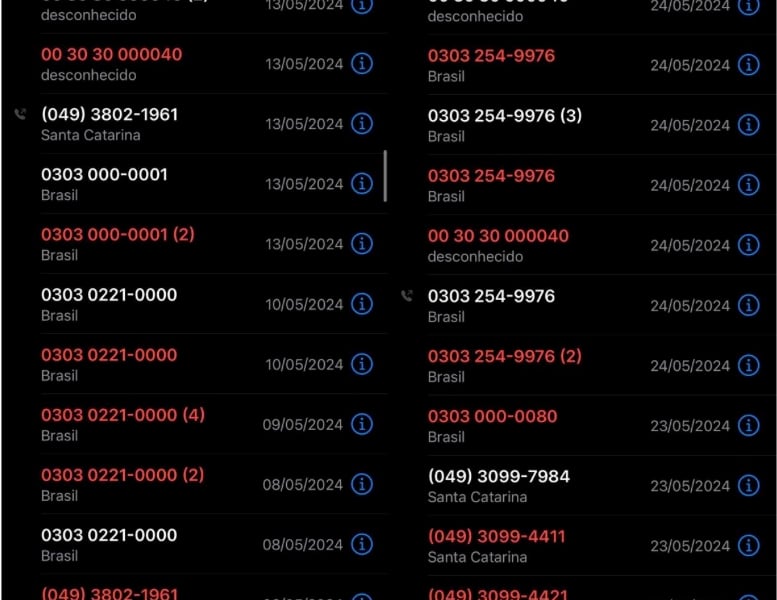
RIO DE JANEIRO (CN) — For three months in early 2024, 33-year-old programmer Marcelo Abrão da Silva received an average of five calls daily from a phone company offering plans he did not want. “It got to the point where I no longer knew whether it was an important call or a telemarketer,” he said.
After repeatedly asking to remove his number from the company’s list, da Silva sold his right to file a complaint on June 6 to Unicainstancia, a Rio de Janeiro startup.
Unicainstancia is one of several private initiatives in Brazil that seek to mediate conflicts between consumers and companies. Founded in 2020, the company offers immediate payments in exchange for taking on the risk of resolving disputes — typically out of court.
For $25, plus $16 if the firm needed conciliation sessions, it acquired da Silva’s right to file a complaint. A few days later, the number of calls dropped. Once he participated in a conciliation hearing, telemarketing calls became rare.
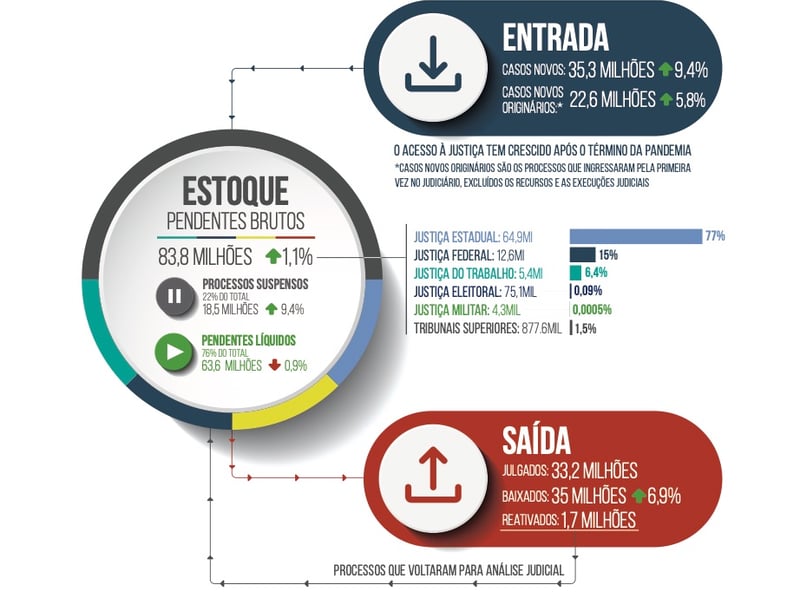
“Today, we have 80 million lawsuits awaiting a judge’s decision. The judiciary could use technology as a first filter because this problem won’t be solved by one measure alone, but by many,” said Gilmar Bueno, a production engineer and founder of the startup, adding that 90% of cases are resolved through agreements.
Brazil saw a flood of lawsuits in 2023. The country registered a 9.5% increase from the previous year, according to the Justice in Numbers 2024 Report published by the National Council of Justice, a Brazilian council responsible for improving transparency, efficiency and administrative oversight of the judiciary. There are now 84 million pending lawsuits, with an average duration of four years and three months. Of these, 7.2 million involved consumer rights — a 72% jump since 2020, per an analysis in the 2024 Brazilian Justice Yearbook.
“People are forced to file lawsuits because they cannot resolve disputes with companies effectively outside the judiciary,” said attorney Igor Britto, director of the Brazilian Institute for Consumer Protection (IDEC), a Brazilian non-governmental organization that advocates for consumer rights and ethical business practices.
According to Britto, the lawsuits represent only 20% of those who face problems. Financial services, electricity, telecommunications, access to food, digital rights (such as data protection), health and sustainable consumption top the list of complaint areas.
“People contact companies at least four times before they get a response. What we have in Brazil is a culture of disobedience of the law, not of litigation,” he said.
Brazilian consumers have protection at three levels, according to University of São Paulo Law School professor Roberto Augusto Castellanos Pfeiffer. The first is administrative, involving Procon, the Consumer Protection and Defense Program connected to the Ministry of Justice’s National Consumer Secretariat. Consumers may file complaints and seek conciliation in person or online.
The central platform is consumidor.gov, which turned 10 in 2024. “Going to court is a constitutional right, but our role is to try to prevent that by resolving conflicts,” said the country’s consumer secretary, Wadih Damous.
However, these agencies lack coercive power, often driving consumers into the legal sphere. “Both individual and collective actions are possible, but individual suits are more common and lead to repeated litigation, while collective lawsuits generally have less success," Pfeiffer said. Individual cases requesting up to 40 minimum wages in damages can be taken to small claims courts, where proceedings are free and do not require an attorney. For collective actions, the Public Prosecutor’s Office is the main actor.
With the rise of digital consumer relations, the private and non-governmental sector — the third level — has gained importance. Besides startups like Unicainstancia, the best-known example is Reclame AQUI, created in 2000 by a consumer who faced overbooking with an airline. “At that time, he had no one to complain to,” said CEO Edu Neves, noting the platform now sees 28 million visits per month.
The platform’s process has remained the same for 25 years. A consumer files a complaint, and if the company is registered, it immediately receives an alert and the complainant’s contact details. “We evolved from a consumer advocacy movement into one that influences consumer behavior,” Neves said. He added that major brands see the site as useful not only for reducing litigation but also for encouraging customers to return for future purchases.
Neves believes consumer relations in Brazil are becoming more like those in the U.S. “Customer retention is the biggest asset today. Brands are competing to minimize friction with their clients,” he said.
On the other hand, Neves sees new risks as consumers, less loyal to major brands, may be more vulnerable to scams. “I see brands operating without any structure. It’s as if we backtracked on quality after making progress,” he said. Unicainstancia’s founder shares that view. “There are more problems than I imagined — the market is getting more sophisticated both from the customer side and in the nature of issues,” he said.
Britto, the director of IDEC, expressed mixed feelings about technology’s role. “On one hand, it promotes access to information and transparency. On the other, big tech is lurking behind it all, and I’m very concerned about misinformation,” he said.
National Consumer Secretary Damous agreed that big tech firms present the biggest structural challenge in Brazil’s consumer relations. “People’s engagement with these networks is a consumer relationship. We see widespread scams and misinformation, with platforms practically consenting. That’s why we’re pushing for regulation,” he said.
Pfeiffer notes that despite technological advancements, the legal dilemma persists. While Brazil has robust consumer protection laws, some court decisions disfavor consumers, which he views as a push to reduce litigation. “I don’t want to encourage a ‘moral damage industry,’ but it can deter abusive practices. The U.S. is a good example, awarding large damages to discourage misconduct,” he said.
Although Pfeiffer would prefer consumers not to rely on the courts, he finds that Brazilians lack broader options for collective organization. “We have serious institutions like IDEC, but they aren’t able to mobilize or boycott on the same scale as in the U.S. Simply exposing a problem doesn’t necessarily fix it. We need to tackle the root cause, which is getting companies to improve,” he said.
According to Damous, the National Consumer Secretariat has completed a draft amendment to a 2022 decree aimed at establishing guidelines and standards for customer service, dubbed the “customer service decree.” If approved, it would mandate 24-hour human support for emergencies and limit the number of service steps to five. “I believe this will be a step forward in consumer relations,” Damous said, adding he hopes to present the draft to President Luiz Inácio Lula da Silva by March.
Subscribe to our free newsletters
Our weekly newsletter Closing Arguments offers the latest about ongoing trials, major litigation and rulings in courthouses around the U.S. and the world, while the monthly Under the Lights dishes the legal dirt from Hollywood, sports, Big Tech and the arts.