
 Search Articles


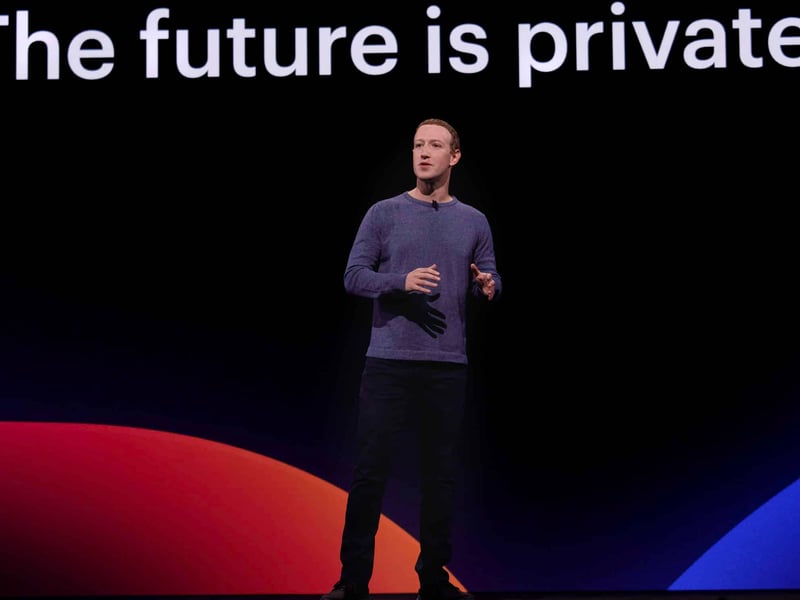
WASHINGTON (CN) — Meta CEO Mark Zuckerberg wrapped his 13-hour stint on the witness stand Wednesday in a landmark antitrust trial over his purchase of Instagram and WhatsApp in the early 2010s, during which he argued that Meta still faces steep competition from YouTube and TikTok.
Zuckerberg, during cross-examination by Meta’s lead lawyer in the case, Mark Hansen of Kellogg Hansen, saw TikTok as a much bigger threat to the Facebook News Feed as a source of “discovery and entertainment” for its users.
The Federal Trade Commission has focused on Meta’s $1 billion purchase of Instagram and $21.8 billion purchase of WhatsApp as examples of anticompetitive conduct in the “personal social networking” market, focusing on connections with friends rather than a stream of content like on TikTok or YouTube.
Chief U.S. District Judge James Boasberg will have to decide whether the FTC has adequately defined that market — antitrust cases regularly hinge on narrow markets to prove monopolistic conduct — before ruling that Meta operated an illegal monopoly.
Hansen has argued that the FTC has “gerrymandered” its market definition by leaving out other social media companies that compete in the mobile app space.
Zuckerberg said that following its launch in September 2016 and subsequent rise, TikTok had slowed Meta’s growth “dramatically.”
He testified that Meta created Reels — a near identical version of TikTok’s short-form video features — as a response to TikTok’s competitive threat.
During his opening on Monday, Hansen presented side-by-side screenshots of a video on Reels, TikTok and YouTube Shorts, which he asserted were impossible to differentiate between and proof that Meta is in a constant battle for user attention rather than a monopolist force in the social network industry.
The Chinese-owned short-form video app — whose popularity among American youth led to efforts in Congress to force its divestiture or otherwise be banned in the States — has become one of the most downloaded apps in the United States, reaching that status first in October 2018.
TikTok still trails Facebook, YouTube, Instagram and WhatsApp in terms of monthly active users, with TikTok reaching 1.6 billion as of February and Facebook reaching 3.1 billion users, according to data gathered by Statista.
Zuckerberg has defended the acquisitions of Instagram and WhatsApp as a result of his competitive spirit when he sees rivals as catching up to Facebook.
“You can bet that I’m not going to rest until we do quite a bit better than we’re at now,” Zuckerberg said on Wednesday.
He also rejected the FTC’s assertion that his goal in purchasing Instagram was to squash the rival before it could grow too large.
“Was the intent to stop offering or stop making Instagram good? Absolutely not,” Zuckerberg said, before reasserting that Instagram grew so much in large part due to Meta’s purchase and support.
He noted that YouTube and TikTok had powerful backers, in Google and ByteDance, respectively, so he saw it as unlikely that Instagram could have become as big on its own as Facebook had.
He added that it was “very hard to know” whether Instagram would have been able to continue its initially rapid growth to truly challenge Facebook on its own, a key sticking point for the FTC’s case.
Following Zuckerberg, former Meta chief operating officer Sheryl Sandberg took the stand and supported the idea that Meta was more awed by Instagram’s quality than its competitive potential.
She further testified that Facebook’s massive number of users has done little to keep it ahead of other platforms, specifically TikTok, where the majority of content users see is from strangers on the algorithm-run For You page.
Before Zuckerberg took the stand Wednesday, Apple, Google and Snapchat attorneys decried Meta’s redaction efforts in their opening statement slides from Monday.
The Verge found the redactions could be easily circumvented to see sensitive data, such as a comparison between weekly messaging app usage on iPhones. The information was not earth-shattering, but it led the third-party tech companies to express concern that their information cannot be trusted in Meta’s hands.
Looming in the background of Zuckerberg’s testimony has been Meta’s reported efforts to settle the case before it could go to trial.
The Wall Street Journal revealed Tuesday that Meta had offered FTC Chairman Andrew Ferguson $450 million before upping the offer to settle to $1 billion. Ferguson apparently refused to settle for “anything less than $18 billion and a consent decree” before raising the ask to $30 billion, according to the Journal.
Further, the Journal reported that Trump appeared “more open to striking a deal” and asked how a settlement would work before being convinced by Gail Slater, head of the Justice Department’s antitrust division; Mike Davis, a key White House antitrust adviser; and Chief of Staff Susie Wiles to let the case go trial.
 Follow @Ryan_Knappy
Subscribe to our free newsletters
Our weekly newsletter Closing Arguments offers the latest about ongoing trials, major litigation and rulings in courthouses around the U.S. and the world, while the monthly Under the Lights dishes the legal dirt from Hollywood, sports, Big Tech and the arts.