
 Search Articles


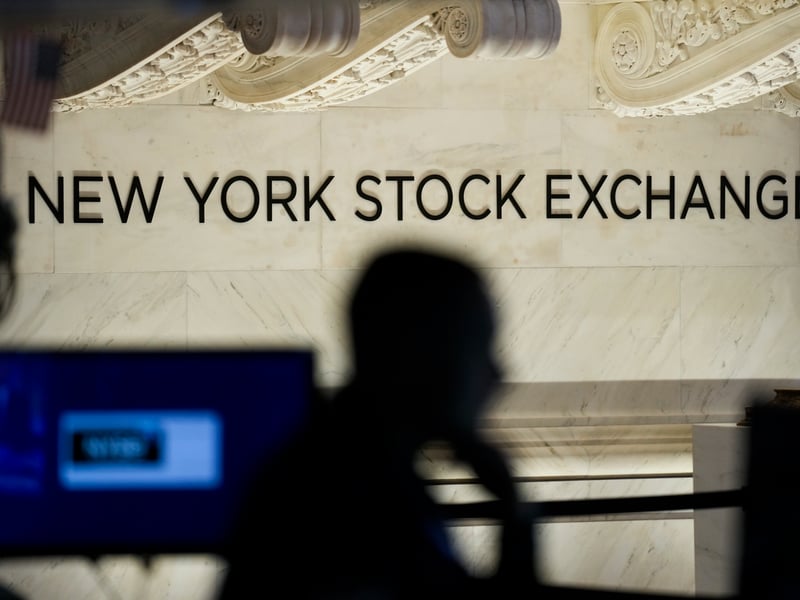
MANHATTAN (CN) — Unable to continue its optimistic outlook in the face of hawkish talk from the central bank and little other news to focus on, equities failed to stay afloat this week on the hope that the Federal Reserve is done jacking up interest rates.
By the closing bell on Friday, the Dow Jones Industrial Average had dropped 571 points for the week. The S&P 500 and Nasdaq fared somewhat better, falling 61 points and 197 points this week, respectively.
The main news of the week was the biannual testimony by Fed Chief Jerome Powell, who warned lawmakers the central bank might not be done with combatting inflation for the year. “Inflation pressures continue to run high, and the process of getting inflation back down to 2% has a long way to go,” Powell told members of the House Financial Services Committee on Wednesday.
Powell added that, while it should take a while to see the full effects of the Fed’s interest rate hikes on inflation, it is a “pretty good guess” the central bank could increase rates twice more this year.
“Nearly all FOMC participants expect that it will be appropriate to raise interest rates somewhat further by the end of the year,” Powell continued in his prepared testimony, adding that “reducing inflation is likely to require a period of below-trend growth and some softening of labor market conditions.”
Separately, Fed Governor Michelle Bowman said in a speech on Thursday that, “while headline inflation has declined substantially, it remains far too high.”
“I believe there is more work to do to bring inflation down,” Bowman stressed.
Many experts say Powell’s testimony and Bowman’s comments imply the Fed maintains a hawkish bent and could hike rates again later this year, but others predict the Fed has no appetite for more than one such hike.
Though the Fed “skipped” its meeting last week, holding the current federal funds rate at 5% to 5.25%, the central bank also indicated in its supplemental materials that two more rate hikes — for a total of 50 additional basis points — could be on the table in the Fed’s “dot plot,” which charts the anonymous views of Federal Open Markets Committee members.
“I think it all boils down to your view of the dot plot, and in our view the Fed’s dot plot is not always a good predictor of future interest rates,” said Jeffrey Roach, chief economist at LPL Financial. “It is worth watching how these views evolve in coming months, which means either the Fed lowers its forecasts or the market adjusts higher, putting pressure on bond yields.”
A survey released on Tuesday by DataTrek found most investors think the Fed is done raising interest rates and some may speculate the Fed could begin cutting rates during the second half of this year. One-third of the roughly 580 investors surveyed last week said they expect the federal funds rate will stay put by the end of the year, while another third said it could bump to by 25 basis points.
But it could always be worse. On Thursday the Bank of England raised its interest rates to 5%, roughly matching the federal funds rate in the United States. Unlike its American counterpart, though, inflation is far greater overseas, with headline inflation at 8.7% in England despite the central bank’s target of 2%.
“The stakes have never been higher for Bank of England policymakers,” said Giles Coghlan, chief market analyst at NYCM, noting further rate hikes could still come from the Bank of England. “Despite the stagflation and pain it will cause in the near-term, market expectations now see rates exceeding 6% in early 2024, and the threat of a recession looms more than ever.”
Other than the noise surrounding central banks, the only other notable economic news this week was new home construction, which surged last month after falling most of this year. Overall, the sector saw 1.63 million housing starts in May, according to the U.S. Census Bureau, compared with 1.4 million starts in April.
Most of the increase was seen among single-unit structures, but multifamily units under construction reached a new high point.
Experts say the jump is likely due to a recent drop in lumber prices, but housing starts are still below where they were in May 2022, when 1.7 million starts were charted. What’s more, the market for existing home sales is stagnant, with analysts noting many homeowners don’t want to abandon their historically low mortgage interest rates for higher ones.
 Follow @NickRummell
Subscribe to our free newsletters
Our weekly newsletter Closing Arguments offers the latest about ongoing trials, major litigation and rulings in courthouses around the U.S. and the world, while the monthly Under the Lights dishes the legal dirt from Hollywood, sports, Big Tech and the arts.