
 Search Articles


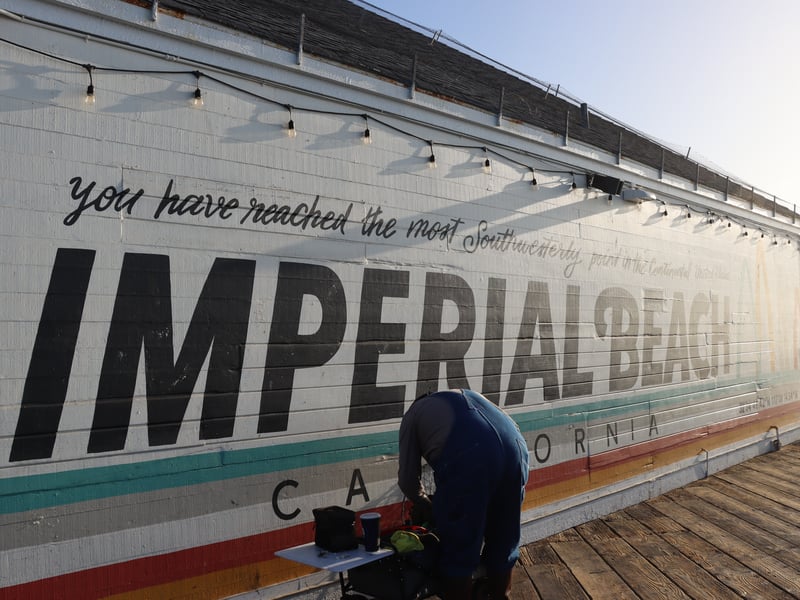
IMPERIAL BEACH, Calif. (CN) — The beach here is closed again, but a few people nonetheless stroll past signs warning of sewage contamination. They take advantage of these uncrowded sands and waters to cuddle a partner, surf or even fish.
“It’s a fantastic place to be,” resident Cory West said about the border town as he fished at the city’s pier on a cool December afternoon. “Among places to be, I’d submit this is a better one.”
Sewage problems here can be traced to both Tijuana and the underfunded South Bay International Wastewater Treatment Plant, a facility created under a joint U.S.- Mexican International Boundary and Water Commission to treat sewage from Tijuana.
In that Mexican metropolis just a few miles away, a growing population and booming industry hasn’t been matched by investment in the city’s sewage system. All that has contributed to sewage issues north of the border, which California residents say have caused noxious odors and even health issues like gastrointestinal diseases.
Despite this stinky situation, West is still enamored with the town. Imperial Beach is “poor man’s La Jolla,” he said, referring to the rich coastal enclave in San Diego.
It’s one of the only coastal communities left in Southern California where working- and middle-class people can live next to the Pacific Ocean, he said — even if the beach was closed much of the year because of sewage contamination. But maybe that was just cause-and-effect. He said pollution was the best thing to happen to Imperial Beach, crediting it for keeping the beach town the kind of place where one could get a pint of Budweiser for $2.50. Still, like many here, he hopes officials will get it under control at some point.
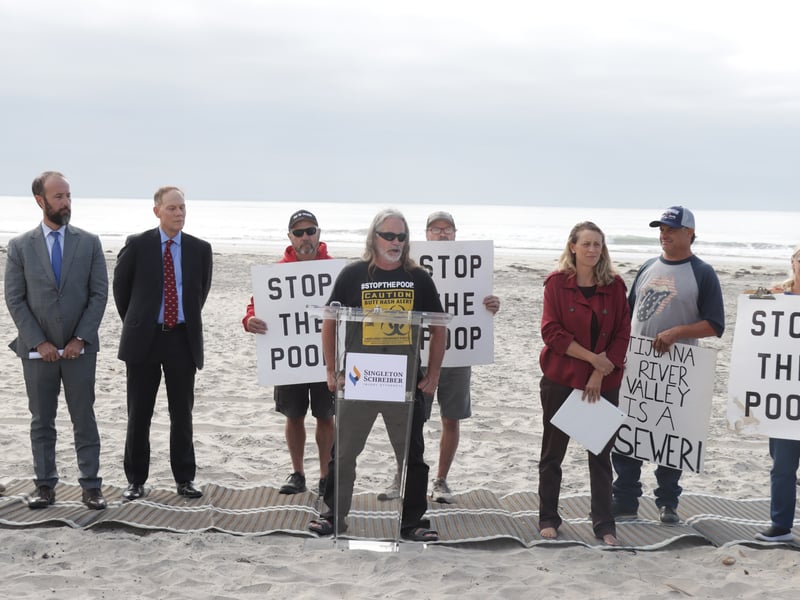
Sewage problems came to a head during Hurricane Hilary in Aug. 2023 and again during a storm this year, bringing the nearby South Bay International Wastewater Treatment Plant to near collapse. During and after this year’s storm, 14.5 billion gallons of sewage flowed across the border into the United States, water officials say.
Among the places flooded in that storm was the rural nearby Tijuana River Valley. While the river floods occasionally, recent storms have caused inundations of waist-deep wastewater that ruined alfalfa meant for horses, said Eileen Barnes, who runs Surfside Ranch here.
Local governments weren’t of much help either after the storm, Barnes said — but the area got by thanks to its tight-knit community.
“You always got someone riding around on a horse out here,” she said. “Everybody’s pretty friendly. Everybody knows mostly everybody.”
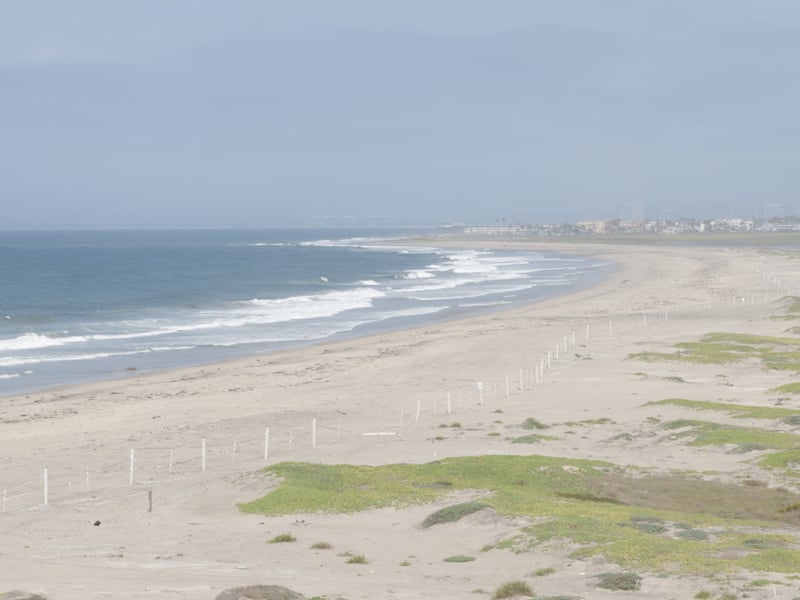
Through her ranch, Barnes offers horseback tours around local trails and along the banks of the river. Visitors get a panoramic view of the border wall, the sprawl of Tijuana and beaches that stretch across the international boundary. Barnes sometimes takes groups out to the beach, but she doesn’t let them go in the water because of the pollution.
Officials in both the U.S. and Mexico have made slow progress on fixing sewage problems. Imperial Beach Mayor Paloma Aguirre has lobbied the Biden administration to declare an emergency over the pollution. At the beginning of the year, the Mexican military took over repairing the San Antonio de Los Buenos treatment plant in Baja California, one major source of sewage leaks.
In September, San Diego celebrated work to renovate a key piece of infrastructure at the South Bay International Wastewater Treatment Plant, known as Junction Box-1. Once in operation, they hope it will help control the amount of wastewater coming in before it’s treated and released into the Pacific. Just this week, U.S. Senator Alex Padilla, a San Diego Democrat, announced he’d secured $250 million in federal funds for the problem. In a statement, he said the money could help “address transborder water and air pollution in the region.”
But as with Cory West, pollution isn’t the only issue troubling some locals. Jose Lopez Eguino runs the San Diego chapter of Alliance of Californians for Community Empowerment Action, a statewide community organization that fights for tenants. After moving around the region, his family settled in Imperial Beach. Unlike theastronomical rents in San Diego, his family was able to find a two-bedroom place with a front and backyard for less than $2,000.
Then a leak flooded the home. His landlord asked him to vacate. After living in a hotel room for months, the family eventually found another two-bedroom unit. But it cost way more, at $3,495 a month.
Through his work at ACCE, Lopez Eguino helps tenants navigate situations just like this one. What he called “substantial remodel evictions” aren’t unique to his family, he stressed.
“We’re definitely in a housing crisis all throughout the state,” he said, “but here in Imperial Beach, we have 70% of people that are renters.”
When people are forced to move out of relatively affordable units in Imperial Beach, they often end up elsewhere in the region, breaking up communities formed over decades in apartment complexes. Lopez Eguino has seen the problem play out at the local school district as well, where he serves as a trustee. And while he acknowledges that local sewage problems are serious, he says housing costs are paramount for many locals.
“What’s the point of fighting to open up the beaches if we’re not going to be able to afford to live here next year?” he said. “People love their community.”
Back at the Imperial Beach pier, West helped a couple reel in and quickly slaughter a shark. A fellow fisherman called dibs on some meat to take home, and West happily obliged.
The meat is similar to swordfish, he said: tough and somewhat gamey, but still good. As for himself, he’d keep some of the odd bits of the shark to use as more bait. He loved coming out here to fish. The pier and the ocean beyond were “refuge from all the other mess in the world,” he said. The sewage problems were not ideal, but as long as he can afford it, he’ll keep coming here to fish like he does basically every day.
Subscribe to our free newsletters
Our weekly newsletter Closing Arguments offers the latest about ongoing trials, major litigation and rulings in courthouses around the U.S. and the world, while the monthly Under the Lights dishes the legal dirt from Hollywood, sports, Big Tech and the arts.