
 Search Articles


MIAMI (CN) — As criticism of a new migrant detention center dubbed “Alligator Alcatraz” grows, the Trump administration and Governor Ron DeSantis face a new class action from groups contesting the lack of attorney access to those kept in the remote facility deep in the Florida Everglades.
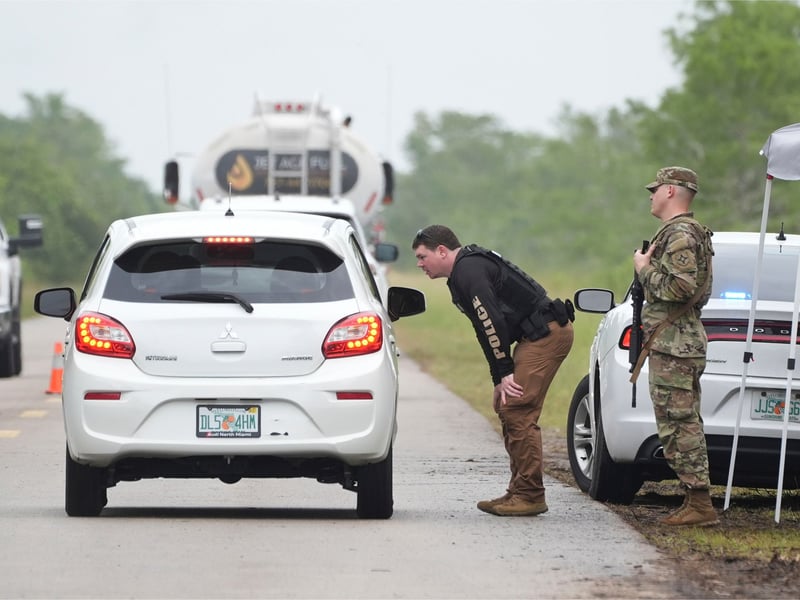
In a 38-page lawsuit filed in Miami federal court, the American Civil Liberties Union and immigration advocacy groups claim those detained at the facility have not been able to contact their attorneys by phone or email. The few detainees who can use collect call pay phones only have a maximum of five minutes to speak on the recorded lines, the complaint states, which violates attorney-client confidentiality. In addition, attorneys who travel to the detention center to meet with clients wait for hours at an armed checkpoint, only to be turned away.
“The U.S. Constitution does not allow the government to simply lock people away without any ability to communicate with counsel or to petition the court for release from custody,” Eunice Cho, ACLU’s lead attorney in the case, said in a statement. “The government may not trample on these most fundamental protections for people held in its custody.”
In the suit, the groups target the U.S. Department of Homeland Security, U.S. Immigration and Customs Enforcement, DeSantis and other state officials.
“No lawbreakers in the history of human civilization have been treated better than illegal aliens in the United States, and yet all they do is complain,” said DHS Assistant Secretary Tricia McLaughlin in an email responding to the lawsuit.
The governor’s office did not immediately respond to a request for comment.
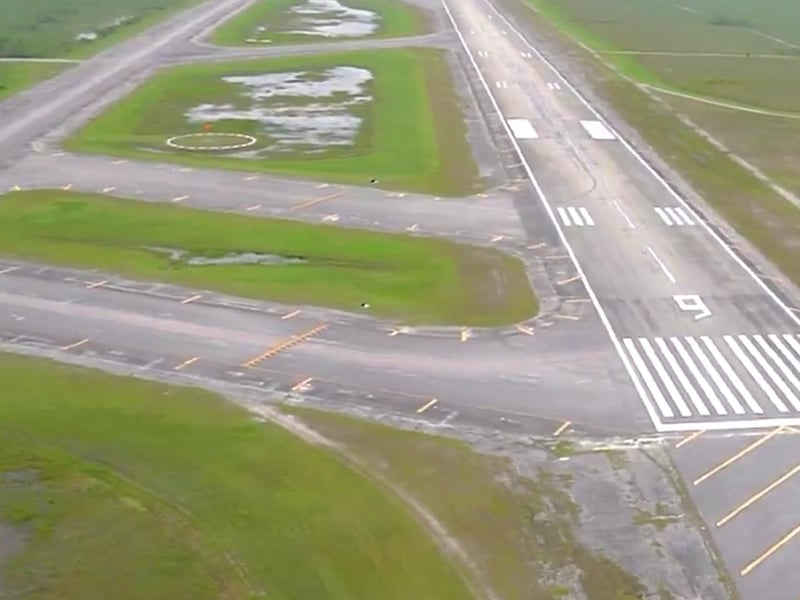
In response to President Donald Trump’s immigration crackdown, DeSantis used emergency powers to acquire the 17,000-acre area from Miami-Dade County last month. Known as the Dade-Collier Training and Transition Airport, the site consists of a small runway surrounded by the swamp land and palmetto fields that make up the Big Cypress National Preserve and Everglades National Park.
Within a week of the state’s acquisition, trucks carrying prefabricated housing, generators, security lighting and fill dirt entered the area and workers hastily set up tents and trailers to house those arrested by ICE and state law enforcement over suspected immigration violations. Trump visited the facility on July 1, the day before the first detainees arrived, and told reporters, “We’re going to teach them how to run away from an alligator if they escape prison.”

Since then, environmental activists, indigenous tribes, Democratic state lawmakers and members of Congress have decried the detention center as inhumane and detrimental to the ecosystem, pointing to reports of flooding, pest infestations, sewage backups and light pollution.
Two environmental groups sued to stop construction, criticizing the lack of an environmental review required by the National Environmental Policy Act and the Endangered Species Act. A group of Democratic state lawmakers also filed suit after they were denied access to the facility days after opening, citing a state law giving state officials the authority to tour any correctional facility.
Though the present lawsuit mentions the “abysmal conditions” of the site, the plaintiffs focus on violations of the First and Fifth Amendment rights of those detained.
“Defendants in this case have blocked detainees held at the facility from access to legal counsel,” they state in the complaint. “No protocols exist at this facility for providing standard means of confidential attorney-client communication, such as in-person attorney visitation and phone or video calls that are available at any other detention facility, jail or prison.”
The groups also claim attorneys have tried to locate their clients through an online database of detainees provided by ICE, but with no search results and a prompt to call the local ICE processing center, only to be told by staff that they do not have any information.
In addition, those held at the facility do not have independent ways of contesting their detention by filing documents with an immigration court, the plaintiffs say in the lawsuit.
State officials have not released exactly how many people are detained at the facility but have noted the site can house up to 4,000. At a press conference Wednesday, Florida’s governor told reporters he wants the facility full before setting up his next proposed detention center at Camp Blanding, the Florida National Guard training headquarters near Jacksonville.
“Even though we’re getting reimbursed for it, I was like, ‘I don’t want to be creating some structure that can hold 2,000 illegal aliens and then we end up having like, 150 there after a week,’” DeSantis said.
So far, the state is initially funding the construction and operation of the Everglades detention center, though DeSantis has mentioned the Federal Emergency Management Agency will compensate the state at $450 million a year.
The ACLU and other immigration advocacy groups associated with the class action ultimately hope to shut down the facility.
“What’s happening here is not just a policy failure, it’s a moral one,” said Bacardi Jackson, executive director of the ACLU of Florida. “The state has hastily erected a costly and deadly shadow prison in the middle of the Everglades during hurricane season to warehouse human beings — stripping them of due process and dignity, cutting them off from their families and legal counsel, intentionally putting their lives in danger, and leaving them to suffer in silence. This is how rights are erased. But the Constitution doesn’t disappear in the Everglades.”
 Follow @alexbpickett
Subscribe to our free newsletters
Our weekly newsletter Closing Arguments offers the latest about ongoing trials, major litigation and rulings in courthouses around the U.S. and the world, while the monthly Under the Lights dishes the legal dirt from Hollywood, sports, Big Tech and the arts.