
 Search Articles


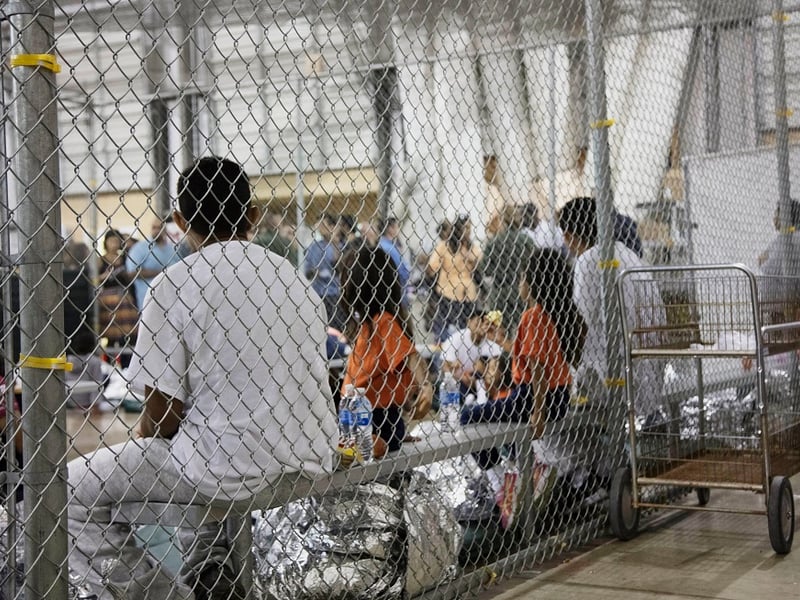
SAN FRANCISCO (CN) — Lawyers for individuals detained at a California immigration detention facility told a federal judge Friday that there is a “system-wide failure of medical care” and detainees are facing dire conditions.
The plaintiffs, seven individuals currently detained at the California City Detention Facility, filed a class action against Immigration and Customs Enforcement and the Department of Homeland Security in November, claiming “inhumane” conditions at the facility that “failed to provide for the basic human needs of the people for whose lives and well-being they are legally responsible.”
The plaintiffs describe being housed in small, concrete cells without the necessary clothing, food or water. They further say the defendants are violating detainees’ constitutional rights by denying them basic medical care, disability accommodations and access to lawyers.
In a hearing over the federal government’sbid to transfer the case into a different federal court, as well as the plaintiffs’ motions for preliminary injunction and class certification, U.S. District Judge Maxine Chesney questioned the parties on how to remedy the claims of inhumane living conditions and restricted access to health care.
“The people in this room don’t disagree as to what the care should be. It’s not a fight over what is right; it is a fight over how it should be accomplished,” the Bill Clinton appointee said.
Chesney emphasized her concern over the facility’s ability to provide adequate medical care, especially for those who need to see health care specialists.
“How is this facility different than a prison? These people have not committed crimes that have caused them to be taken to the facility. What they have is a lot of people who are ill, a number of them very seriously. They are not set up to care for them. I think this is pretty clear. This is a organization that runs prisons; they know how to deal with a prison population. This is not a prison population,” she said.
The detention facility, owned and operated by CoreCivic, a private, for-profit prison company, is located around 100 miles from Los Angeles in the middle of the Mojave Desert. The facility previously operated as a federal and state correctional facility before becoming an ICE detention facility in September 2025.
The plaintiffs argued that transferring the case outside of the Northern District of California would cause further delays and jeopardize detainees’ health.
“What the defendants are asking is for this court to grind the wheels of justice to a halt … people are risking death today, we need relief,” attorney Steven Ragland of Keker, Van Nest & Peters, representing the plaintiffs, told the judge. “What the government is asking is to put this all on ice, let it sit, let people suffer in torturous conditions and good luck to you. We think that is terribly unjust.”
The government disputed the claim that transferring the case would cause any meaningful delay and argued that litigation would be more expensive in the Northern District compared to the Eastern District, where the facility is located.
“Briefing is complete. It is ready to be decided and should be decided in the court with the strongest interest,” Department of Justice attorney Savith Iyengar said.
Chesney agreed with the government’s argument that the case should be litigated in the Eastern District of California, but sympathized with the plaintiff’s claims of immediate, irreparable harm if the case is delayed any further.
“There is a good chance I am going to transfer it, and I don’t want to dump an unwieldy set of requests on an already burdened judiciary or have your clients not get what they need in the interval,” she told the plaintiffs. “I am concerned. I want to help you out.”
The judge floated the idea of issuing a temporary order directing the government to remedy specific concerns of the plaintiffs, including adequate medical care and access to legal counsel. The plaintiffs further proposed that Chesney order an independent monitor to oversee compliance with the court’s order, a request the government strongly objected to.
“The system does not work; it needs supervision. This is unobjectionable stuff,” attorney Cody Shawn Harris also of Keker, Van Nest & Peters, said. “This is the basics the defendants need to provide.”
At the end of the hearing, Chesney said she was going to transfer the case, but would postpone officially issuing the order until she could address some of the plaintiffs’ concerns, including appointing a monitor to ensure detainees have proper medical care.
She further said she would grant the plaintiffs’ request for provisional class certification to ensure her order applies to all detainees, and not just the named plaintiffs.
“I am going to grant the transfer, but give them some immediate relief they can start using,” she said.
DHS Assistant Secretary Tricia McLaughlin denied accusations that the conditions in the facility are inhumane as the plaintiffs describe.
“All detainees are provided with 3 meals a day, water and have access to phones to communicate with their family members and lawyers. No one is denied access to proper medical care. ICE has higher detention standards than most US prisons that hold actual US citizens,” McLaughlin said in a statement.
“It is a longstanding practice to provide comprehensive medical care from the moment an alien enters ICE custody,” she added. “ICE also provides necessary accommodations for disabilities. This is the best healthcare than many aliens have received in their entire lives.”
 Follow @mhattridge_
Subscribe to our free newsletters
Our weekly newsletter Closing Arguments offers the latest about ongoing trials, major litigation and rulings in courthouses around the U.S. and the world, while the monthly Under the Lights dishes the legal dirt from Hollywood, sports, Big Tech and the arts.