
 Search Articles


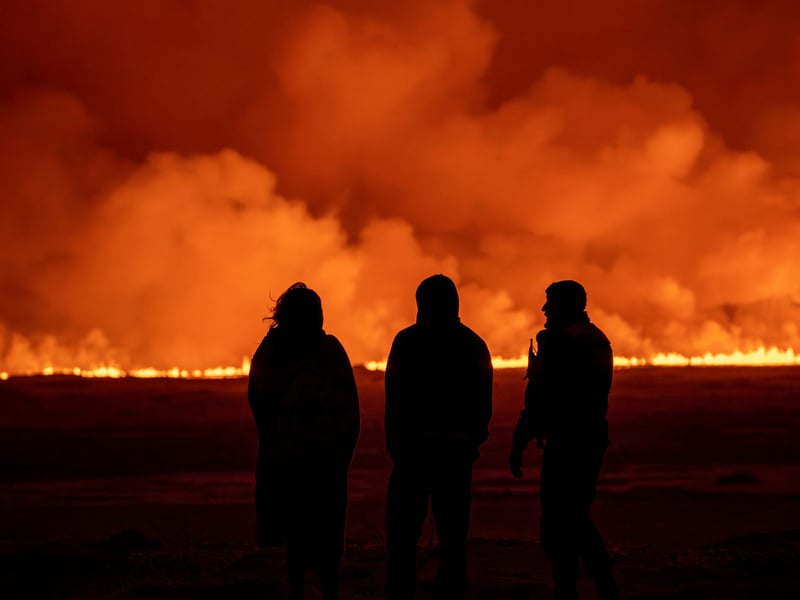
(CN) — Iceland finally saw the volcanic eruption it had anticipated for weeks on Monday. Just before midnight, a series of intense earthquakes led to lava breaking the surface along a fissure on the capital peninsula in the country’s southwest.
The eruption followed a month of national preparation, in which Iceland evacuated about 4,000 people from the nearby town of Grindavík. Scientists have been constantly monitoring high-magnitude underground tremors, after the initial creation of a 9-mile-long magma corridor.
Near midnight, lava started flowing from a 2.5-mile-long fissure and erupted about 330 feet into the air. The magma plumes have since slowed down, and the latest observational flights show they are around 100 feet high.
Still, the Icelandic civil defense remains on high alert, and experts warn of the unpredictability of the situation. Local geophysicist Benedikt Ófeigsson underlined to the Iceland news media RÚV that “new cracks in the ground could open without warning.”
He also said that Iceland has “seen examples of eruptions from a few hours or days to six months in the area." On Tuesday, the Icelandic Meteorological Office reported that only a third of the original fissure remained active, and that the eruption had concentrated around five central points.
Despite anticipating the volcanic activity since November, Grindavík Mayor Fannar Jónasson said that the timing was somewhat surprising. “Things had calmed down. The magma intrusion under Grindavík was no longer active and had begun to solidify,” he told the news media.
There is no immediate danger to people or critical infrastructure, authorities said. They stay away from the outbreak zones, but the international airport remains open.
While the eruption happened about 20 miles north of Reykjavik, the lava moved north and east rather than south to the towns. Several Icelandic experts noted that the eruption happened in a good location, and that the wind direction carried toxic fumes away from populated areas and toward the sea.
However, the national university´s research unit for volcanology and natural disasters warned of air pollution with between 30 and 60 tons of sulfur dioxide gas emissions. They advised people in Reykjavik to stay inside and close windows and ventilation.
Because the country had expected the incident, officials started taking measures weeks ago. They built high dykes around the Svartsengi power plant, and the people of Grindavík were told to sleep elsewhere on the island. The measures meant that no one was in immediate danger when the eruption happened.
Iceland is one of the countries in the world with the most active volcanoes. It is situated in the North Atlantic Ocean, where the Eurasian and North American tectonic plates are moving apart each year. The process creates fractures in the earth’s crust called volcanic rift zones.
The country saw its last big eruption in 2021, when the Fagradalsfjall volcano woke up after being dormant for 6,000 years. The lava flow lasted for half a year. It is not unheard of for eruptions to start big and then continue at a low level for a long time.
Subscribe to our free newsletters
Our weekly newsletter Closing Arguments offers the latest about ongoing trials, major litigation and rulings in courthouses around the U.S. and the world, while the monthly Under the Lights dishes the legal dirt from Hollywood, sports, Big Tech and the arts.