Search Articles


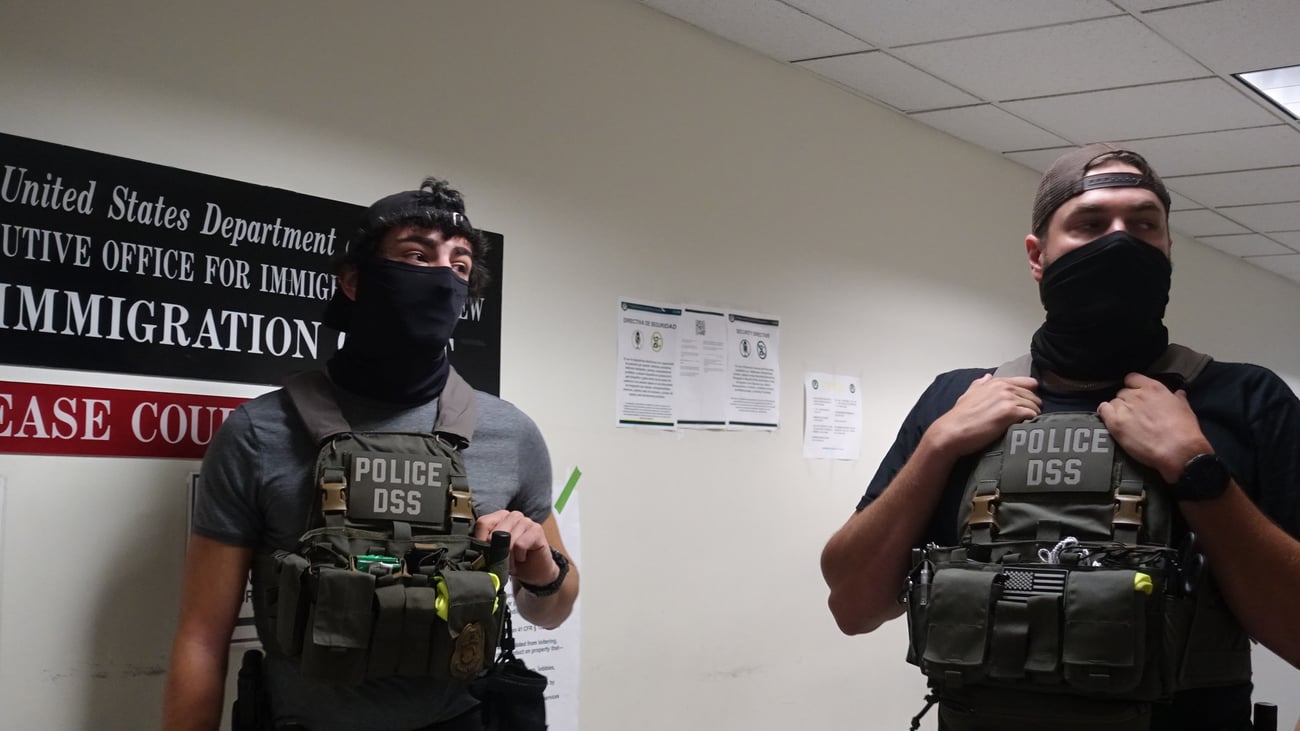
MANHATTAN (CN) — Immigration and Customs Enforcement has made yet another arrest at a New York City immigration court, despite a May ruling from a federal judge that broadly blocked such detentions.
U.S. District Judge Kevin Castel, a George W. Bush appointee, ruled May 18 that ICE never had the legal justification to make these arrests. His order, which applied to immigration courts in Manhattan, kneecapped the agency’s controversial strategy of detaining people as they arrived for mandatory immigration hearings.
Despite that, ICE has made at least six arrests in Manhattan immigration courts since Castel issued his order. The latest arrest came on Thursday, when agents detained Bronx resident Matar Ndiaye while he was “dutifully attending an immigration court hearing for his asylum claim,” according to court filings.
“Mr. Ndiaye had dutifully appeared in immigration court several times since entering the United States,” Ndiaye argues in a habeas corpus petition filed Thursday. “That all changed today, July 16, 2026: after dutifully attending his master calendar hearing in immigration court at 290 Broadway in Manhattan and being given and being given a new court date for an individual hearing in April 2027, Mr. Ndiaye was summarily arrested.”
Ndiaye adds he had no due process and no prior warning before he was detained. He was never deemed a flight risk or a danger to the community by an immigration judge.
“Mr. Ndiaye has simply lived in the Bronx and built a life and community in New York City,” he continues. “On information and belief, he has never been convicted of a crime and has complied with all immigration directives.”
Ndiaye was briefly detained in an ICE holding room at 26 Federal Plaza in Lower Manhattan before he was transferred to Delaney Hall, a scrutinized New Jersey facility, according to ICE detainee records.
His legal arguments, that he was not afforded due process prior to his detention, are consistent with many of the thousands of other habeas petitioners swept up by the Trump administration’s widespread deportation agenda. But the site of Ndiaye’s arrest adds another layer to his bid for release.
Since Castel’s order was filed in May, ICE has tried to justify its persistent arrests at immigration courts by claiming “alternative locations in New York” were unsafe due to the possibility of anti-ICE protesters.
According to the agency, this concern falls within the narrow exceptions to Castel’s ruling, which only allowed for arrests at immigration court if they involve a threat to national security or public safety.
ICE only made these arguments earlier this month in reference to previous arrests. The Department of Homeland Security, which oversees ICE, didn’t immediately respond to an inquiry about Ndiaye’s arrest, specifically.
Ndiaye’s lawyer, immigration attorney Kyle Barron, told Courthouse News on Friday it is “unjust for the government to be detaining people who are showing up to court and complying with immigration directives.”
It’s precisely why, prior to the second Trump administration, ICE was actively discouraged from making arrests at or around immigration courts at all. Ndiaye notes in his habeas petition these arrests “have a tremendous deterrent effect on noncitizens accessing the immigration court system and the legal forms of relief statutorily available in removal proceedings.”
“Detentions also disrupt the functioning of the courts,” he argues.
On Friday — unrelated to Ndiaye’s detention — Castel asked the government to explain why it continued to make other arrests in immigration courts, despite his ruling, which “requires a determination of the non-existence of an alternative safe place or a determination that it would be ‘too difficult to achieve’ the arrest at the alternative location.”
The judge is seeking this information by July 31.
Castel previously greenlit immigration court arrests based on an internal guidance memo from ICE in 2025. But months later, he reversed course after federal prosecutors admitted ICE misled them about the memo, which never actually gave it the authority to make arrests at immigration courts at all.
 Follow @Uebey
 Follow @uebey.bsky.social
Subscribe to our free newsletters
Our weekly newsletter Closing Arguments offers the latest about ongoing trials, major litigation and rulings in courthouses around the U.S. and the world, while the monthly Under the Lights dishes the legal dirt from Hollywood, sports, Big Tech and the arts.
Additional Reads


 Faceoff brewing over Paramount-Warner Bros. merger July 17, 2026