
 Search Articles


THE HAGUE, Netherlands (CN) — Israel’s effort to slow the International Criminal Court’s investigation into possible violations committed in the Palestinian territories faltered Monday, as judges in The Hague ruled the eruption of the Gaza war in October 2023 did not require prosecutors to go back to square one.
In a closely watched appeal, judges at the ICC’s top chamber sided with prosecutors and left an earlier ruling intact, turning down Israel’s request to force a procedural reset.
The majority made clear that the court’s Palestine investigation can keep moving, despite the sharp escalation of violence after Hamas’ 2023 attack and Israel’s sweeping military response in Gaza.
The dispute boiled down to one technical question with real weight behind it: whether the violence that erupted after October 2023 was enough to trigger a legal reset, forcing prosecutors to reissue a formal notice and giving states another chance to halt the ICC’s investigation.
The appeals judges answered just as bluntly, saying no. They agreed with the lower court that, despite the scale of the violence since Oct. 7, the legal frame of the case has not shifted.
As the judges put it, “the majority is not persuaded by Israel’s submission that the general circumstances in which the alleged criminality is said to have occurred have changed radically.”
Instead, they said the conduct now under investigation remains tied to the same continuing conflict the court was asked to examine back in 2018, rather than amounting to a break so fundamental that prosecutors would have to reset the case.
The decision keeps the investigation moving, clearing the way for the ICC prosecutors to continue examining possible crimes by all sides without reopening the procedural door for Israel or other states.
The long road to the ICC probe
The fight at The Hague began long before the current war. In 2018, Palestine formally asked the International Criminal Court to step in, referring to the situation on its territory and urging prosecutors to look into suspected crimes in Gaza, the West Bank and East Jerusalem.
That move, which covered past, ongoing and future conduct, set the stage for what would become one of the court’s most politically charged investigations.
After years of legal wrangling over whether the court even had authority to act, ICC prosecutors formally opened a full investigation in March 2021, reaching back to potential crimes committed since June 2014. Within days, the court notified states with potential jurisdiction, including Israel, that the probe was underway, giving them a chance to ask the ICC to step aside in favor of their own investigations.
Israel, which has never joined the ICC, flatly rejected the court’s authority. It said the judges in The Hague have no power over Israeli nationals and pointed to its own military and civilian courts as capable of investigating any suspected abuses. Notably, though, Israel did not take the formal step of asking the ICC to defer the case under the court’s rules.
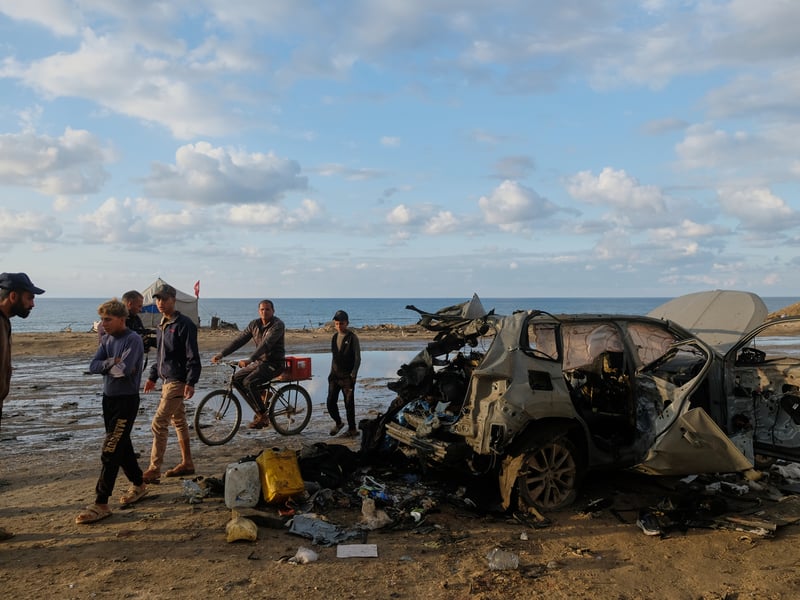
That uneasy status quo collapsed on Oct. 7, 2023, when Hamas fighters carried out a deadly attack inside Israel, killing civilians and taking hostages. Israel responded with a sweeping military campaign in Gaza that, by December 2025, had devastated much of the enclave and plunged it into a deep humanitarian crisis.
Aid agencies, international organizations and U.N. officials have repeatedly warned of widespread civilian suffering, while Israel has said its operations are acts of self-defense aimed at Hamas fighters operating within the civilian population.
After the attack and the war that followed, several ICC member states filed new referrals, pressing the court’s prosecutor to step up action in the Palestine investigation. Israel quickly seized on those filings, arguing they changed the legal ground beneath the case.
Israel said the surge of violence after Oct. 7, 2023, combined with the new referrals, amounted to a legally new “situation” under the ICC’s statute. That, it argued, should have forced prosecutors to restart the process by issuing a fresh notice, reopening the door for states to try to pause the court’s work.
Pre-Trial Chamber I rejected that argument in November 2024, finding that the investigation opened in 2021 was already broad enough to cover crimes tied to the same underlying crisis. Israel appealed, urging the ICC’s top judges to reverse the decision.
The Appeals Chamber wasn’t persuaded. It agreed with the lower judges and the prosecutor, stressing that an ICC “situation” isn’t locked to a single moment in time. As long as later acts are sufficiently connected to the same conflict, they can still fall within the scope of an existing investigation.
The judges also made clear that the rules don’t require prosecutors to notify states about every specific incident they examine or to restart the process whenever violence flares up. Doing so, they warned, would risk bogging down investigations in conflicts defined by repeated or prolonged cycles of violence.
A ruling upheld, but not without warning
Two judges broke with the majority. In a dissenting opinion, Judge Luz del Carmen Ibáñez Carranza said the Pre-Trial Chamber glossed over the legal significance of the new state referrals filed after Oct. 7.
She argued that the judges failed to clearly explain why those referrals did not amount to a new situation, warning that thin reasoning makes it harder for parties to meaningfully challenge a ruling on appeal.
Judge Solomy Balungi Bossa also dissented, faulting the lower chamber for sidestepping Israel’s core arguments. She said that omission went to the heart of the decision and should have prompted the Appeals Chamber to send the case back so judges could properly reassess whether the new referrals reshaped the investigation’s scope and required a fresh notice.
Judge Gocha Lordkipanidze, writing separately, agreed with the result but added a note of caution. He said prosecutors can’t treat this ruling as a blank check and must stay alert to changing facts, reassessing along the way whether new circumstances in other cases might require an updated notice to keep the balance between state rights and the court’s work intact.
What comes next at the ICC
The ruling keeps the ICC’s Palestine investigation moving forward under heavy political pressure. It does not decide guilt, name suspects or resolve the court’s long-running jurisdiction fight with Israel. What it does do is block a key procedural off-ramp, making clear that an investigation launched years before the current war does not have to be sent back to square one.
Kevin Jon Heller, a professor of international law and security at the University of Copenhagen and a special adviser to the ICC prosecutor on war crimes, said the ruling matters less for what it forces prosecutors to do now than for what it confirms legally.
“This ruling means nothing in practice, because it does not require the ICC’s prosecutor to do anything — it simply affirms that the prosecutor was not required, and is not now required, to provide Israel with a new Article 18 notification and a new 30-day waiting period,” he said.
Heller said the decision’s real significance lies in what it signals about Israel’s broader legal fight with the court. “The real importance of the decision is that it strongly implies Israel will lose its far more important challenge to the court’s jurisdiction over Israeli actions in Palestine,” he said.
If judges believed the ICC lacked jurisdiction, he added, “there is obviously no need for the prosecutor to issue a new notification in the first place.”
Neither Israel’s Foreign Ministry nor the Palestinian Foreign Ministry immediately responded to requests for comment.
By December 2025, the war in Gaza had become the deadliest chapter of the Israeli-Palestinian conflict in decades, a struggle rooted in rival national movements that took shape as the Ottoman Empire collapsed and hardened through war, displacement and occupation after 1948.
Against that backdrop, the court’s decision now locks the investigation into a single legal track, ensuring claimed crimes tied to the conflict remain under scrutiny even as the violence, politics and realities on the ground continue to shift.
Courthouse News reporter Eunseo Hong is based in the Netherlands.
Subscribe to our free newsletters
Our weekly newsletter Closing Arguments offers the latest about ongoing trials, major litigation and rulings in courthouses around the U.S. and the world, while the monthly Under the Lights dishes the legal dirt from Hollywood, sports, Big Tech and the arts.