
 Search Articles


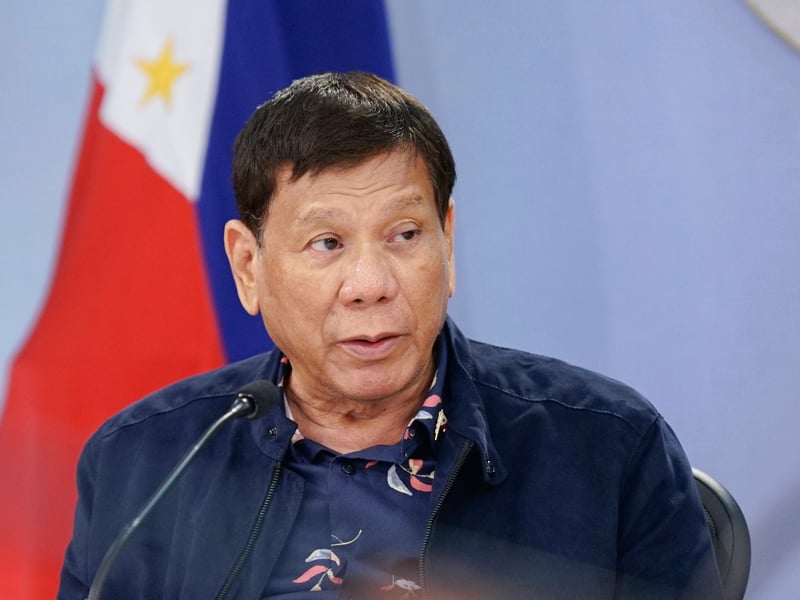
THE HAGUE, Netherlands (CN) — Former Philippine President Rodrigo Duterte won a temporary reprieve at the International Criminal Court, where judges postponed a key hearing on Monday after his lawyers argued he is unfit to stand trial, a move that divided the bench and drew a dissenting opinion.
Duterte, who led the Philippines from 2016 to 2022, was brought to The Hague in March after judges issued a warrant for his arrest. Prosecutors say he must face charges over a violent anti-drug campaign, accusing him of directing thousands of killings, jailing people without due process and unleashing other abuses by security forces.
After his first appearance in March, judges set a confirmation of charges hearing for Sept. 23. It’s not a trial yet — this stage is a filter to see if the case is strong enough to move forward. As explained by the Rome Statute, the treaty that created the ICC, the hearing tests whether prosecutors have shown “sufficient evidence to establish substantial grounds to believe that the person committed each of the crimes charged.” If the judges say yes, the case proceeds to a full trial.
By July, prosecutors had finished turning over evidence and filed a formal charging document along with a pretrial brief. But on Aug. 18, the defense dropped a last-minute request for an indefinite delay, arguing that Duterte “is not fit to stand trial.”
Prosecutors pushed back against an open-ended delay. They admitted that “a short adjournment may be necessary” but urged judges to keep it no longer than needed to decide on Duterte’s fitness. Representatives for victims also spoke out, warning that putting the case on hold would only weaken their fight for accountability.
On Monday, the majority of the ICC’s three-judge panel hit pause. Judges Iulia Motoc and Reine Alapini-Gansou ruled that the hearing should be postponed long enough to decide on Duterte’s fitness, clearing the September date from the calendar and putting all deadlines on hold until further notice.
The judges stressed that the delay was only temporary. “The abovementioned postponement will be limited to the time strictly necessary to determine whether Mr. Duterte is fit to follow and participate in the pretrial proceedings, including the confirmation of charges hearing,” they wrote. They added that because prosecutors have already shared their evidence and filed the paperwork, both sides should be ready to pick things up right away if Duterte is declared fit.
Judge María del Socorro Flores Liera took a different line, filing a dissent to say the case should have stayed on track. In her words, “the request should have been rejected and the pretrial proceedings continued, including the confirmation of charges hearing.”
Flores Liera drew a clear line between the court’s pretrial and trial phases, arguing that questions about a defendant’s health should only be decided once a case reaches the trial stage. In her view, pretrial hearings are simply about weighing the prosecution’s evidence, not about judging whether a suspect is medically fit to face proceedings.
She cautioned that putting the brakes now could slow the court’s work unnecessarily. “Considering the chamber’s duty to ensure the expeditiousness of the proceedings, the chamber should have proceeded with addressing the request by rejecting it,” she concluded.
The split shows the strain on the ICC as it tackles one of its most politically sensitive cases. The confirmation hearing is only a procedural step, but it decides whether the case moves on to a full trial. For victims, the delay means yet another setback in their long wait for justice. For Duterte, it buys valuable time while judges decide if he can take part.
For now, the case is on ice, with the next step depending entirely on how the judges rule on his ability to stand trial.
Courthouse News reporter Eunseo Hong is based in the Netherlands.
Subscribe to our free newsletters
Our weekly newsletter Closing Arguments offers the latest about ongoing trials, major litigation and rulings in courthouses around the U.S. and the world, while the monthly Under the Lights dishes the legal dirt from Hollywood, sports, Big Tech and the arts.