
 Search Articles


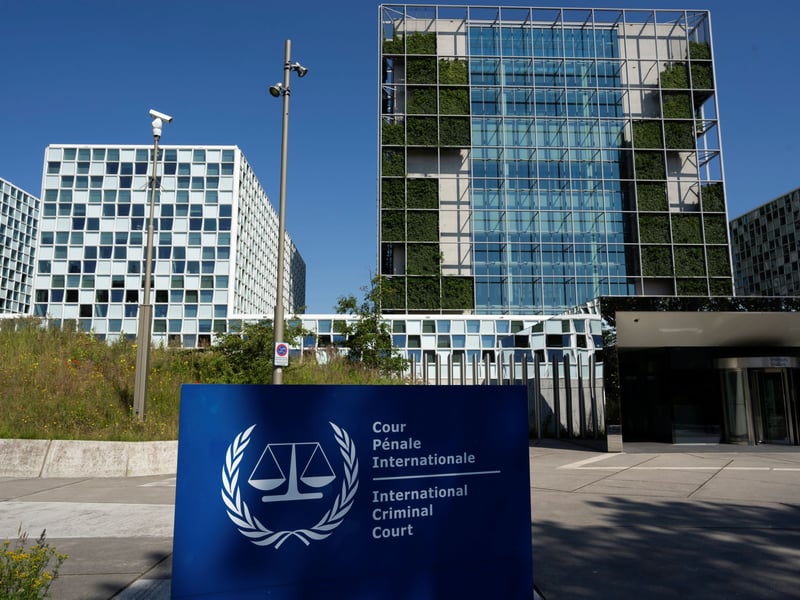
THE HAGUE, Netherlands (CN) — The oversight body for the International Criminal Court dealt the world’s only permanent court for atrocity crimes a budget substantially lower than requested, as the institution’s annual meeting drew to a close.
The Assembly of States Parties’ weeklong meeting ended Saturday with worries over security and future sanctions dominating the agenda.
Funding
After significant haggling during the week, states finally approved a 195 million euro ($206 million) budget on the last day of the meeting. It is a 4.5% increase over the previous year but far short of the 202 million euros ($213 million) the court had requested.
The cyber attack last year alone has cost the court 3.2 million euros ($3.3 million).
The court has investigations open across 12 countries but after December will have no trials in process, another fact that garnered criticism during the week.
“The situation is very grim,” says Milena Sterio, a professor of law at Cleveland State University, talking to Courthouse News on the sidelines of the event.
Threat of sanctions
The meeting opened on Monday with dire warnings about the challenges the court is facing.
“The court is being threatened with draconian economic sanctions from institutions of another permanent member of the Security Council as if it was a terrorist organization,” court President Tomoko Akane said in her opening address.
The Japanese judge was referring to the threat of economic sanctions by the United States.
The U.S. has often been hostile to the court. The country signed the Rome Statute, which created the court in 2002, but never ratified the treaty and later withdrew its signature. In 2020, the Trump administration placed sanctions on the previous chief prosecutor, Fatou Bensouda, over the global judicial body investigating American military actions in Afghanistan.
“Sanctions are meant to coerce the court into not doing its job,” Alonso Gurmendi Dunkelberg, who focuses on international relations at University of Oxford, told Courthouse News Service.
U.S. politicians and others were highly critical after the court issued arrest warrants last month for Israeli Prime Minister Benjamin Netanyahu, his former Minister of Defense Yoav Gallant and a senior Hamas official for war crimes and crimes against humanity.
The Biden administration blasted the decision, calling the arrest warrants “outrageous.”
“Let me be clear: Whatever this prosecutor might imply, there is no equivalence — none — between Israel and Hamas,” President Joe Biden said in a statement. “We will always stand with Israel against threats to its security.”
Republican politicians have gone further, with Senator Tom Cotton threatening military action and Senator Lindsey Graham calling the court a “dangerous joke” and urging Congress to sanction Khan.
“To any ally, Canada, Britain, Germany, France, if you try to help the ICC, we’re going to sanction you,” Graham said on Fox News.
Security concerns
In her opening address, Judge Akane also pointed to threats from Russia, which has issued arrest warrants for Khan and several judges over the court’s 2023 arrest warrant for Russian President Vladimir Putin.
Last week, the court announced that two of the judges on the panel that issued the warrant for Netanyhau and others had been subjected to arrest warrants in Russia.
Earlier this year, The Guardian reported that Yossi Cohen, the head of Israel’s foreign intelligence agency Mossad, had attempted to pressure Bensouda.
She opened the investigation into supposed war crimes committed in Palestinian territories in 2021 after judges ruled that the court has jurisdiction over the West Bank and the Gaza Strip, territories Israel occupied following the Six-Day War of 1967.
In 2023, the court was the subject of a serious cyber attack, leaving staff without internet and email. The year before, the Dutch security service — the Netherlands hosts the ICC — foiled a plot by a Russian military agent to infiltrate the court posing as a Brazilian intern.
 Follow @mollyquell
Subscribe to our free newsletters
Our weekly newsletter Closing Arguments offers the latest about ongoing trials, major litigation and rulings in courthouses around the U.S. and the world, while the monthly Under the Lights dishes the legal dirt from Hollywood, sports, Big Tech and the arts.