
 Search Articles


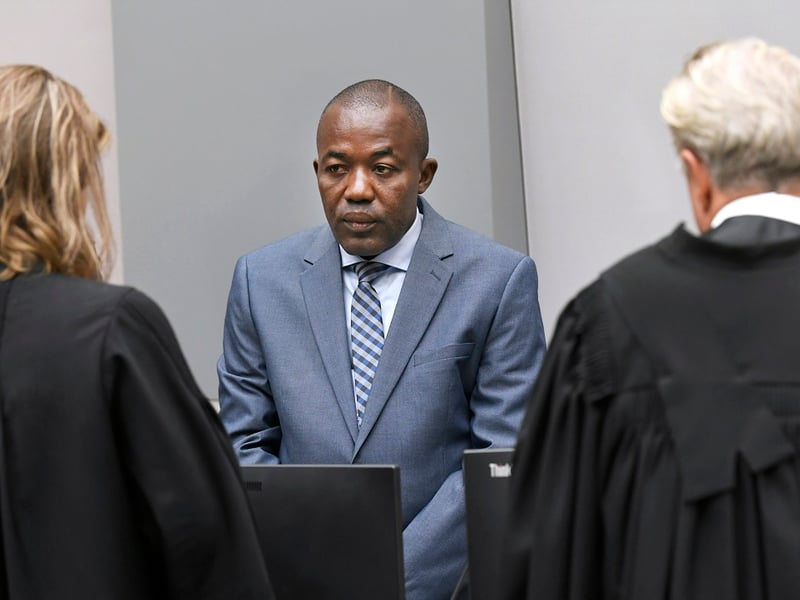
THE HAGUE, Netherlands (CN) — Two Central African warlords were found guilty Thursday of orchestrating a brutal campaign of violence that left thousands of Muslim civilians dead, tortured or forced from their homes, in one of the International Criminal Court’s most extensive war crimes cases.
Alfred Yekatom and Patrice-Edouard Ngaïssona, both senior figures in the anti-Balaka militia alliance, faced trial for some of the worst atrocities committed during the sectarian bloodshed that gripped the Central African Republic in 2013 and 2014.
The Hague judges sentenced them to 15 and 12 years in prison. This verdict followed years of proceedings that drew on nearly 20,000 exhibits and the testimony of 174 witnesses.
The court found Yekatom guilty of 21 charges, including murder, torture, persecution and attacks on places of worship. He was cleared of one charge — recruiting child soldiers — because the judges said there wasn’t enough reliable evidence. While some witnesses claimed children under 15 had joined his ranks, the court found their testimony lacked credibility.
Dmytro Suprun, one of the lawyers appointed by the court to represent former child soldiers in the trial, said the judges were not in full agreement on this point. “One of the three judges disagreed with the others, which shows that the panel was divided on whether Yekatom was responsible for using children in armed conflict,” he said.
He also pointed out that since victim lawyers cannot appeal this type of ruling, the trial’s outcome effectively closes the door to justice for former child soldiers.
“Without a conviction, they won’t be eligible for reparations, and their suffering will remain unaddressed. This makes their rehabilitation difficult, if not impossible, and leaves little hope for lasting peace at the individual, family or community level. Deprived of justice and formal recognition, these victims are now even more likely to be marginalized in their communities.”
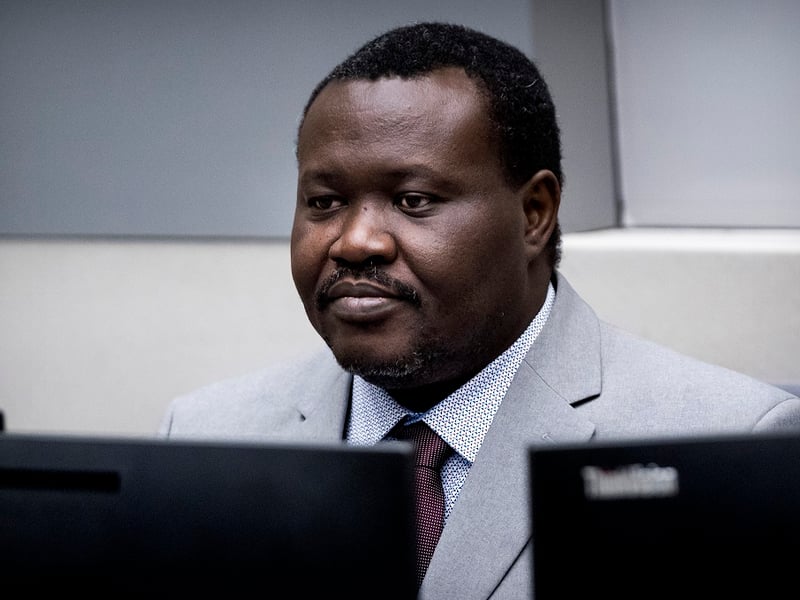
Ngaïssona was convicted on 27 counts. He didn’t take part in the violence directly, but the judges said he helped coordinate it from abroad and funded the fighters, knowing full well that civilians would be harmed.
Roots of the conflict
In early 2013, a coalition of mostly Muslim rebel groups known as the Seleka swept into the capital, Bangui, and forced President François Bozizé from power. Their takeover unleashed a wave of violence, much of it aimed at Christian communities. What began as a political rebellion quickly deepened long-standing religious and ethnic tensions, setting the stage for the bloody conflict that followed.
The backlash wasn’t far behind. In the wake of the Seleka’s rise, local armed groups began to emerge in Christian communities across the country. These fighters came to be known as the anti-Balaka — a name commonly interpreted as “anti-machete” in Sango, a reference to the Seleka’s frequent use of machetes in attacks.
At first, the anti-Balaka were loosely organized and framed themselves as self-defense groups. But over time, they evolved into a more structured and violent movement. According to the court, both Yekatom and Ngaïssona were key players in that shift.
Ngaïssona, a businessman with political ties to the ousted president, helped coordinate and fund the militias. Yekatom, a former soldier nicknamed “Rambo,” led fighters who launched attacks across western regions of the country.
A calculated campaign of terror
One of the brutal episodes unfolded on Dec. 5, 2013, when anti-Balaka fighters launched a coordinated assault on Bangui, hoping to take back power from the Seleka. Thousands of fighters had gathered on the outskirts in the days leading up to the offensive. Then, just before dawn, they moved in.
Yekatom’s group had been assigned to attack the Boeing neighborhood. According to the judgment, he fired his pistol into the air to begin the assault. His fighters stormed the local market, targeting Muslim vendors. Three people were killed in the attack: Hassan Mahamat and two others whose names were not identified.
The same morning, they turned their attention to a nearby mosque. “It’s very sad to see the house of God destroyed,” one witness told the court. “If someone goes to a religious place, a church or a mosque, in principle, the action should stop.”
The violence didn’t stop in the capital. That same day, anti-Balaka fighters attacked the town of Bossangoa, about 300 kilometers to the north. At least 18 Muslims were killed, and thousands more were forced into a local school. They were held there for weeks in severely overcrowded and degrading conditions. The court found that Ngaïssona helped coordinate the wider campaign and provided financial support to fighters involved.
In Yambara, near Bangui, Yekatom’s men detained a man named Saint Cyr, accusing him of links to the Seleka. Though Yekatom wasn’t present during the torture, he was later told that one of his fighters had cut off Cyr’s fingers, toes and an ear.
According to the court, Yekatom said the fighter had done a “good job” and rewarded him with a position on his security team. Yekatom later described the killing as “they peeled the papaya.”
Yekatom’s group also forcibly removed Muslim civilians from towns and villages south of Bangui, pushing through areas like Sekia, Bimon and Mbaïki. By January 2014, the influx of displaced people in Mbaïki had overwhelmed the town.
“Muslims in Mbaïki at the time were living in difficulty, under conditions of overcrowding, hunger and fear of death from the Anti-Balaka,” the court said.
Eventually, more than 3,000 Muslims were forced out of the region. One of the few who stayed behind, Mbaïki’s second deputy mayor, Djido Saleh, was killed in February 2014. Fighters from Yekatom’s group chased him from his home, then beat and mutilated him.
“Honorine Gbafalo cut off Djido Saleh’s genitals. Other individuals beat him and cut parts of his body, including one of his ears and his neck, partly severing his head,” according to the judgment.
Following the killing, international forces ordered Yekatom’s group to leave the town.
Elisabeth Rabesandratana, one of the lawyers representing victims of crimes other than child soldier recruitment, shared how her clients reacted to the ruling.
“At this stage, the victims are satisfied that the trial has run its full course and that they have been able to present their suffering and the facts they endured, including women and children being forcibly displaced, men tortured and executed in large numbers, and homes, belongings and mosques destroyed. They forget nothing and carry this tragic memory,” she said.
“They now hope that this verdict will recognize their status as victims in proportion to the suffering they endured and that the ICC will do everything in its power to help them turn the page on this painful past with responsibility, dignity and respect.”
The ruling isn’t final. Both men still have the right to appeal. If they do, the case will go to the ICC’s Appeals Chamber, which will review both the verdict and the sentences. They have 30 days from the judgment to file an appeal.
Subscribe to our free newsletters
Our weekly newsletter Closing Arguments offers the latest about ongoing trials, major litigation and rulings in courthouses around the U.S. and the world, while the monthly Under the Lights dishes the legal dirt from Hollywood, sports, Big Tech and the arts.