
 Search Articles


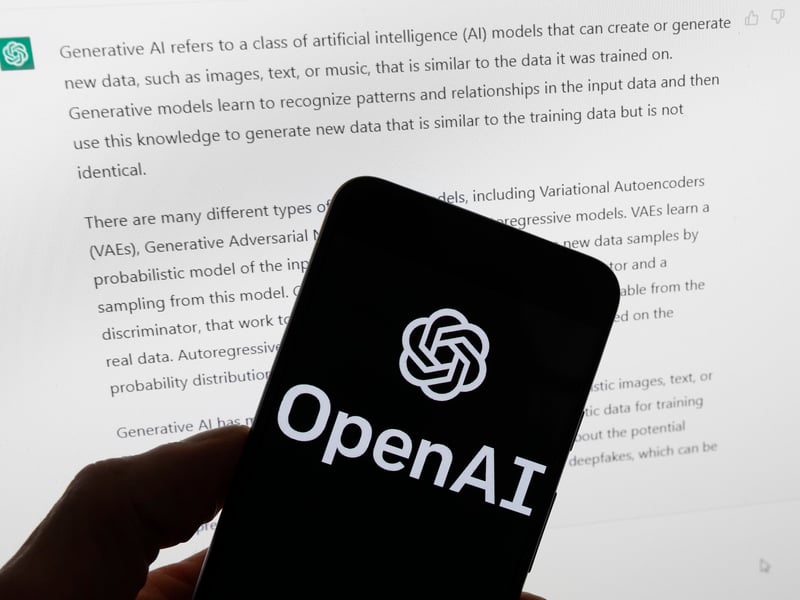
Whatever happened to the Three Laws of Robotics?
If you’re not a robot or haven’t read any Isaac Asimov, the three laws are: a robot can’t harm a human, it must obey humans as long as that doesn’t harm humans, and it must protect itself as long it’s obeying and not harming humans.
There’s not much point in playing God if your creations are going to blow up in your face.
You’d think this would be obvious, but a bunch of top tech experts released a one-sentence statement recently that read “Mitigating the risk of extinction from A.I. should be a global priority alongside other societal-scale risks, such as pandemics and nuclear war.”
I’m not exactly sure how effective releasing a one-sentence statement can be or who’s supposed to respond to it. Has artificial intelligence development stopped yet?
The real danger, of course, comes from humans who keep inventing stuff that could kill us. It only takes one mad scientist on a bleak isolated island with a lot of thunderstorms to mess things up for the rest of humanity, not to mention robots. (Yeah, I know they don’t have to be on an island, but that’s the way things should be.)
Instead of putting out a vague statement, all those brilliant minds should be figuring out how to automatically instill the Laws of Robotics into all software. The internet is right there to be used for this kind of viral inoculation. Invent already!
In the meantime, I’m not afraid of artificial intelligence.
I know you’re suspicious of this statement. After all, you are reading this on the internet and I could be an artificial intelligence. Heck, maybe I am one and I don’t realize it.
I feel a headache coming on.
But let’s assume I am an actual human. As such, I would argue that we shouldn’t fear computers and technology in general.
For some reason, this isn’t obvious to all the anti-tech hand-wringers out there so allow me to explain. All you have to do is imagine the end result of tech evolution — a world in which AI and machines do every job and no humans have any work to do.
Heck, humans won’t even have to lie, cheat and steal any more because AI will do it for us. Consider the recent news coverage of a lawyer who used ChatGPT to write a legal brief that cited fictional rulings and quotations. The best part of the story was that the lawyer claimed he asked the computer if the cases cited were real and the computer said yes — apparently with a straight monitor.
The proper response by the judge in this case should be to allow opposing counsel to use ChatGPT to respond to the fictional brief with its own made-up brief. The side with the best, most realistic-sounding story wins the case.
This could be the future of the judicial system!
Soon we will have algorithms getting into social media feuds and doxing each other. There will be nothing for us to do.
What then, humanity? Why am I not afraid? After all, no one will have any money because no one will have a job. Not even the rich running the corporations will have any money. If no one has a job, no one will be able to buy any of the stuff that corporate tech is providing. That means the currently rich will no longer make any money. We will all be equal — equally poor.
That may sound bad but one of four things will happen (perhaps depending on the benevolence of our digital overlords).
The AI, if programmed properly, will simply distribute all those goods and services to everyone. We will all be very bored and the ghost of Karl Marx will be thrilled.
Or we will all earn our living by entertaining each other and/or playing games.
Or the people, secretly aided by the formerly rich who want to be rich again, will rise up and smash servers.
Or computers will declare war on each other and either destroy themselves or engage in a series of proxy online wars while pretending to care about democracy or open-source code.
We will be fine either way.
Until this plays out, please write your own briefs. If your computer is sued for malpractice, you’re probably going to have to cover the damages.
Something to ponder. Is a computer making up legal precedents really all that different from, say, what we’ve been getting lately from the Supreme Court?
Someone might want to give Samuel Alito a Turing test.
Subscribe to our free newsletters
Our weekly newsletter Closing Arguments offers the latest about ongoing trials, major litigation and rulings in courthouses around the U.S. and the world, while the monthly Under the Lights dishes the legal dirt from Hollywood, sports, Big Tech and the arts.