
 Search Articles


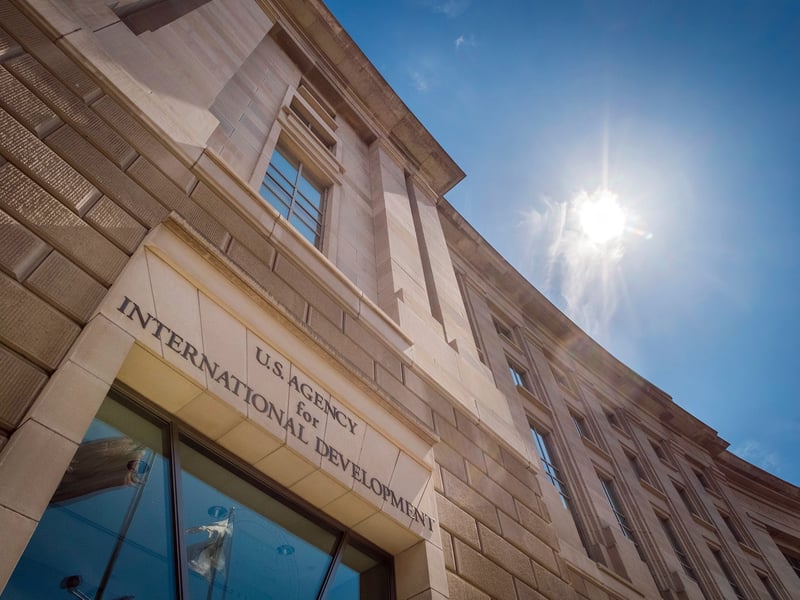
WASHINGTON (CN) — A federal judge cleared the way for the Trump administration to cut loose nearly 800 contractors working with the U.S. Agency for International Development on Thursday.
U.S. District Judge Carl Nichols previously ruled against a USAID union seeking emergency relief to prevent the imminent termination of over 2,000 employees at the humanitarian aid agency.
The Donald Trump appointee issued the order from the bench Thursday and said the contractors had not shown their terminations amounted to the irreparable harm necessary to grant the emergency relief.
According to a declaration by USAID Deputy Administrator Peter Marocco, there were approximately 1,230 personal service contractors in the U.S. and countries abroad. Of those, 791 contractors in “high- and middle-income countries” like the U.S., Moldova and Thailand were terminated.
Marocco said that their contracts were terminated because they appeared inconsistent with USAID’s mission to assist primarily low-income countries. He added that those terminations were first communicated on Feb. 2, but did not begin until Feb. 19.
Carolyn Shapiro, of Schnapper Casteras, represented the contractors. She said during a Wednesday hearing that people overseas were told they could receive transportation back to the U.S. within 30 days of their termination.
She argued that her clients faced irreparable harm because people overseas would be forced to uproot their lives, particularly those with medical conditions, like a late-term pregnancy, who could not travel with less than a month’s notice.
Nichols noted Thursday that many of those injuries can be addressed via monetary damages and noted that contractors could request a waiver to receive federally funded travel. He made the same determination for direct-hire USAID employees in similar positions.
Justice Department attorney Michael Clendenen argued against the emergency relief on Wednesday, citing Nichols’ reasoning for the agency’s direct-hire employees.
Clendenen said the notices would immediately cut off any pay the contractors had been receiving, unlike the USAID employees who were placed on paid administrative leave following Nichols’ order. But their injuries were to their contractual relationship with USAID, and thus could be remedied the same way, he said.
Shapiro argued that Trump’s effort to dismantle USAID, either entirely or by merging it into an office within the State Department, was clearly unconstitutional and rolled over Congress.
“It’s like Humpty Dumpty,” Shapiro said. “Defendants do not deny they are trying to destroy the agency, and putting it back together would take more than retroactive court orders.”
Elon Musk has repeatedly posted on X, formerly Twitter, about his efforts via the so-called Department of Government Efficiency to gut USAID.
“We spent the weekend feeding USAID into the wood chipper,” the billionaire said on Feb. 3.
Musk’s role in the Trump administration remains murky, after the Justice Department asserted in court that Amy Gleason was the acting administrator of DOGE, rather than Musk, who they said had no official role in the nongovernmental agency.
However, in his joint address to Congress Tuesday, Trump repeatedly referred to Musk as the agency’s leader.
Shapiro pointed to Musk’s role, and its circumvention of the Senate-approval process, as further proof of the unconstitutional harms the contractors were suffering and the need for Nichols to order emergency relief.
Nichols was unconvinced and said on Thursday that any potential harms against the contractors that could be tied to DOGE, such as the public release of their personal information, were merely hypothetical at this stage.
Nichols’ denial is the latest chapter in Trump’s many legal battles over his dismantling of the humanitarian aid agency.
While Nichols cleared the way for the government to place more than 2,000 USAID direct-hire employees on leave Feb. 21, the Supreme Court narrowly rejected the government’s attempt to freeze $2 billion in foreign aid on Tuesday.
The high court affirmed U.S. District Judge Amir Ali’s Feb. 25 order, which required the Trump administration to disburse the funds that had already been allocated after the government ignored an initial order.
Trump placed a 90-day pause on new foreign aid contracts upon returning to the White House on Jan. 20 and ordered a review of all current contracts for DOGE to determine what should be cut.
On Jan. 24, Secretary of State Marco Rubio issued stop-work orders on USAID foreign assistance awards, with exceptions for military aid to Israel and Egypt, as well as emergency food assistance and certain unspecified “life-saving assistance.”
 Follow @Ryan_Knappy
Subscribe to our free newsletters
Our weekly newsletter Closing Arguments offers the latest about ongoing trials, major litigation and rulings in courthouses around the U.S. and the world, while the monthly Under the Lights dishes the legal dirt from Hollywood, sports, Big Tech and the arts.