
 Search Articles


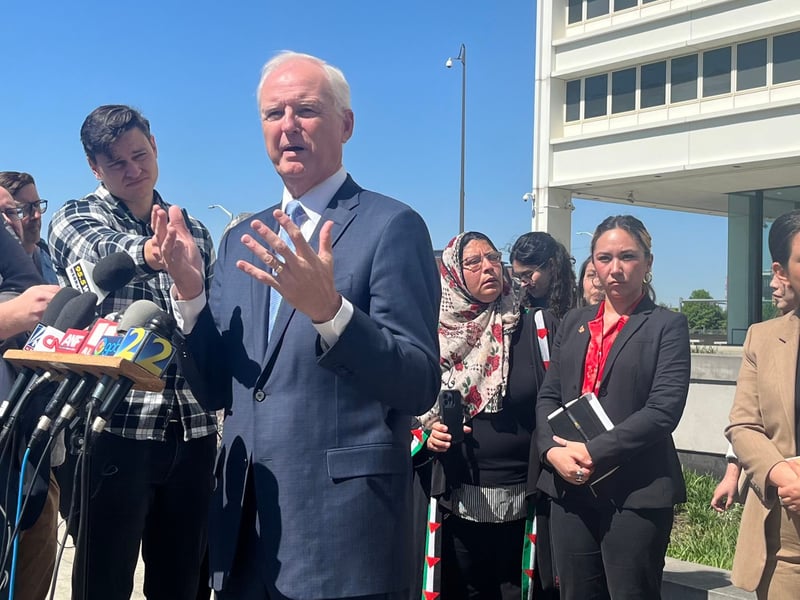
ATLANTA (CN) — Hundreds of international college students asked a federal judge Thursday to reinstate their legal status and allow them to resume their work and studies after the government abruptly terminated their immigration records.
“My inclination is to grant some relief,” U.S. District Judge Victoria Calvert, a Joe Biden appointee, said.
In the suit, 133 students from universities across the country said U.S. Immigration and Customs Enforcement illegally terminated their records from SEVIS, a government database that tracks international students’ compliance with their F-1 student visa status.
This termination of a SEVIS record effectively ends F-1 student status. If their request for a temporary restraining order is not granted, the students argue they will be at risk of detainment and deportation without their academic standing and employment.
Calvert said she is taking the case under advisement and will issue a ruling within the coming weeks after the government files its response.
“Whatever I do will be considered by other judges. I want to make sure my analysis is correct,” she said.
Attorney Charles Kuck told the judge that the students face irreparable harm as many are about to graduate next month, are currently employed or have accepted job offers for after graduation.
He added that they have paid thousands of dollars to American universities. International students are ineligible for federal financial aid, and their ability to pay tuition often factors into whether they will be admitted into schools.
One of the notices told a student to leave in 15 days, which is not the law, Kuck told the judge. He argued that the government’s actions appear to be designed to coerce students into abandoning their studies and “self-deporting” despite not violating their status.
“I think the hope is they’ll just leave, but the reality is these kids are invested here,” Kuck said.
All of the students in the complaint were in full compliance with the terms of their visa status, Kuck said, which allows a student to remain in the U.S. as long as they maintain a full course of study, avoid unemployment and are not convicted of a crime of violence with a potential sentence of more than a year.
None of the students were given proper notice or an explanation of why their records were terminated or visas were revoked, Kuck argued, in violation of their due process rights.
They received notice from either a school official or an email from a consulate with the reason given for the termination being that they failed to maintain status or were identified in a criminal records check.
However, Kuck said their only criminal history persists of minor misdemeanor offenses, many of which were traffic citations that were already paid for or dropped.
One student received a DUI charge that was reduced to reckless driving, while some had speeding tickets or had been charged for driving with a suspended or expired license. Another was arrested as a minor for a juvenile charge in 2007, but the case was dismissed and previously disclosed to the consular officer during his interview to receive his student visa.
Many of the students’ charges were ultimately dismissed or amended, according to the suit.
Kuck said he believes the terminations were conducted through an artificial intelligence program scanning databases without any individual review.
David Powell from the U.S. Attorney’s Office told the judge that these students should seek reinstatement of their status by submitting an application with a school official and repaying a SEVIS registration fee.
He also argued that the Northern District Court of Georgia may not be the proper venue to address the claims because only 26 of the students attend a college in Georgia. The judge pressed Powell on how the government would be harmed if she granted temporary relief until a full injunction hearing on the merits can be held.
“I’m not really convinced I’m hurting the government’s immigration agenda,” Calvert told him.
Some of the plaintiffs have already graduated, but have remained in the country on “optional practical training,” a one-year period — or up to three for science and technology graduates — that allows employment in the U.S. after completing an academic degree. During that time, graduates work in their field and wait to receive their H-1B or other employment visas if they wish to continue working in the country.
Around 242,000 foreigners in the U.S. are employed through this “optional practical training.” About 500,000 are pursuing graduate degrees, and another 342,000 are undergraduate students.
The suit comes amid a wave of foreign students studying in the U.S. discovering their legal status had been suddenly terminated with little notice and without committing a deportable offense.
As of Thursday, over 210 colleges and universities have identified 1,400-plus international students and recent graduates who have had their legal status changed by the State Department, according to an Inside Higher Ed analysis.
“There is no doubt that what happened here today is a microcosm of a greater movement within the immigration service nationally,” Kuck told reporters after the hearing. “There is no doubt that this administration wants foreign students outside the United States, especially from countries it deems undesirable. Never before has an action like this taken place. And as a result, we see terror in these students. This is designed to scare people into leaving.”
About 1.1 million international students were in the country last year — a source of essential revenue for tuition-driven colleges.
Last month, Secretary of State Marco Rubio said the State Department was revoking visas held by visitors who were acting counter to national interests, including some who protested Israel’s war in Gaza and those who face criminal charges.
President Donald Trump has also frozen billions of dollars in federal funding at his own alma mater, the University of Pennsylvania, along with Columbia, Harvard and other institutions.
“All of us need to look at what’s going on,” Cory Isaacson from the American Civil Liberties Union said after Thursday’s hearing.
“The disregard for the Constitution and fundamental rights will extend to all of us on American soil.”
Several federal judges in other states have already issued temporary restraining orders or injunctions to block the government from terminating the visas of international students.
 Follow @Megwiththenews
Subscribe to our free newsletters
Our weekly newsletter Closing Arguments offers the latest about ongoing trials, major litigation and rulings in courthouses around the U.S. and the world, while the monthly Under the Lights dishes the legal dirt from Hollywood, sports, Big Tech and the arts.