
 Search Articles


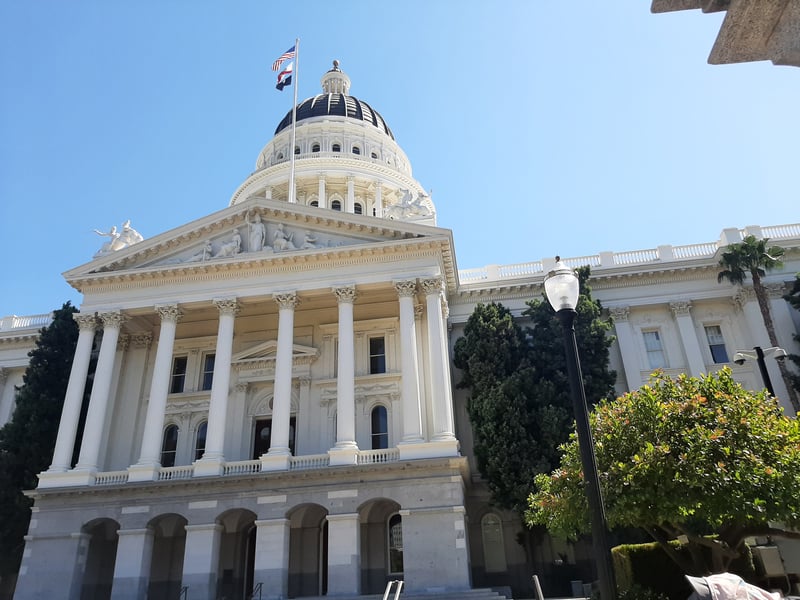
SACRAMENTO, Calif. (CN) — Thursday was do-or-die for hundreds of bills in the California Legislature, with many high-profile pieces of legislation passing the key hurdle.
Bills with a fiscal impact had to pass their respective chamber’s appropriations committee on Thursday. Hundreds had gathered on the suspense file, a sort of holding pen where affected bills were placed in anticipation of Thursday’s hearings.
Testimony already was heard on these bills, meaning there was no discussion Thursday. The chair of each committee moved quickly through their bills. Those that didn’t pass didn’t get a vote. Instead, they were noted as held in committee.
The next step for a vast majority of the bills that passed is the floor of their respective chamber. This year’s session must end no later than Aug. 31.
Two high-profile bills written by state Senator Shannon Grove, a Bakersfield Republican, passed Thursday’s vote in the Assembly Appropriations Committee.
Senate Bill 1043, the Accountability in Children’s Treatment Act, would make the Department of Social Services keep a public database on the use of behavioral restraints and seclusion in short-term residential therapeutic programs.
Media personality and hotel heiress Paris Hilton testified in committee about the bill.
“Thank you to Senator @BuffyWicks and the entire California Appropriations Committee for passing SB 1043 today,” Hilton posted on X, referring to Assemblymember and Appropriations chair Buffy Wicks. “I am endlessly grateful for your commitment on this important issue.”
Grove praised Hilton in a statement.
“I am proud to stand alongside Paris Hilton, a survivor of the troubled teen industry, to advocate for and support children in treatment facilities throughout our state,” the senator said.
Grove’s second bill, Senate Bill 1414, increases penalties for solicitation of a minor. However, it was amended earlier in the legislative process, which Grove lamented.
In its current form, the bill only applies to someone at least 18 years old when the offense occurs, and the person solicited was under 16, or if they were under 18 and were a human trafficking victim.
“Thankfully, once signed, predators who purchase any child ages 15 and below for sex would be charged with a felony,” Grove posted on X. “The original version of my bill included protections for children of all ages.”
Senate Bill 1287 — written by state Senator Steven Glazer, a Contra Costa Democrat — is another bill that’s drawn controversy. It would impose requirements on California State University trustees and the California Community Colleges’ Board of Governors. A request would be made of the UC regents. They would have to adopt and enforce policies prohibiting violence, harassment, intimidation and discrimination. Policies also would prohibit calls for genocide.
Rules would provide time, place and manner restrictions for protests, and students would receive training on how to debate ideas with civility and respect.
Pro-Palestinian protesters have interrupted Assembly proceedings at least twice this session.
The Fund for Reparations and Reparative Justice — Senate Bill 1331, written by state Senator Steven Bradford, a Gardena Democrat — now moves to the Assembly floor. The legislation would make a fund to address harms the state caused descendants of African American enslaved people or descendants of free Black people living in America before the 20th century. Money would come from federal, state or local grants, or private donations.
A bill regulating self-driving vehicles got another chance in its Thursday passage. Assembly Bill 2286 — written by Winters Democratic Assemblymember Cecilia Aguiar-Curry — is similar to one vetoed last year. It would require a driver behind the wheel of an autonomous vehicle over 10,000 pounds when on public roads.
Legislation that would put guardrails on the development of large artificial intelligence models — Senate Bill 1047, written by Bay Area Democratic state Senator Scott Wiener — also passed. An AI expert said Wednesday that he fears a lack of guardrails on the technology could potentially lead to another pandemic, as AI could help someone create a virus.
A bill that would change the state’s current plastic-bag ban also passed out of committee. Assembly Bill 2236 — written by Assemblymember Rebecca Bauer-Kahan, an Orinda Democrat — is identical to Senate Bill 1053, written by state Senator Catherine Blakespear, an Encinitas Democrat.
The Senate bill previously passed out of the Assembly Appropriations Committee and currently is awaiting a vote on the Assembly floor.
Both bills would remove an exemption for thicker plastic-film bags that currently exists. There would be new rules for reusable bags sold at stores, and stores couldn’t sell reusable bags unless they met new standards.
Two closely watched bills were sent from appropriations to the Rules Committee.
Senate Bill 1446 — written by state Senator Lola Smallwood-Cuevas, a Los Angeles Democrat — must appear in the Assembly’s Rules Committee before it reaches the Assembly floor. The bill would require state grocery stores to have an employee present for every two self-checkout machines. Also, customers would be limited to 15 items at those machines.
Assembly Bill 886 — called the California Journalism Preservation Act, written by Assemblymember Wicks, an Oakland Democrat, was sent to the Senate Rules Committee. It would provide funding to digital news providers, which would come from large online platforms with annual net sales or market capitalization of $550 billion or over a billion active monthly users worldwide.
Other bills passed include Senate Bill 954, written by state Senator Caroline Menjivar, a San Fernando Valley Democrat. It would require free condoms be made available to high school students at public schools.
Assembly Bill 1866 — written by Assemblymember Gregg Hart, a Santa Barbara Democrat — would require the cleanup of idle wells. Assembly Bill 3233 — penned by Assemblymember Dawn Addis, a Morro Bay Democrat — would reinforce local governments’ authority over oil and gas production.
Several bills didn’t make the cut.
One of them, Assembly Bill 3047 — written by Assemblymember Kevin McCarty, a Sacramento Democrat — would have required the state surgeon general to create a commission and investigate brain injuries connected to youth tackle football. Recommendations would have come later, and included a minimum appropriate age for the game.
A bill of McCarty’s that would have banned children under 12 from playing youth tackle football died early this year.
Assembly Bill 270 — written by Assemblymember Alex Lee, a San Jose Democrat, would have allowed candidates for elected office to use public funds for campaigning, if certain requirements were met.
A law passed in 2016 already allows candidates for office to accept public dollars when running. However, a state or local government must first dedicate a fund for it. Also, the courts have ruled that the question of candidates using those funds must go to the voters.
Lee’s bill would have put the issue on the November 2026 ballot.
Subscribe to our free newsletters
Our weekly newsletter Closing Arguments offers the latest about ongoing trials, major litigation and rulings in courthouses around the U.S. and the world, while the monthly Under the Lights dishes the legal dirt from Hollywood, sports, Big Tech and the arts.