
 Search Articles


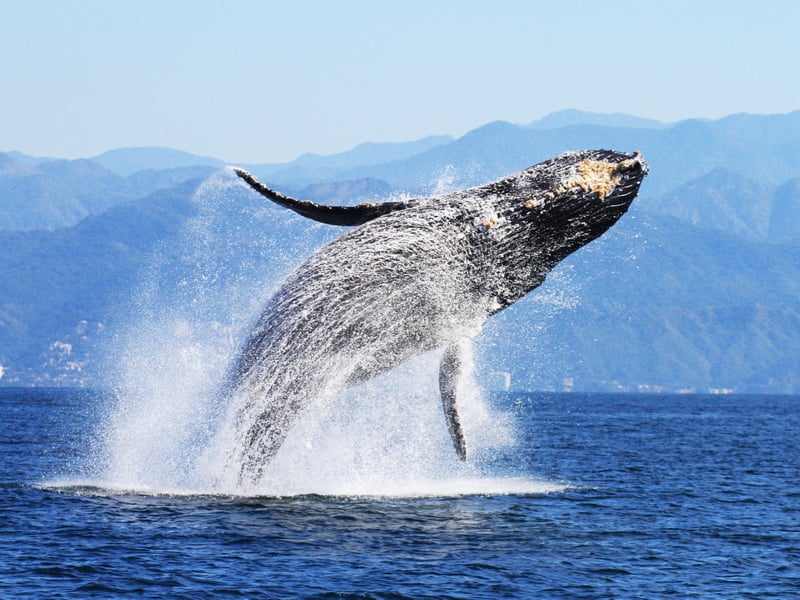
(CN) — The North Pacific humpback whale, once on the brink of extinction due to hunting, is now facing another threat to its survival, according to a recent study that chronicled an alarming climate change trend.
The study, published in the Royal Society of Open Science, showed the population of North Pacific humpbacks declined by 7,000 — about 20% — between 2012 and 2021.
Scientists say the catalyst is the increased frequency and intensity of marine heat waves.
“Humpback whales are a strong indicator of ocean health,” said Ted Cheeseman, the primary author of the study.
In 2015, Cheeseman co-founded Happywhale, a photo database that uses artificial intelligence to identify hundreds of thousands of whale photos submitted by scientists, whale watching tour guides and tourists. As images of humpbacks poured in from around the world, it was apparent that the massive mammals had made a major comeback since government regulations ended commercial whaling in the 1970s.
But as Cheeseman and over 70 co-authors looked further into the data, they found that more recent declines in numbers coincided with significant changes in ocean temperatures.
“We knew the marine heat wave had an impact, and we knew it was pretty substantial,” Cheeseman said.
However, his first reaction was disbelief upon seeing the staggering numbers of missing whales. He added, “And, you know, I’m very accustomed to environmental bad news, right?”
As he gained collaborators and dug into the data, the numbers held.
Marine heat waves are incidents of extreme ocean temperatures. They are generally defined as an anomaly of two degrees Fahrenheit or more, according to the Scripps Institution of Oceanography.
While marine heat waves have occurred historically, today they occur much more often and much more dramatically, said Mikaela Alksne, a doctoral student at Scripps. And with last summer being the Northern Hemisphere’s hottest in 2,000 years, the trend is likely to continue, if not worsen.
“This is our new normal, which is scary,” Alksne said. “Since the turn of the century there have been multiple marine heat waves of high intensity that we’ve never really seen before.”
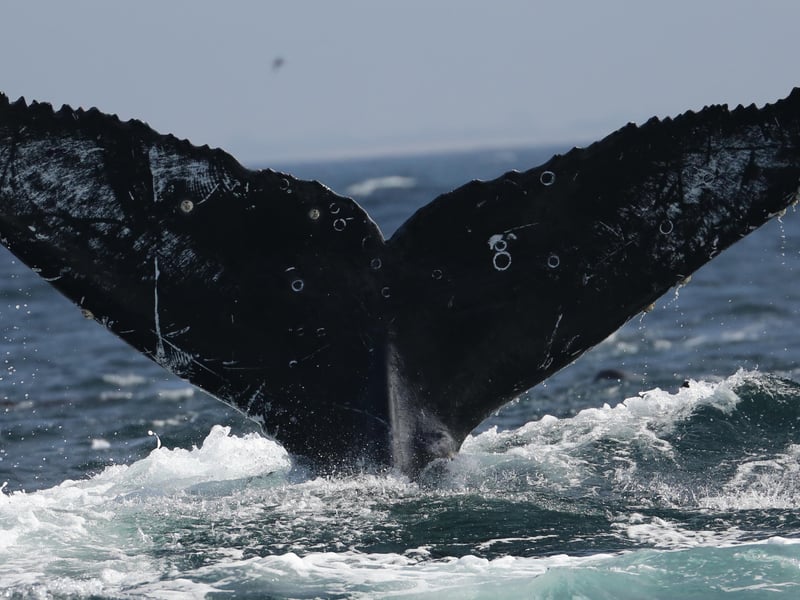
Humpback whales, which can grow to be over 50 feet long and weigh 44 tons, migrate in predictable patterns. Happywhale uses AI to identify these giants of the sea by their tail markings and shape. With thousands of photos, Happywhale has been able to consistently track the whales as they travel.
But in many cases, Cheeseman noted, whales the team was following just vanished.
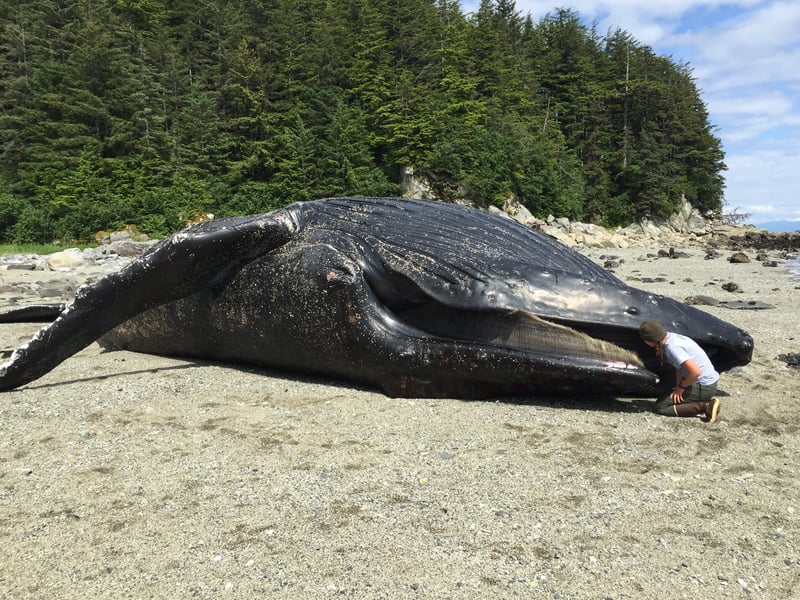
“There’s no whale Atlantis out there that they all just disappeared to,” he said. Rather, they likely starved — a theory corroborated by multiple emaciated whale corpses that have washed to shore.
While researchers have discussed the toll of climate change for decades, most of the severe ocean change has been alarmingly recent. Globally, the biggest marine heat wave ever recorded was between 2014 and 2016.
“Unfortunately, that’s probably a distinction that won’t last our lifetimes,” Cheeseman said. “It’ll happen again.”
The marine heat waves, which affected much of the Pacific, caused the ecosystem to shift and prompted prey to move elsewhere, Alksne said, which poses a challenge for predators.
“All of them are just going to have a harder time finding good food,” she said.
When prey move, predators are forced to adapt, which is already causing unusual events. Last month, whale watchers in central California witnessed a rare sight when they spotted orcas killing a minke whale in the Monterey Bay. Meanwhile, south of Monterey, in Morro Bay, whale watchers have seen orcas hunt gray whales not far from the iconic Morro Rock on two occasions since 2014.
Not only have orcas traveled farther north to cooler waters, but whales have come closer to shore to follow fish, drawing the orcas closer to land.
John Calambokidis, a senior research biologist and co-founder of Cascadia Research Collective, has studied whales for 45 years. While he witnessed the resurgence of humpbacks in the aftermath of whaling regulations, he also noticed the impact of the 2015 marine heatwave.
“We published a paper about how those warmer ocean conditions pushed those productive areas even tighter into shore, and they brought humpback whales much tighter into shore,” he told Courthouse News in October. “And it was part of the reason why we think there was such a spike in entanglements of humpback whales that occurred in that year.”
While humpbacks might follow prey closer to shore, they tend to not stray too far from their wider migratory pattern, Cheeseman said.
“Humpback whales are apparently unwilling to go outside of that known space, regardless of the scale of disturbance,” he said. “A whale whose home range is Southeast Alaska is not going to feed in the Aleutian Islands because of food there.”
California experienced its greatest marine heat wave in 2015. Two more followed, in 2018 and 2019. The climate-related data is also changing so rapidly, it’s difficult to monitor, Alksne said.
“All of our baselines are changing,” she said.
That makes research based on long-term averages less relevant, she added, “because those averages are changing so quickly, it’s likely we can’t even keep up.”
Happywhale’s data helps, she said, because it provides large amounts of data internationally.
“They were able to label all that data and then get to the science and the really long-term patterns,” she said.
Getting non-scientists excited about contributing will add to the data, she said. Meanwhile, the A.I. identification will likely expand, and the advent of other technologies, including drone capabilities, are likely to further advance research.
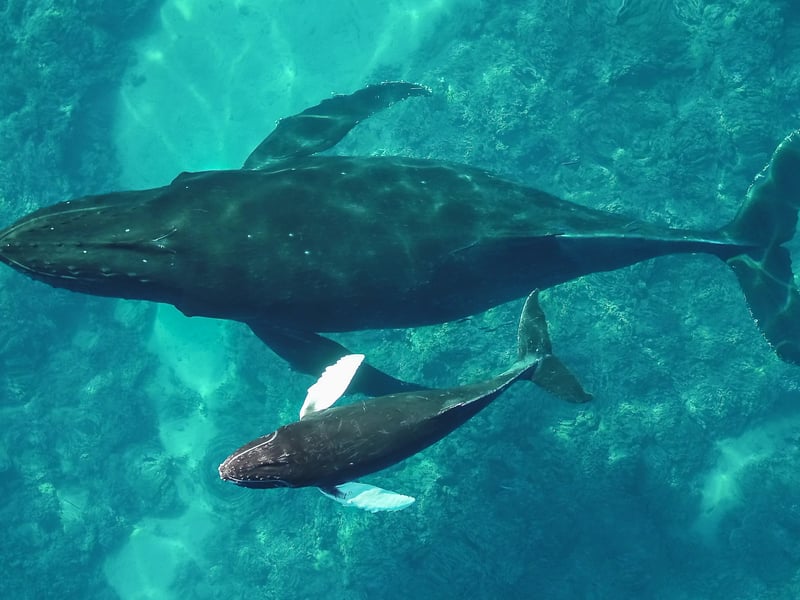
Now, Cheeseman said, the challenge is getting leaders to look at the research and take action to offset the impact of climate change: “We need to respond to this.”
Regulating whaling, shipping routes and fishing nets have had a clear positive impact on whale survival, but offsetting ocean warming is a much loftier task. It requires major changes, such as a substantial shift to alternate fuels and energy.
Otherwise, Alksne said, the new norm is likely to be grim.
“I’m not going to sugarcoat it,” Alksne said. “It is bad, and it’s scary, and a lot needs to be done if we’re going to conserve these mammals and have our children and grandchildren get to experience the California coast the same way we do.”
Subscribe to our free newsletters
Our weekly newsletter Closing Arguments offers the latest about ongoing trials, major litigation and rulings in courthouses around the U.S. and the world, while the monthly Under the Lights dishes the legal dirt from Hollywood, sports, Big Tech and the arts.