
 Search Articles


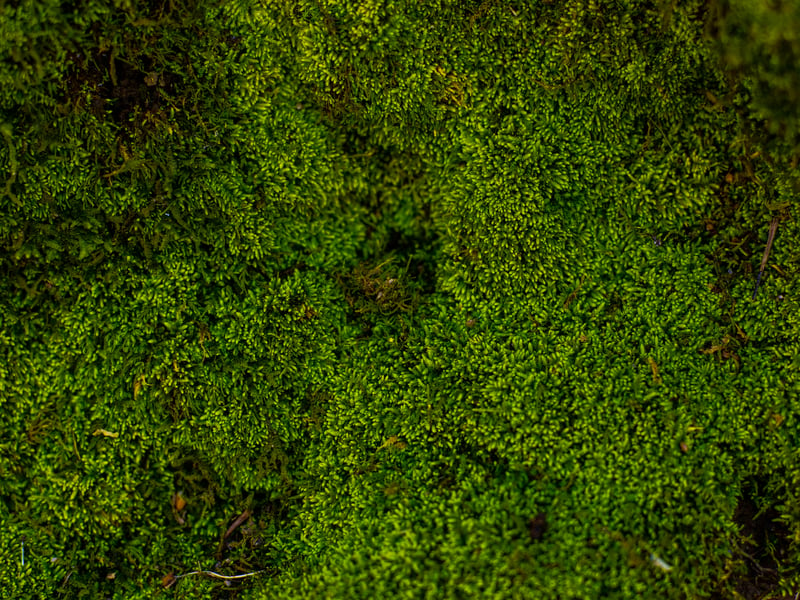
(CN) — Moss can survive some of Earth’s harshest environments. Now scientists say its spores also survived direct exposure to space on the exterior of the International Space Station.
In a study published Thursday in Cell Press journal iScience, researchers reported that moss sporophytes, the capsule-like structures that hold spores, endured 283 days outside the ISS and returned to Earth still able to germinate.
More than 80% of the spores survived.
“Most living organisms, including humans, cannot survive even briefly in the vacuum of space,” said lead author Tomomichi Fujita of Japan’s Hokkaido University, in a press release. “However, the moss spores retained their vitality after nine months of direct exposure. This provides striking evidence that the life that has evolved on Earth possesses, at the cellular level, intrinsic mechanisms to endure the conditions of space.”
Fujita said the idea for the experiment came from studying how moss evolved and adapted to life on land. Mosses are able to colonize extreme environments on Earth, and that led him to wonder how far that resilience could extend.
To find out, the team first exposed the moss Physcomitrium patens, or spreading earthmoss, to conditions that simulate space. That included strong UV radiation, extreme temperatures and vacuum conditions.
They tested three moss structures: juvenile moss called protonemata, brood cells that form under stress and sporophytes that contain the spores.
“We anticipated that the combined stresses of space, including vacuum, cosmic radiation, extreme temperature fluctuations and microgravity, would cause far greater damage than any single stress alone,” Fujita said.
The spores proved to be far more resilient than the other moss structures. None of the juvenile moss survived exposure to high UV levels or extreme temperatures.
Brood cells fared better but still suffered significant damage. Researchers said spores inside the sporophytes showed roughly 1,000 times more tolerance to UV radiation and also survived a week at minus 196 degrees Celsius as well as a month in 55 degree heat.
The researchers believe the thick outer structure of the spore serves as a protective barrier that absorbs radiation and shields the inner cell. They note that this adaptation likely helped mosses and other bryophytes transition from aquatic to terrestrial environments about 500 million years ago.
After the lab simulations, the team sent hundreds of sporophytes into space.
The spores launched aboard the Cygnus NG-17 spacecraft in March 2022 and were mounted on the exterior of the ISS for 283 days. Astronauts sent them back to Earth on a SpaceX mission in January 2023.
“We expected almost zero survival, but the result was the opposite: most of the spores survived,” Fujita said. “We were genuinely astonished by the extraordinary durability of these tiny plant cells.”
Back in the lab, most of the spores were alive, and almost all were able to germinate.
Tests showed normal chlorophyll levels except for a drop in chlorophyll a, which is sensitive to visible light, but the reduction did not appear to affect the spores’ health.
“This study demonstrates the astonishing resilience of life that originated on Earth,” Fujita said.
Using the before and after data, the team created a model to estimate how long spores might survive under similar conditions. They estimate the spores could last up to 5,600 days, or about 15 years, although they caution the number is only an early calculation.
Researchers hope their findings help guide future work on growing plants in extraterrestrial soils and exploring whether hardy organisms like moss could anchor simple ecosystems beyond Earth.
“Ultimately, we hope this work opens a new frontier toward constructing ecosystems in extraterrestrial environments such as the Moon and Mars,” Fujita said. “I hope that our moss research will serve as a starting point.”
Subscribe to our free newsletters
Our weekly newsletter Closing Arguments offers the latest about ongoing trials, major litigation and rulings in courthouses around the U.S. and the world, while the monthly Under the Lights dishes the legal dirt from Hollywood, sports, Big Tech and the arts.