
 Search Articles


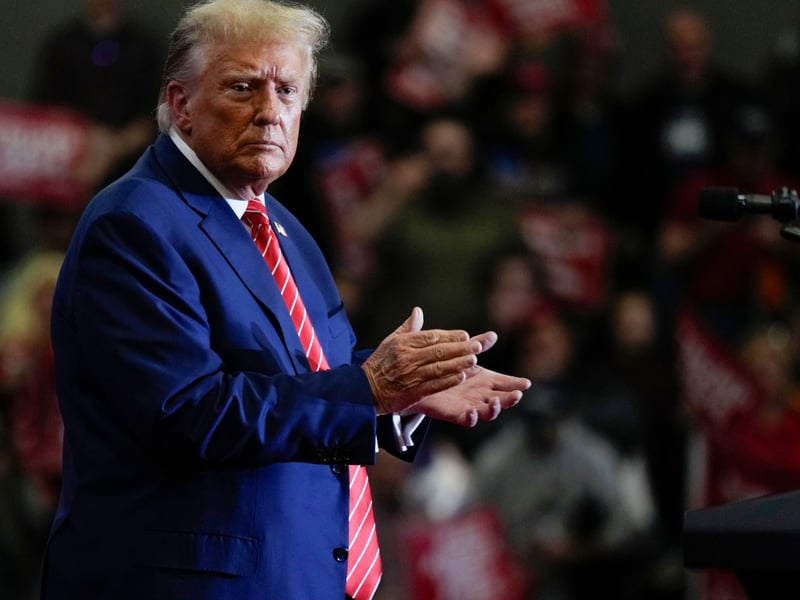
WASHINGTON (CN) — As President-elect Donald Trump prepares to take the oath of office for the second time on Jan. 20, questions have mounted about how the now two-term president will handle the levers of power in his new administration.
Trump has pledged to use executive action to enact a broad swath of policies, such as his planned “mass deportation” of immigrants and heavy tariffs on imports — and recent days, he has toyed with using economic or even military force to annex Canada and Greenland.
And legal experts worry that a second Trump administration could try to legitimize its actions, and consolidate power, through a federal judiciary typically regarded as a check on executive overreach.
“When I look at what Trump’s going to do with the judiciary, I think about it against the backdrop of someone who’s a would-be, aspiring dictator, who’s profoundly corrupt himself and sees government as a personal instrument which he seeks to corrupt,” said Chris Edelson, assistant professor of government at the American University School of Public Affairs.
When he returns to the White House, Trump and his team will once again oversee the nomination of judges for vacancies on federal district and appellate courts — as well as any that might open up on the Supreme Court. And the Republican Senate, tasked with confirming Trump nominees, appears unlikely to offer any serious opposition to the administration.
In fact, top Senate GOP lawmakers have said that approving Trump’s judicial picks is a top priority. Iowa Senator Chuck Grassley, who returned this month as chair of the powerful Senate Judiciary Committee, pledged in November that the panel would “hit the ground running” under his leadership.
As for the types of judicial nominees the second Trump administration may send to Grassley and the Judiciary Committee, experts say the president-elect’s first term provides some indication.
Edelson pointed out that many of the first Trump administration’s court appointees were white men who had been “vetted and recommended” by the conservative legal organization the Federalist Society.
“I suspect that a lot of that will be similar, especially for the lower courts,” he said. “We’ll see people come through who are Federalist Society picks and white men, for the most part.”
That dynamic produced some “wildly unqualified” nominees in Trump’s first administration, Edelson said, recalling candidates who appeared before the Senate Judiciary Committee that were inexperienced and unable to answer “basic questions about civil procedure.”
This time around, Edelson forecast that the administration’s court appointees would be “reliable loyalists” of the president.
Carl Tobias, chair of the University of Richmond School of Law, agreed that the first Trump White House largely nominated “Federalist Society types” to the federal bench, whose legal philosophy revolved around a strict interpretation of the Constitution.
And Tobias concurred that loyalty to Trump would likely be a factor in how the White House selected candidates for judicial vacancies.
“They’re not going to make the same mistake with judges who are going to turn on him, like the people trying those Jan. 6 cases in the D.C. district,” he said, alluding to four Trump-appointed judges on the U.S. District Court for the District of Columbia, which has ruled against the president-elect in cases related to the Jan. 6, 2021, Capitol riot.
But this time, Tobias said, Trump’s nominees may skew even further to the right. Conservative legal activists, he explained, have long said that the first administration’s picks were “too soft” and are looking for judges who will be torchbearers for issues such as dismantling the authority of federal agencies or cracking down on immigration.
Meanwhile, with Grassley at the helm of the Senate committee charged as the first line of defense for White House court nominees, experts suggest there will be little Republican resistance to Trump nominees.
“The Republican party has largely become the party of one person — of Trump,” said Edelson. “I think it’s very hard to find Republicans who deviate from that. I haven’t seen Grassley as one of them.”
Tobias said the Iowa senator “carried the water” for Trump as Senate Judiciary chair under his first administration, pointing out that Grassley helped shepherd the nominations of Supreme Court Justices Neil Gorsuch, Brett Kavanaugh and Amy Coney Barrett.
But Grassley also has respect for Senate traditions, Tobias said, speculating that the lawmaker had respect for how the Judiciary Committee was run under Democratic Senator Dick Durbin, who on many occasions appealed to his colleagues’ bipartisan better angels.
“He’s not going to go out of his way to punish people — but he’s also not going to go out of his way to help the Democrats.”
Other Republicans on the committee, which include Texas Senator Ted Cruz, Utah Senator Mike Lee and Tennessee Senator Marsha Blackburn, are even less likely to break ranks with Trump, said Edelson.
“These are staunch loyalists, which is true of most of the party,” he explained.
Tobias held up Louisiana Senator John Kennedy as one potential gatekeeper for some of the more extreme nominees the Trump administration could bring forward.
“He does whatever he wants to do,” Tobias said of the senator, who is known for asking nominees difficult legal questions during hearings. “He’s very proud of his record, and in the first Trump administration he did kill a couple really weak nominees.”
But the opposition of a single Judiciary Republican would not be enough to stall a controversial nominee. The GOP controls 12 seats on the panel, while Democrats hold just 10 — meaning two Republicans would need to defect to keep a would-be Trump judge off the Senate floor.
It’s a broader margin than the 11-10 split Democrats saw when they were in control of the chamber, thanks to the larger majority Republicans enjoy.
And in the Senate writ large, there are fewer and fewer Republicans who could stand in the way of confirming Trump nominees, said Edelson.
With the exit of Utah Senator Mitt Romney, Alaska Senator Lisa Murkowski and Maine Senator Susan Collins will return to the fore as the main GOP skeptics of the president. Edelson was skeptical about their potential role as a check on Trump.
“Maybe they’re going to stand up against a really extreme nominee,” he said. “Maybe in a lower court.”
Meanwhile, under a GOP Senate, there are limited avenues for Democrats to block Trump’s judicial nominees.
The upper chamber has long abided by a tradition known as blue slipping, under which home state senators can concur or object to White House court nominees. But Republicans under the first Trump administration walked away from the process for appellate judges, refusing to consult Democrats on the president’s picks for federal circuit courts.
Under President Joe Biden, Democrats kept up that trend, honoring blue slips only for federal district court picks. Though Democrats argued that they were simply abiding by precedent set by Republicans, that hasn’t stopped some GOP lawmakers from railing on the White House over what they have said is a lack of consultation on appellate nominees.
Though Grassley is back in charge of the Judiciary Committee, Tobias said that the remaining blue slip tradition is not likely under threat. Republicans, he forecast, are unwilling to sell the last remaining vestige of minority opposition to judicial nominees.
But Edelson argued that bucking tradition was a theme under Trump’s first presidency.
“What we’ve seen the last eight or nine years is an erosion of norms,” he said. “We’re in a different place in the United States.”
Edelson contended that the key question for Trump’s upcoming administration is whether he undertakes efforts to consolidate power under the executive, including in the federal judiciary.
“If that happens, what he’ll be doing is trying to make everything in government his instrument — including the courts, including the Senate,” he said.
 Follow @BenjaminSWeiss
Subscribe to our free newsletters
Our weekly newsletter Closing Arguments offers the latest about ongoing trials, major litigation and rulings in courthouses around the U.S. and the world, while the monthly Under the Lights dishes the legal dirt from Hollywood, sports, Big Tech and the arts.