
 Search Articles


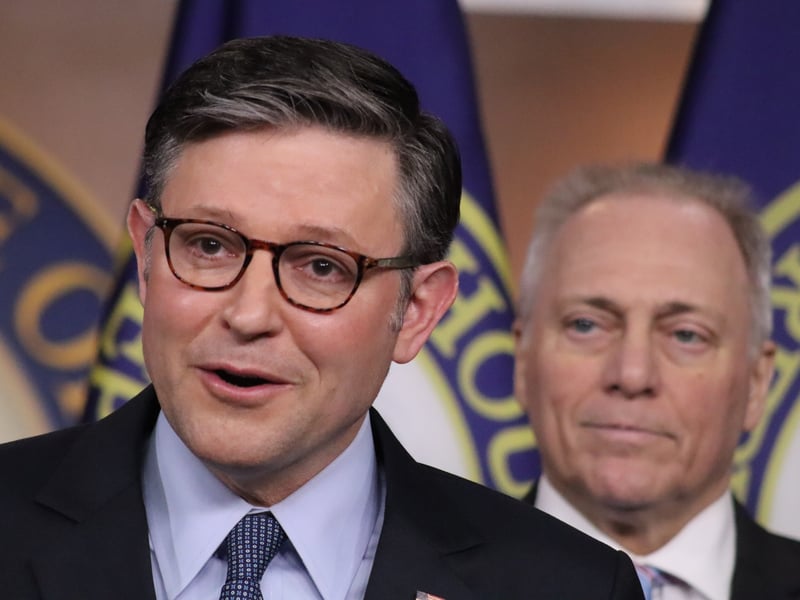
WASHINGTON (CN) — It’s crunch time again on Capitol Hill, as lawmakers convene in Washington this week to try to pass yet another stopgap budget resolution and sidestep yet another critical government funding deadline.
But while House Republicans over the weekend unveiled a measure aimed at avoiding a costly government shutdown, they’re doing so without any Democratic support — banking the success of their spending patch on a handful of conservative lawmakers, some of whom have been fiercely critical of the exact type of legislation currently on the table.
The GOP’s 99-page budget resolution, commonly referred to as a continuing resolution, would extend temporary funding for federal programs through September. But the measure, though it hikes spending for defense, slashes outlays for an assortment of other government projects, such as community-oriented policing services, mental health surveillance and higher education support.
That move, while apparently aimed at shoring up support among Republican budget hawks, is a political nonstarter for Democrats who have already said they will oppose the stopgap spending resolution when it comes up for a vote this week.
House Minority Leader Hakeem Jeffries said in a statement Monday morning that the proposed measure “recklessly” slashes federal funds and pointed out that the legislation does not include provisions that would shield Social Security, Medicare and Medicaid from budget cuts.
“We are voting No,” the Democratic leader proclaimed.
Social Security, Medicare and Medicaid — some of the largest shares of government spending — are funded separately from the programs outlined in the proposed continuing resolution. But Democrats have long warned that those vital programs could eventually be on the chopping block as Republicans and the Donald Trump administration eye massive spending cuts.
A budget resolution passed in the House last month, which laid out the White House’s policy agenda, prescribed more than $1 trillion in cuts. Critics have argued that such a lofty goal likely cannot be achieved without trimming government health care programs such as Medicaid.
And while this week’s proposed continuing resolution courts the Republican party’s right flank with budget cuts, that wasn’t enough for Kentucky Representative Thomas Massie, who on Monday called the measure a “uniparty” deal.
“Unless I get a lobotomy Monday that causes me to forget what I’ve witnessed the past 12 years, I’ll be a NO on the CR this week,” he wrote in a post on X.
Massie has consistently opposed stopgap efforts to fund the budget, slamming Republican leadership for a move which he sees as an irresponsible punt on Congress’ obligation to pass full-year spending bills. The Kentucky lawmaker railed on House Speaker Mike Johnson in September as Republicans moved to pass the current spending patch, saying at the time that the measure was “failure theater.”
When the continuing resolution comes up for a vote, however, Republicans can afford to lose Massie’s support. But their razor-thin House majority means there is little room for other GOP defectors. As of Monday morning, other budget hawks such as Indiana Representative Victoria Spartz have said little about where they stand on a stopgap budget.
Spartz last month told reporters that she was a “hard no” on the Republican budget resolution but later changed her mind — reportedly following an eleventh-hour call with Trump.
With the current stopgap slated to expire Friday, Congress will need to pass the proposed extension this week. The House Committee on Rules is slated to take up the measure Monday afternoon, after which it will head to the chamber floor for a vote by midweek.
Trump, for his part, has urged Republicans to “please” back the proposed continuing resolution.
“Great things are coming for America, and I am asking you all to give us a few months to get us through to September so we can continue to put the Country’s ‘financial house’ in order,” he wrote in a post on Truth Social over the weekend.
If it clears the House, the continuing resolution will face calmer waters in the Senate, where Republicans control a slightly safer majority.
Congress has flirted with a government shutdown on roughly a half dozen occasions since the GOP seized control of the House in 2022. Intra-party squabbling over bipartisan cooperation on the budget led to former House Speaker Kevin McCarthy’s ouster in 2023 — and Johnson has faced separate challenges to his leadership on similar grounds.
 Follow @BenjaminSWeiss
Subscribe to our free newsletters
Our weekly newsletter Closing Arguments offers the latest about ongoing trials, major litigation and rulings in courthouses around the U.S. and the world, while the monthly Under the Lights dishes the legal dirt from Hollywood, sports, Big Tech and the arts.