
 Search Articles


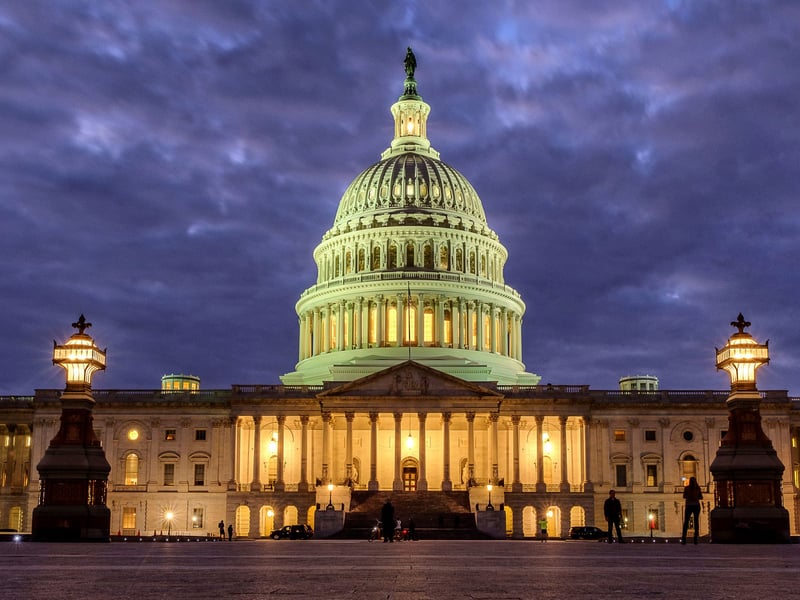
WASHINGTON (CN) — The first comprehensive federal judgeships bill in decades cleared its final congressional hurdle Thursday as the House overwhelmingly approved the proposed legislation.
But the measure, which lawmakers and legal experts say is critical to alleviating crushing caseloads facing understaffed courts, is likely dead on arrival in the White House, which has already said it would veto the bill if it landed on President Joe Biden’s desk.
The lower chamber Thursday morning approved the Judicial Understaffing Delays Getting Emergencies Solved, or JUDGES, Act in a 236-173 vote. If made law, the legislation would add 63 new vacancies in U.S. district courts across the country to be filled over a 12-year period. Those figures are based on 2023 recommendations from the U.S. Judicial Conference.
Just 29 Democrats voted in favor of the legislation, and 11 did not vote at all.
The split House vote and looming presidential veto represents a major change of political fortunes for the JUDGES Act, which enjoyed broad bipartisan support in recent months. The bill was sponsored in both chambers by Democratic and Republican lawmakers.
And the Senate, in an exceedingly rare move, advanced the measure in August after a unanimous voice vote.
It wasn’t until Monday, though, that the House decided to take up the JUDGES Act, a delay which chafed some congressional Democrats. Lawmakers accused the chamber’s Republican leadership of deliberately sitting on the bill until after the November presidential election to hand President-elect Donald Trump a tranche of new judicial appointments.
Though the GOP held that the deferral was more process than politics, that explanation did not satisfy Democrats.
New York Representative Jerry Nadler, ranking member of the House Judiciary Committee, said on the House floor Thursday that the JUDGES Act represented a “broken promise.”
Under the JUDGES Act, presidents would appoint new judges in six separate intervals, a provision that Nadler and the bill’s Democratic sponsors have argued was designed to ensure that no lawmakers knew which party would control the White House, as long as the measure was made law before the election.
“In this legislation we promised to give the next three unknown presidents a certain amount of judgeships — we were all at an equal disadvantage,” Nadler said. “House Republican leadership was unwilling to take a chance on their own candidate and refused to bring the bill to the floor before the election. Thus, the agreement central to the JUDGES act … is now broken.”
The New York Democrat added that it would be “irresponsible” for his party to hand Trump as many as 25 new judgeships as outlined in the bill, arguing that the incoming president sees the courts as “nothing more than an extension of his political operation.”
But Texas Representative Troy Nehls, one of the JUDGES Act’s main House proponents, chalked the Democratic response up to “childish foot stomping.”
Nehls contended that the bill remained fair despite the delay, thanks to its provisions spreading out the new appointments over more than a decade.
“But because they are angry over the results of the election, the official Democrat position now seems to be that our federal trial court system should be left to languish under the weight of crippling backlogs,” he said. “This bill is commonsense. One of our most basic obligations as a Congress is to oversee the judiciary and ensure it functions well.”
The White House, meanwhile, threatened on Tuesday to veto the JUDGES Act. The Biden administration agreed that the bill’s timing was suspect, arguing in a policy statement that concerns about caseloads were not the “true motivating force” behind the measure.
The White House added that the legislation was “unnecessary to the efficient and effective administration of justice,” pointing out that many of the proposed new judgeships would be in states such as Florida, Louisiana and North Carolina, where lawmakers have sought to hold existing vacancies open.
“Hastily adding judges with just a few weeks left in the 118th Congress would fail to resolve key questions in the legislation, especially regarding how the judges are allocated,” the administration said.
Gabe Roth, director of reform-minded judicial advocacy group Fix the Court, urged the president to reconsider his veto threat in a statement Thursday.
“I doubt he’d want increased backlogs and reduced courtroom access to be his judicial legacy,” he said.
Sponsors of the JUDGES Act were split on the possibility of a presidential veto.
Indiana Senator Todd Young, the bill’s Republican lead, urged Biden to reverse course, calling his proposed legislation “commonsense.” But Delaware Senator Chris Coons, a Democrat, appeared to place blame for the bipartisan breakdown on the GOP, telling Courthouse News on Tuesday that it was “unfortunate” that delay tactics resulted in a potential veto.
If the White House scuttles the JUDGES Act, Republicans could bring a similar bill up next Congress. But Democrats are already setting low expectations for bipartisanship on such an effort.
Georgia Representative Hank Johnson, who sponsored the measure in the House but voted against it on Thursday, told Courthouse News that he was not optimistic about those prospects.
“I’m open to any possibilities, but at this time it appears a compromise is greatly unlikely,” he said.
U.S. district courts across the country are navigating more than 700,000 pending cases, a figure legal experts say is made worse by judicial understaffing. Congress has not successfully passed a comprehensive federal judgeships bill since 1990.
 Follow @BenjaminSWeiss
Subscribe to our free newsletters
Our weekly newsletter Closing Arguments offers the latest about ongoing trials, major litigation and rulings in courthouses around the U.S. and the world, while the monthly Under the Lights dishes the legal dirt from Hollywood, sports, Big Tech and the arts.