
 Search Articles


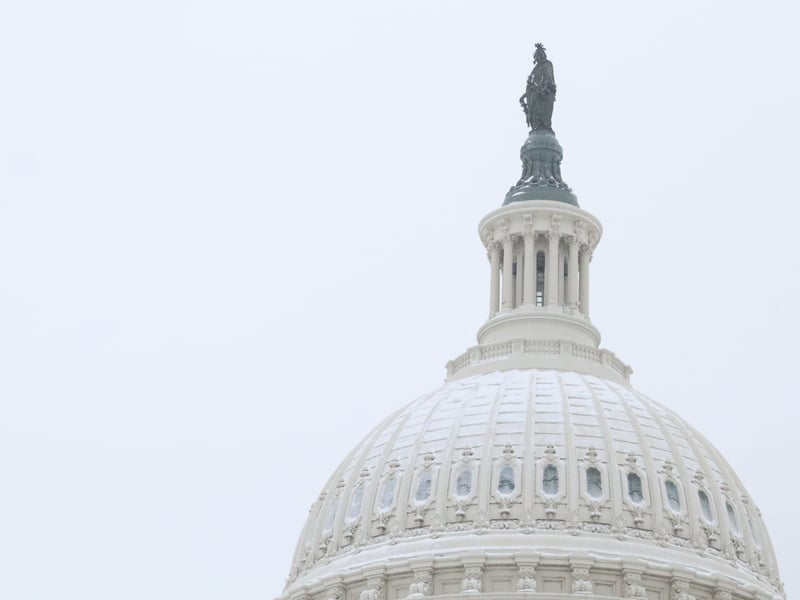
WASHINGTON (CN) — Congress took a major step toward averting a costly government shutdown Tuesday as the House approved a short-term budget resolution that would keep most federal programs funded through the fall.
The measure, commonly referred to as a continuing resolution, is also a win for House Speaker Mike Johnson, who shored up support for the stopgap among some of his more skeptical colleagues and demonstrated that Republicans could pass budget legislation without relying on Democratic support.
The lower chamber approved the spending patch on a 217-213 vote, with only Kentucky Representative Thomas Massie opposing the resolution. Maine Representative Jared Golden was the only Democrat to back the measure.
If approved by the Senate, the continuing resolution will largely keep federal programs funded at current levels through September. But the legislation also slashes cash flows for an assortment of projects across the government — a move aimed at building consensus with the Republican Party’s contingent of spending hawks.
That strategy worked, as several key lawmakers and the conservative House Freedom Caucus came out in favor of the continuing resolution.
Speaking during a news conference Tuesday morning, Freedom Caucus chairman and Maryland Representative Andy Harris explained that while conservative lawmakers have traditionally opposed stopgap budget legislation as the first step to omnibus spending bills, he did not view Johnson’s continuing resolution in the same light.
“This is a continuing resolution that goes to the end of the fiscal year and therefore negates the need for any consideration of any omnibus bill,” said Harris. He added that the House’s budget patch is also the first in years to cut certain spending while maintaining funds for vital programs.
“This is not your grandfather’s continuing resolution,” he quipped.
But Massie, who has been a vehement opponent of short-term budget legislation for years, has taken issue with the programs funded under Johnson’s resolution. In a Monday post on X, he argued that the measure “obligates” President Donald Trump to spend the same amounts of money on things that former President Joe Biden did during his last months in office.
While Congress could pass legislation, known as recissions, to walk back some of that spending later on, Massie contended that there was “no commitment to do so.”
The Kentucky representative’s complaints earned him a harsh rebuke from Trump, who called him a “grandstander” and suggested that he could face a primary election challenger.
“He can’t even approve a continuing resolution when he approved them many times during his career as a ‘congressman,’” Trump wrote on his social media platform Truth Social.
Massie fired back at the president on X, saying that Trump had been “misleading” and that he had only voted for a continuing resolution under former House Speaker Kevin McCarthy that would have slashed 8% from discretionary government spending. That measure, he added, never became law.
Meanwhile, Democrats railed on House Republicans for a stopgap funding measure which cuts programs such as rent subsidies and certain veterans’ heath care programs. And speaking on the House floor Tuesday, Connecticut Representative Rosa DeLauro argued that the legislation would effectively hand government spending over to Trump and his adviser Elon Musk until Congress can pass a full-year spending bill this fall.
“This bill creates more flexibility for this administration to continue to undermine the Constitution and countless spending laws by stealing promised investment from American families, children and business — and unlawfully dismantling agencies, arbitrarily firing civil servants and canceling union contracts,” said DeLauro, the top Democrat on the House Committee on Appropriations.
DeLauro argued Republicans had walked away from negotiations to approve a shorter axis continuing resolution that would have extended government programs until April 11.
“They pulled the rug out from under us and said ‘stop negotiating’ because Musk and Trump want control with a full-year continuing resolution,” she said.
Democrats have also worried that the budget patch could open the door for Republicans to slash funding for critical government programs such as Medicare, Medicaid and Social Security.
While the GOP has countered that none of those are propped up by the continuing resolution, some experts have said that the more than $1 trillion in budget cuts laid out in a resolution passed in the House last month would require appropriators to dip into federal heath care services.
With Johnson’s continuing resolution through the House, all attention turns to the Senate, which must pass the legislation by Friday to avoid a government shutdown. Trump is expected to sign the measure.
 Follow @BenjaminSWeiss
Subscribe to our free newsletters
Our weekly newsletter Closing Arguments offers the latest about ongoing trials, major litigation and rulings in courthouses around the U.S. and the world, while the monthly Under the Lights dishes the legal dirt from Hollywood, sports, Big Tech and the arts.