
 Search Articles


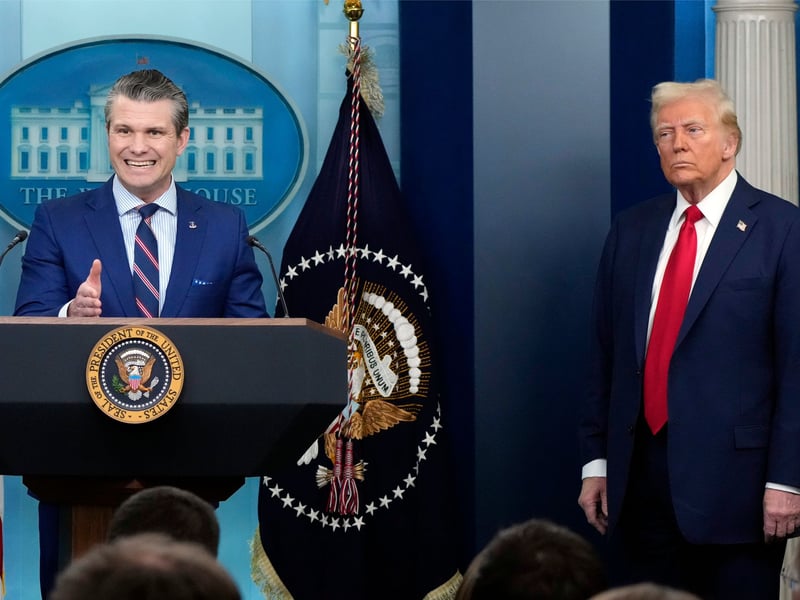
WASHINGTON (CN) — House Democrats on Wednesday demanded that the Donald Trump administration turn over details related to the government’s use of a commercially available messaging app, following bombshell revelations that senior White House officials used the service to discuss potentially classified military plans.
The lawmakers, writing in a letter to Attorney General Pam Bondi and FBI director Kash Patel, pressured the Justice Department to inform Congress as to whether it has opened an investigation into what they said was a “stunning breach” of national security law and protocol.
“This situation is perhaps one of the most humiliating and dangerous national security breaches in modern American history,” wrote the group of House Democrats led by Maryland Representative Jamie Raskin.
In a Monday report from The Atlantic, the publication’s editor-in-chief Jeffrey Goldberg revealed that White House national security adviser Michael Waltz earlier this month had inadvertently added him to a group chat on encrypted messaging platform Signal. The group, which included Vice President JD Vance, Defense Secretary Pete Hegseth and CIA director John Ratcliffe, discussed plans for forthcoming military strikes on Houthi rebels in Yemen — all, Goldberg said, without realizing a journalist was reading their messages.
Goldberg initially refused to publish some details of the conversation, reasoning that he did not want to divulge potentially classified military information. But the White House, which has called his story a hoax and derided Goldberg as a sensationalist, also said none of the officials involved in the chat shared classified information.
In response, The Atlantic on Wednesday morning published the Signal thread in full. According to screenshots of the conversation taken by Goldberg, Hegseth shared a blow-by-blow timetable about the planned strikes on Houthi leadership, including details about when U.S. fighter jets would deploy and reach their targets.
Writing his letter to Bondi, Raskin argued that using Signal to divulge such information not only put American service members and intelligence officers at risk but that the White House’s conduct “almost certainly” violates federal law, including the Espionage Act which makes it a crime to mishandle national defense information.
Using the Signal group may also have run afoul of the Federal Records Act, the lawmaker added. Federal law requires agencies and their leaders to preserve records of their activities, but Goldberg reported — and screenshots of the thread confirm — that Waltz had set messages sent by chat participants to automatically erase after one week. He later extended that interval to four weeks.
And Raskin pushed back on the Trump administration’s claim that none of the information shared in the Signal chat was classified, pointing to the strike timeline sent by Hegseth which came more than two hours before the first targets were expected to be killed.
“If these messages had been received by or leaked to an adversary, the consequences for the American pilots involved in the mission could have been nothing short of catastrophic,” he wrote.
The Maryland Democrat demanded to know whether the Justice Department of FBI had opened an investigation into cabinet officials’ use of Signal, and whether such a probe would weigh criminal violations for the chat’s participants.
Raskin also requested information on whether any of the White House officials who were in the Yemen group had accessed the thread using their personal devices, rather than using official government technology.
At least one chat member, Trump’s Ukraine and Middle East envoy Steve Witkoff, was in Moscow for a meeting with Russian President Vladimir Putin while the Yemen conversation was ongoing — though the White House has said he did not access Signal while he was in Russia. Still, Raskin asked the Justice Department whether the White House took precautions to ensure that the Kremlin did not have access to the group thread.
And the Maryland Democrat further demanded that the administration turn over information about the broader use of Signal within the federal government, asking whether other political appointees at the Justice Department or FBI use the service to discuss official matters.
Raskin gave Bondi and Patel until Friday to respond to his inquiry and gave the officials the option to respond in writing or an in-person briefing.
The White House has vehemently denied any wrongdoing in the Signal fiasco beyond Goldberg’s mistaken inclusion in the Yemen planning thread.
During a Senate hearing on Tuesday, Director of National Intelligence Tulsi Gabbard testified under oath that no members of the Signal group had posted operational details of the planned Yemen strikes. Asked to explain her comments during a subsequent appearance in the House on Wednesday, Gabbard said she had misremembered.
“My testimony is that I did not recall the exact details of what was included there,” she told Connecticut Representative Jim Himes.
Writing in a post on X Wednesday morning, Waltz argued that the contents of the Signal chat contained no locations, sources or methods related to intelligence planning — all information that certainly would have been considered classified. He added that foreign partners had already been notified of the impending strikes.
“BOTTOM LINE: President Trump is protecting American and our interests,” Waltz added.
Hegseth, in a separate post, offered his own scathing rejection of The Atlantic’s reporting, reiterating the White House position that he had not divulged any classified information in the messages which Goldberg referred to as “war plans.”
“Those are some really shitty war plans,” Hegseth retorted. “This only proves one thing: Jeff Goldberg has never seen a war plan or an ‘attack plan’ … Not even close.”
Revelations about the Signal group, and the public dustup that followed, have spurred calls on Hegseth and Waltz to resign from both sides of the political aisle. Trump, however, has said that he stands behind his national security team.
 Follow @BenjaminSWeiss
Subscribe to our free newsletters
Our weekly newsletter Closing Arguments offers the latest about ongoing trials, major litigation and rulings in courthouses around the U.S. and the world, while the monthly Under the Lights dishes the legal dirt from Hollywood, sports, Big Tech and the arts.