
 Search Articles


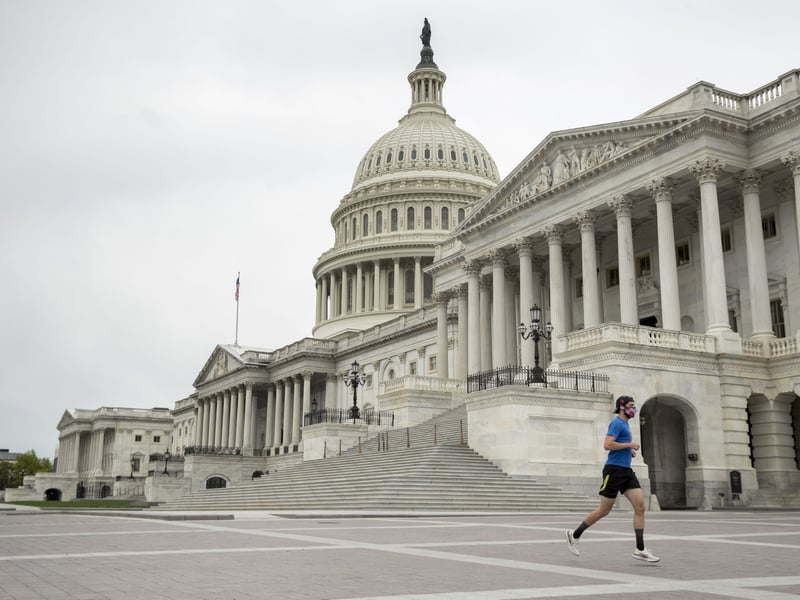
WASHINGTON (CN) — House Republicans on Thursday once again sidestepped internal fractures on the federal budget, approving a Senate-passed spending framework laying out billions in dollars in cuts and extending President Donald Trump’s tax plan for decades.
The resolution, which cleared the lower chamber on a 216-214 vote, is not a budget bill. But the measure’s passage is a win for the GOP as it sets out to draft spending legislation in line with the president’s ambitious agenda.
It’s the second time that the budget blueprint has found itself on the House floor. The chamber passed a version of the measure in February, but changes in the Senate required it to see another ballot in the House.
But the upper chamber’s alterations raised questions about House GOP support for the resolution, which barely passed earlier this year. The Senate version, passed over the weekend, would drastically reduce the amount of spending cuts initially proposed in the House — clocking in at just $4 billion, compared with the $2 trillion laid out in the February resolution.
The Senate’s budget framework would also extend tax cuts, inked in 2017 during Trump’s first term, beyond the 10-year timeframe proposed in the House iteration.
Those changes rattled spending hawks in the House, who were primarily furious about the decline in budget cuts proposed by the upper chamber.
Speaking on the House floor Wednesday evening, Texas Representative Chip Roy lauded his colleagues for the budget framework they passed in February, but said that the Senate resolution was “irresponsible.”
“When are we going to get serious about spending?” Roy questioned. “The Senate sent over a joke, and we’re going to capitulate to the Senate knowing full well that the Senate instructions carry the day.”
Democrats similarly panned the measure, arguing that the Republican budget blueprint would balloon government debt and would lead to cuts to vital federal programs such as Medicaid.
Ohio Representative Marcy Kaptur branded the measure a “billionaire bonanza” and an “abdication” of Congress’ duty to Americans. “This debate isn’t just about the numbers on a balance sheet but about the health of the American people,” she said.
House Minority Leader Hakeem Jeffries called the budget plan “reckless.”
“It’s a cruel budget,” said the New York Democrat on the House floor. “It’s a budget that will have catastrophic consequences on everyday Americans.”
Republican complaints about the resolution threatened to tank it Wednesday night, as GOP leadership delayed an initial vote amid uncertainty about holdouts.
But those issues appeared to have been mostly papered over by Thursday morning. Kentucky Representative Thomas Massie and Indiana Representative Victoria Spartz were the only two Republican “no” votes.
Ahead of Thursday’s vote, meanwhile, House Speaker Mike Johnson set out to allay concerns from critics, saying during a news conference Tuesday morning that the budget resolution “is not law” and that the Senate framework would not change efforts to secure adequate spending reductions.
And the White House urged Congress to pass the measure, writing in a policy statement that it was a “critical step” in advancing Trump’s priorities as lawmakers begin the budget reconciliation process.
“President Trump has demonstrated through numerous concrete actions his firm commitment to cutting wasteful spending,” the White House said. “This resolution aligns with his mission by paving the way for historic spending cuts to root out rampant waste, fraud and abuse across the federal government, while responsibly addressing the debt extension.”
Now that Congress has approved a blueprint for addressing the Trump administration’s budget priorities, it must begin work on spending bills that will carry out the resolution’s commitments.
Lawmakers must also contend with another looming fiscal deadline — the debt limit. The government is expected to reach its self-imposed borrowing ceiling between July and October, according to a March forecast from the Bipartisan Policy Center.
 Follow @BenjaminSWeiss
Subscribe to our free newsletters
Our weekly newsletter Closing Arguments offers the latest about ongoing trials, major litigation and rulings in courthouses around the U.S. and the world, while the monthly Under the Lights dishes the legal dirt from Hollywood, sports, Big Tech and the arts.