
 Search Articles


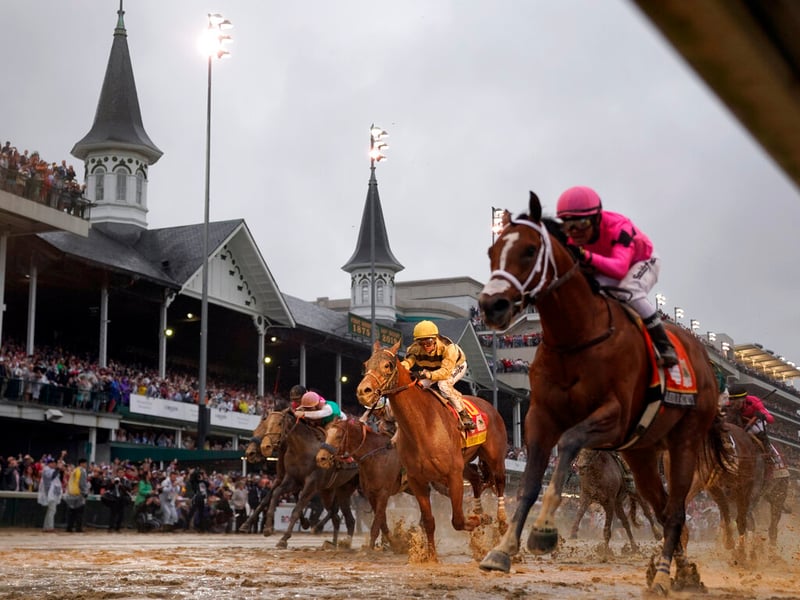
CINCINNATI (CN) — The governance and regulation of the horse racing industry by a private entity does not violate the nondelegation doctrine and passes constitutional muster, a Sixth Circuit panel ruled Wednesday.
In considering a lawsuit filed by Oklahoma, West Virginia, and Louisiana for the second time — on this occasion after a related ruling from the U.S. Supreme Court — the appeals court reiterated its stance that critical oversight from the Federal Trade Commission ensures rulemaking authority remains with the federal government.
“Sometimes government works,” Chief U.S. Circuit Judge Jeffrey Sutton, a George W. Bush appointee, wrote in the opinion.
Congress’ passage of the Horseracing Integrity and Safety Act in 2020 centralized rulemaking for the thoroughbred racing industry and wrested power from the states’ own governing bodies.
Most notably, the act created a private, nonprofit entity to oversee and implement regulations, the Horseracing Integrity and Safety Authority.
Various states took legal action, which resulted in a partial rewrite of the law to ensure the FTC was the ultimate rulemaking body.
Still not satisfied, Oklahoma challenged the constitutionality of the Horseracing Authority at the Sixth Circuit in 2022.
Its efforts were unsuccessful, and the Sixth Circuit found the law and the private governing body constitutional.
Fast forward to June 2025, when the U.S. Supreme Court issued its opinion in FCC v. Consumers’ Research, a decision that upheld the constitutionality of a federal internet program carried out by a private corporation.
The nation’s high court remanded the horse racing authority case back to the Sixth Circuit for reconsideration in light of the FCCdecision, but the outcome remained the same.
Sutton wrote on behalf of the same panel that heard initial arguments in the case over three years ago, and trod the same ground covered in his previous decision.
“The authority yields to FTC supervision and lacks the final say over rulemaking and enforcement of the law, all tried and true hallmarks of an inferior body,” he wrote for the panel.
The fact the authority can propose rules and safety regulations does not change the outcome, the panel found.
“The FTC’s power to review proposed rules, to abrogate existing rules, and to add new rules makes clear who is in charge and who has the final say,” Sutton wrote.
Oklahoma had also argued enforcement powers granted to the authority usurp power from the agency and violate the constitution, but the panel remained unconvinced.
In the opinion, Sutton emphasized the only enforcement mechanism used by the authority since its creation is that of an “internal enforcement action” that involves only a proposed sanction.
“The authority cannot impose a sanction without oversight. Any aggrieved entity may obtain review from an administrative law judge over any sanction proposed by the Horseracing Authority. After that, the FTC has full authority to review the authority’s enforcement action with fresh eyes. Through this independent review, the FTC may reverse any sanction by the authority,” Sutton wrote.
The panel gave some weight to the states’ argument that the authority’s ability to bring civil enforcement actions in federal court violates the nondelegation provision, but ultimately determined that thorny question would have to be decided another day.
In his opinion, Sutton first emphasized the states’ decision to bring a facial challenge to the law precludes them from singling out enforcement provisions as unconstitutional, but also pointed out the authority has never filed such an action, which raises ripeness and standing issues.
“Oklahoma cannot smuggle a truly hypothetical, likely unripe, perhaps soon-to-be moot, pre-enforcement challenge to a single provision under the cover of a broad facial challenge,” Sutton quipped.
Senior U.S. Circuit Judge R. Guy Cole Jr., an appointee of Bill Clinton, and U.S. Circuit Judge Richard Griffin, another George W. Bush appointee, also sat on the panel.
Neither party immediately responded to requests for comment.
 Follow @kkoeninger44
Subscribe to our free newsletters
Our weekly newsletter Closing Arguments offers the latest about ongoing trials, major litigation and rulings in courthouses around the U.S. and the world, while the monthly Under the Lights dishes the legal dirt from Hollywood, sports, Big Tech and the arts.