
 Search Articles


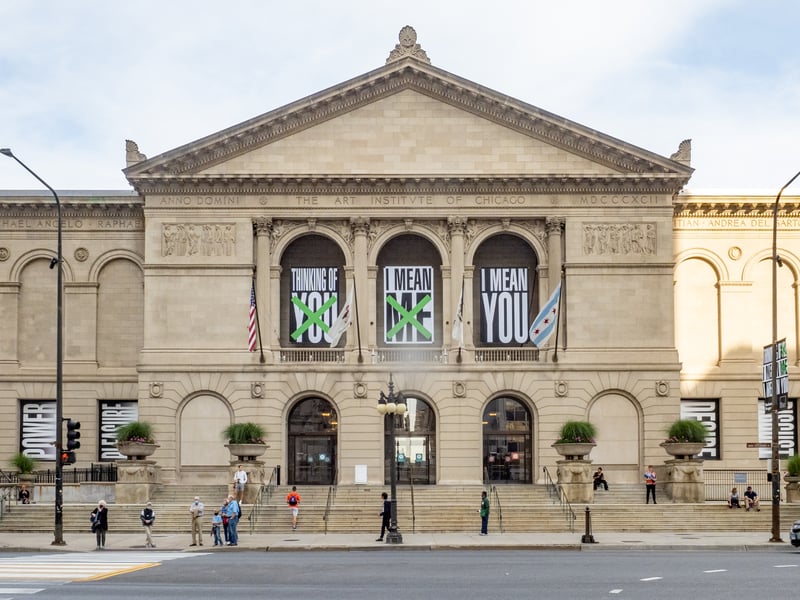
MANHATTAN (CN) — The heirs of an Austrian Jewish performer asked the Second Circuit Tuesday to restore their claims that The Art Institute of Chicago stole a World War II era drawing by Egon Schiele that rightfully belongs to them.
Fritz Grünbaum’s heirs say the piece, titled “Russian Prisoner of War,” was stolen from his home when he was kidnapped in Vienna, before being imprisoned and murdered at the Dachau concentration camp. According to his heirs, the museum failed to properly trace the art work’s origins — which would have required the piece be returned to Grünbaum’s family.
“We have experts testifying that anybody who bought Egon Shiele’s artworks from this period knew that Egon Schiele’s collectors were largely murdered Jews,” Raymond Dowd, an attorney with Dunnington Bartholow representing the heirs, said Tuesday. “This was public. It was well documented.”
But U.S. Circuit Judge Guido Calabresi asked if the heirs believed a museum is not entitled to acquire a piece if it fails to conduct a proper provenance, or record of an artwork’s origin.
Dowd said no, but added that the piece was “Nazi looted art” and said the museum has a duty to return such pieces to their original owners. He pointed to notices the U.S. government sent to museums and other cultural institutions after the war, urging them to return pieces confiscated by Nazis.
The heirs argue that the museum’s failure to conduct a proper provenance was a “red flag” indicative of a bad faith attempt to acquire the piece.
“These governmental efforts put the Art Institute of Chicago and the entire art and museum community on heightened notice that acquiring artworks that were in Europe after 1933 and transferred prior to 1946 without complete provenances was a red flag,” the heirs say in their brief. “Indicating that such artworks were potentially stolen.”
Refuting the heirs’ claims, the Art Institute of Chicago says the heirs have admitted that the museum was unaware of the drawing’s origins. “They affirmatively alleged the museum’s ignorance of the fact that the painting was owned by Grünbaum,” said Mark Yohalem, an attorney with Wilson Sonsini representing the museum.
Yohalem added that the heirs failed to demonstrate the museum acted with bad faith when acquiring the artwork.
“I can agree with you that finding museums are in bad faith on easy grounds would be very hard on plaintiffs, but that’s not for me to say,” said Calabresi, a Bill Clinton appointee. That decision would fall to the New York Court of Appeals, the state’s highest court, should the circuit panel revive the heirs’ claims.
U.S. District Judge Joen Koeltl dismissed the Manhattan federal court complaint because the heirs were barred by the statute of limitations. Because the museum acquired the work in 1966, Koeltl found, the deadline to bring claims in New York would have passed in 1969.
But the Grünbaum heirs argue that the Holocaust Expropriated Art Recovery Act of 2016, signed into law by former President Barack Obama, revives the statute of limitations in this case.
While Koeltl rejected that argument, the heirs asserted in front of the appeals panel that the HEAR Act still applies.
According to Dowd, the statute of limitations does not go in effect until six years after the passage of the HEAR Act, which places the heirs within the threshold to move forward with their claims.
 Follow @NikaSchoonover
Subscribe to our free newsletters
Our weekly newsletter Closing Arguments offers the latest about ongoing trials, major litigation and rulings in courthouses around the U.S. and the world, while the monthly Under the Lights dishes the legal dirt from Hollywood, sports, Big Tech and the arts.