
 Search Articles


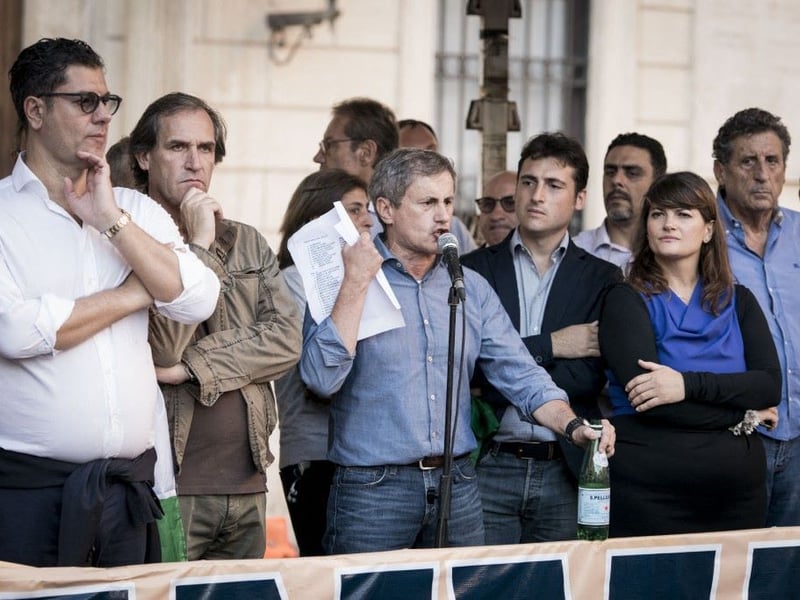
PALERMO, Sicily (CN) — An unlikely figure has emerged as a champion for Italian prisoners: An imprisoned 67-year-old former far-right mayor of Rome and trailblazer in the rise of the country’s post-fascist politics.
For the past eight months, Gianni Alemanno has been posting on Facebook about life inside the Rebibbia prison in Rome. Through his writings — part diary, part political manifesto — he is campaigning for better prison conditions as he serves a 22-month sentence for corruption.
Alemanno’s posts — angry, ironic, empathetic, sometimes sappy and self-pitying — may not redeem his past, but they have become unexpected dispatches from Italy’s prison crisis.
They crack open a window and remind Italians of what many prefer not to see: A prison system buckling under neglect, claiming lives every week and raising uncomfortable questions about justice, dignity and responsibility.
Political calculation almost certainly shapes Alemanno’s writings, especially given their intended audience: Many of his longtime allies and admirers now hold positions of influence within Prime Minister Giorgia Meloni’s government — Italy’s first led by a party with post-fascist roots since Benito Mussolini’s dictatorship.
Alemanno’s cries of injustice — stories of prison suicides and hollow-eyed elderly inmates pleading for early release — have begun to move political allies who are known for showing little concern about life behind bars.
Over the summer, Deputy Prime Minister Matteo Salvini, the hard-right League leader known for his tough-on-crime stance, and House President Lorenzo Fontana, also of the League, made conspicuous shows of solidarity by visiting Alemanno in Rebibbia. Meanwhile, Senate President Ignazio La Russa, a fellow far-right veteran militant and stalwart of Meloni’s Brothers of Italy party, has gone so far as to suggest broadening early-release measures.
His denunciations may also have spurred the government to act. In July, Justice Minister Carlo Nordio unveiled an emergency decree against overcrowding: building new cells, testing container cell units, expanding alternatives to incarceration, transferring drug-dependent inmates to rehab, and hiring more prison staff.
There’s an inescapable irony that Alemanno’s camp — a hodgepodge of Mussolini apologists, nationalists, reactionaries, nostalgic monarchists, anti-communists — is showing concern for prisoners as they confront the reality of what prison means when one of their own is inside.
“He comes from an area of politics that has not been very interested in prisons or supportive of improving prison conditions,” said Alessio Scandurra of the prison watchdog group Antigone. “This makes it particular.”
Simone Santorso, a criminologist at the University of Sussex in England, said Alemanno’s initiative is noteworthy precisely because it breaks with the usual positions of his political camp and signals a rare willingness to grapple directly with prison life.
“The government’s responsiveness in this case suggests that pressure around Alemanno may have partly accelerated the decree,” Santorso said, referring to Nordio’s emergency measures. “But as critics point out, these interventions risk evaporating once the spotlight fades, leaving the wider prison population in the same degrading conditions.”
Alemanno’s trajectory is the stuff of tragic theater.
Born in the poor southern region of Puglia and raised in Rome, he cut his teeth in the post-fascist youth movement of the 1970s during Italy’s years of political violence — the so-called Years of Lead. After throwing a Molotov cocktail in 1982 at the Soviet Union embassy in Rome, he was jailed in Rebibbia for eight months.
By 2008, he was mayor of Rome — striding up the Capitoline Hill as the city’s conservative strongman, hand in hand with the likes of Silvio Berlusconi.

Now, he sleeps in a prison bunk bed after he was convicted in connection with the “Mafia Capitale” scandal, a sprawling web of corruption and organized crime. He insists he is innocent.
In Rebibbia, he’s an inmate like thousands of others whose names will never make headlines. But his celebrity guarantees his words are amplified by the media.
Alemmano and his associates at his small political party, Independence, did not return messages seeking comment.
Over the course of 25 diary entries, Alemanno has focused on the severe overcrowding inside Italy’s old and dilapidated prisons — conditions that turn even more intolerable during summer.
“While temperatures exceed 45 degrees [Celsius, 113 F], fans are a luxury for the few, the cells are like gas chambers, the showers work intermittently, and drinking water is scarce,” he wrote in a June post addressed to top government figures. “Every summer, the same pattern repeats itself: Suicides, protests, appeals and then silence.”
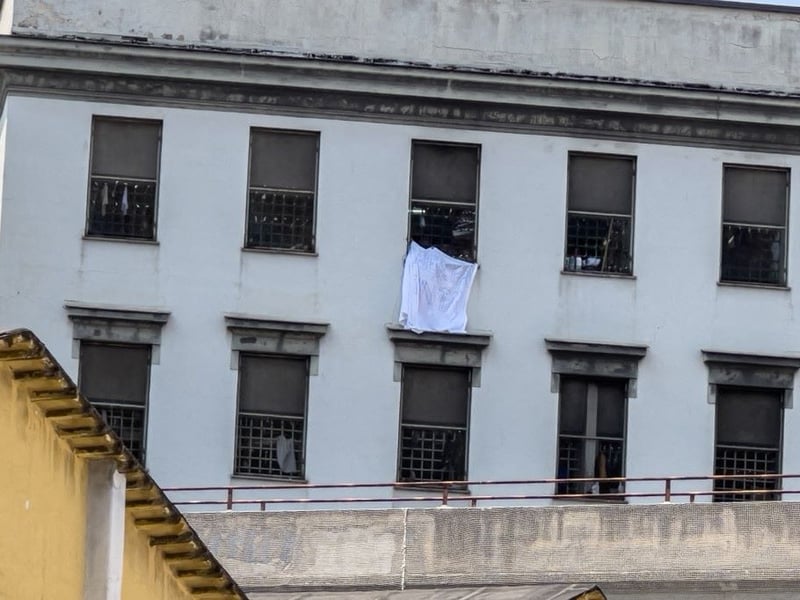
“The heat is not just a discomfort but an added punishment, where human dignity melts away, day after day, among peeling walls, bunk beds and windows sealed with plexiglass panels,” he wrote.
For Alemanno, overcrowding, under-staffing, poor health care, untreated diseases and rundown facilities are behind an alarming rise in prison suicides and make mockery of Italy’s constitution, which says incarceration should aim at rehabilitating prisoners.
Grimly, Alemanno keeps track of the suicides and attempts at suicide inside Rebibbia.
There was Kafi, a 29-year-old Libyan, who tried to hang himself in July while in solitary confinement after treatment for scabies. He was saved, barely, when an Albanian prisoner raised the alarm after peeping into his cell. Inmates and two prison guards carried the badly injured Kafi on a stretcher to the infirmary.
Eight days later, another prisoner in the ward, Flavio, was saved after he tried to hang himself inside a cell’s tiny toilet. A worried cellmate broke through the flimsy wooden door and found him unconscious. But two months later, Flavio nonetheless killed himself in the prison.
“Thirty-five years old, sick with third-stage cancer that had metastasized, he committed the extreme act because he hadn’t received any therapy in three and a half months,” Alemanno wrote.
Flavio was in prison for committing crimes to feed a drug addiction that was left untreated behind bars, he wrote.
“He shouldn’t have been in prison but under house arrest or in treatment at a therapeutic community … Another death foretold, a death that could have been avoided,” he wrote.
Luisa Ravagnani, a criminologist at the University of Brescia, said his descriptions were “very realistic.”
“The prison situation in Italy is no secret,” she said in an email. “A lot has been said about it and that’s been the case for years. The problem is finding lasting solutions.”
Italian culture has wrestled with its prisons before.
Enzo Tortora, a beloved television host, was wrongly imprisoned in 1983 on mafia charges and his letters from jail seared the public conscience. Fabrizio Corona, the so-called “king of paparazzi” and TV personality accused of blackmailing celebrities over embarrassing, often sexual, photos, made his prison time a spectacle, blending confession and performance.
In the 1990s, the vast political corruption investigation known as Tangentopoli sent mayors, ministers and magnates to prison, many of them to Milan’s San Vittore, where journalists camped outside for scoops.
Each case briefly illuminated the darkness of Italy’s carceral system, only for the spotlight to fade when the scandal passed.
Alemanno is striking a chord because Italy’s prisons are wretchedly overcrowded — among the worst in the European Union — and suicides are becoming common.
“The situation inside Italian prisons is, in fact, highly alarming,” Santorso said in an email. “Cells are overcrowded, hygiene is poor, and access to health care and psychological support is very limited.”
Nationally, about 63,000 detainees are housed in prisons fit for only about 51,000 people, an occupancy level about 134% of capacity, according to Ministry of Justice figures. Antigone, the watchdog group, insists the real safe capacity is closer to 48,000.
Of Italy’s 189 prisons, 58 have overcrowding levels of 150% or more, according to news reports. Milan’s San Vittore occupancy rate exceeds 220%, a level similar to prisons in parts of Africa.
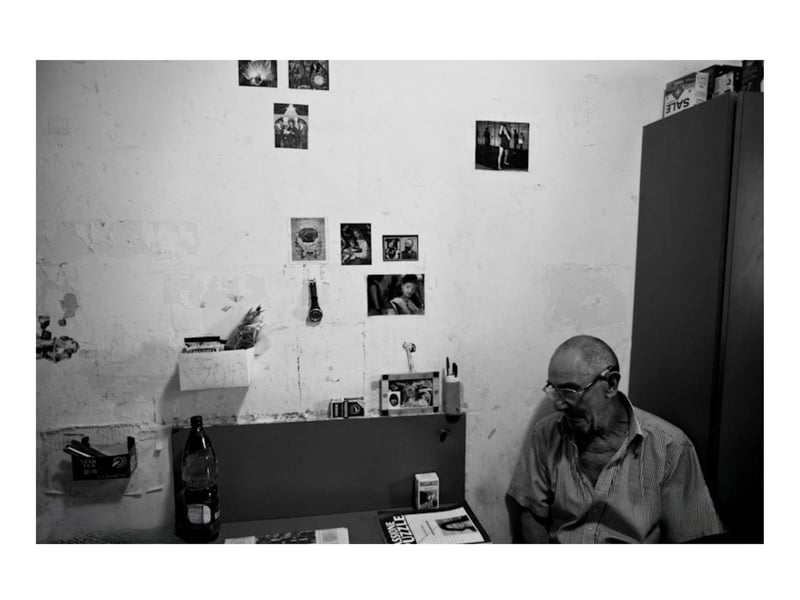
Overcrowding goes back at least to the days of Mussolini’s regime. But it’s become scandalous in recent decades.
By the 2000s, the country’s prisons were packed with more than 69,000 detainees — an occupancy rate greater than 145% — and in 2013 the European Court of Human Rights ruled that conditions where inmates had only 3 square meters (32 square feet) of personal space and no hot water amounted to “inhuman and degrading treatment.” The judgment forced Rome to reduce the inmate population to its current levels through early-release measures.
Even more alarming is the rise in suicides, with inmates now about 18 times more likely to kill themselves than the general population.
Last year, 91 detainees died by suicide, the highest number ever; so far this year, at least 65 prisoners have killed themselves, according to Ristretti Orizzonti, a prison magazine.
“This reflects the despair generated not only by detention but by the conditions under which it is enforced,” Santorso said.
After 28 years of research and prison visits, Ravagnani was blunt about the system’s failures — from long waits for basic needs, such as a painkiller or a dentist, to rape.
“I could tell you a thousand cases of violence suffered by prisoners, violence that never makes it to court,” she said. “This still happens today and it is intolerable.”
Convicts cannot be rehabilitated by a prison system so rife with shortcomings, she said.
Neither right-wing governments, with their obsession for security and zero-tolerance rhetoric, nor left-wing ones, with unfilled promises of reform, have fixed the failures, she said.
“The issue of criminal policy is useful in election campaigns and serves politics (as a whole) to point out easy targets and conceal bigger problems,” she said.
Consequently, inmates are treated inhumanely, and they stop reflecting on the harm they caused and instead see themselves as victims of a punitive system, she said. That mindset doesn’t foster accountability; it entrenches old behaviors and leads to recidivism.
In theory, the government and Italian society like to believe the country stands behind the principle of rehabbing prisoners and guiding them toward understanding their actions.
“It seems easy, but today this principle remains almost exclusively on paper,” Ravagnani said.
Unfortunately, the government’s newest actions to tackle overcrowding may wind up as the latest half-hearted attempt at fixing a broken system.
Santorso said Nordio’s decree was “more like a palliative than a structural response to a crisis that has been spiraling for years.”
Italy’s prisons have long been a mirror of the state itself: underfunded, dysfunctional, prone to crisis and mismanagement.
From a series of prison riots in the 1960s and 1970s to the suicides of today, the pattern repeats. Reforms are promised, then postponed. Public opinion swings between indifference and outrage, depending on who the prisoner is. Prison budgets stagnate year after year.
“What is really needed is a broader rethinking of penal policy, including reducing pretrial detention and expanding alternatives to incarceration,” Santorso said.
For now, at least, Alemanno’s messages of outrage from the G8 wing in Rebibbia are stirring debate.
But Alemanno has a megaphone. He writes and the newspapers print. But a man from Morocco, a kid from Palermo, a migrant woman from Eastern Europe go unheard.
Quite possibly, the spark ignited by Alemanno will fizzle out once he exits Rebibbia in a year.
“Alemanno can speak out, and he does so for everyone,” Ravagnani said. “But there are prisoners who don’t know how to bring their suffering to light, because they don’t speak the language or lack the ability to reach media outlets similar to Alemanno’s.”
If you are having thoughts of suicide, call or text 988, or call the National Suicide Prevention Lifeline at 1-800-273-8255 (TALK). Visit SpeakingOfSuicide.com/resources for a list of additional resources.
Courthouse News reporter Cain Burdeau is based in the European Union.
 Follow @cainburdeau
Subscribe to our free newsletters
Our weekly newsletter Closing Arguments offers the latest about ongoing trials, major litigation and rulings in courthouses around the U.S. and the world, while the monthly Under the Lights dishes the legal dirt from Hollywood, sports, Big Tech and the arts.