
 Search Articles


WASHINGTON (CN) — The Supreme Court agreed Friday evening to add several disputes to its docket concerning how government agencies enforce laws.
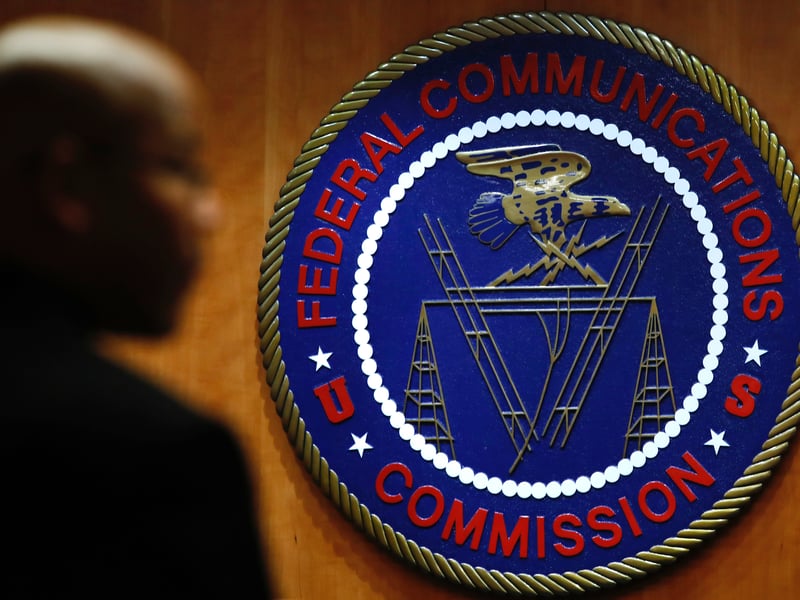
Among the newly added cases are two telecom giants’ multimillion-dollar feuds with the Federal Communications Commission. Verizon and AT&T face fines for failing to safeguard customer data, but they say that the FCC’s penalty scheme unconstitutionally deprives parties of their Seventh Amendment right to a jury trial.
The FCC ordered Verizon to pay a $47 million fine after an investigation from the New York Times revealed that customer location data was being provided to law-enforcement officers in an unapproved manner and without adequate verification of customer consent. AT&T was ordered to pay over $57 million for similar offenses.
Under FCC rules, parties have limited paths to dispute such penalties, sometimes including the after-the-fact possibility of a jury trial. Verizon and AT&T petitioned the Supreme Court to argue that they were entitled to a jury trial.
“This FCC enforcement action for monetary penalties is ‘legal in nature’ and therefore ‘implicates the Seventh Amendment’ right to a jury in ‘suits at common law,’” Verizon wrote. “The court of appeals nevertheless found no Seventh Amendment problem because Verizon ‘could have declined to pay the forfeiture’ ordered by the FCC ‘and preserved its opportunity for a de novo jury trial if the government sought to collect.’”
In another case the high court will now take up, a California man and 14 others were ordered to give up over $2 billion in profits to the Securities and Exchange Commission for a stock pump-and-dump scheme. Ongkaruck Sripetch claimed that a lower court held that investors can be victims for disgorgement purposes even without suffering pecuniary harm.
Courts in California and New York have split on the issue.
“The SEC should not exercise a disgorgement power it does not have — but it especially should not exercise such a power merely because a defendant operates in San Francisco’s Financial District instead of the NYSE,” Sripetch wrote. “The current situation is untenable.”
The Supreme Court’s review of Sripetch’s claims could have nationwide effects on how the SEC enforces penalties — which reached a record high of $6.1 billion last fiscal year.
Global technology company Cisco Systems will also receive Supreme Court review this term on whether it aided and abetting Chinese government officials’ abuses by them internet networking equipment.
 Follow @KelseyReichmann
 Follow @kelseyreichmann.bsky.social
Subscribe to our free newsletters
Our weekly newsletter Closing Arguments offers the latest about ongoing trials, major litigation and rulings in courthouses around the U.S. and the world, while the monthly Under the Lights dishes the legal dirt from Hollywood, sports, Big Tech and the arts.