
 Search Articles


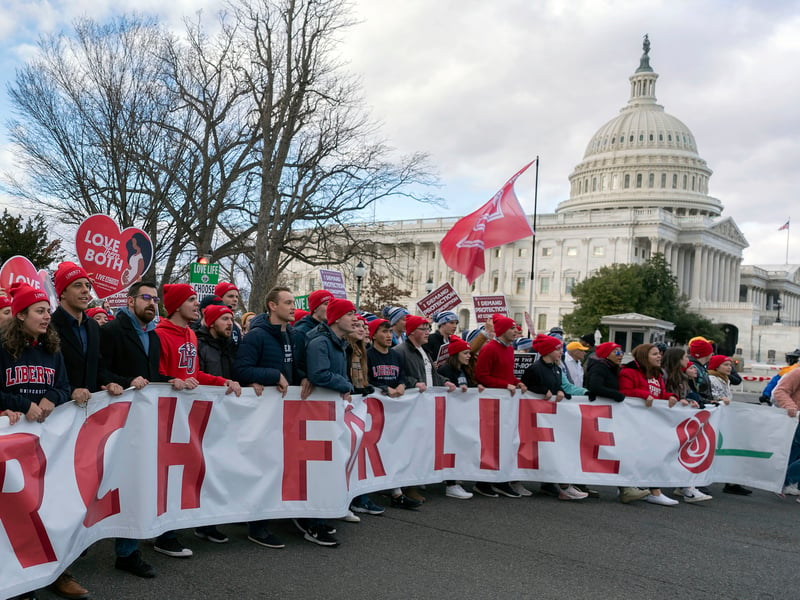
Charleston, S.C. (CN) — The South Carolina Supreme Court found that approximately six weeks of pregnancy is the appropriate period to determine if a fetus is viable under the state’s abortion ban.
Justice John Cannon Few wrote Wednesday in a unanimous decision, with one justice concurring in a separate opinion, that legislators intended to prohibit abortions after the first detection of a “steady and repetitive rhythmic contraction of the fetal heart.”
In most instances, this occurs after about six weeks of pregnancy — not nine weeks, as proposed by Planned Parenthood’s South Atlantic branch in its challenge to the law, the justice wrote.
South Carolina Attorney General Alan Wilson celebrated the ruling in a statement, calling it “a resounding win” for the rule of law and protections for unborn children.
“Today’s decision reaffirms that our elected legislators, not out-of-state interest groups, hold the power to shape South Carolina’s policies in accordance with the values of its people,” Wilson said.
“Today, justice failed South Carolina,” the organization said.
The high court’s decision ended another round of litigation as Planned Parenthood’s South Atlantic branch has repeatedly challenged the constitutionality of the state’s “fetal heartbeat” law.
The state’s abortion law was first passed in 2021 but only went into effect after the U.S. Supreme Court’s Dobbs decision effectively ended the constitutional right to an abortion. Planned Parenthood convinced the high court to strike down the law in a narrow 3-2 decision in January 2023, determining the law violated privacy protections guaranteed by the state constitution.
The Republican-controlled legislature passed a similar law after the court’s sole female justice and opinion’s writer, Kaye Hearn, retired from the bench. Planned Parenthood sued again, but the newly all-male Supreme Court reversed course, finding in a 4-1 decision that the new law was constitutional.
The court declined to provide clarity on when an abortion was prohibited however, leading to the most recent legal challenge. Planned Parenthood argued in its third lawsuit that the ban should be interpreted to take effect after approximately nine weeks under the statute’s language, because that’s when most of the main parts of the eventual heart have developed.
The court found the argument unconvincing, however.
In Wednesday’s opinion, the court reasoned that while the law’s definition of “fetal heartbeat” was ambiguous, the lawmakers made their intent known during debate, repeatedly referring to the law as a “six-week” abortion ban.
Opponents further introduced amendments intended to counteract what they saw as the negative consequences of the six-week ban, including a bill to hold a father liable for child support “starting at week six of the pregnancy.”
“This extensive 2023 legislative history — considered in view of the judicial history of Planned Parenthood I — is decisive,” Few wrote.
Justice Garrison Hill concurred, but warned in a separate decision against overreliance on the statements of individual legislators to interpret a statute.
“It is through consensus, in the democratic process, that the legislature forms its purpose; as such, and as we have often said, the best evidence of the legislature’s intent is the language of the law itself,” Hill wrote.
 Follow @SteveGarrisonPC
Subscribe to our free newsletters
Our weekly newsletter Closing Arguments offers the latest about ongoing trials, major litigation and rulings in courthouses around the U.S. and the world, while the monthly Under the Lights dishes the legal dirt from Hollywood, sports, Big Tech and the arts.