
 Search Articles


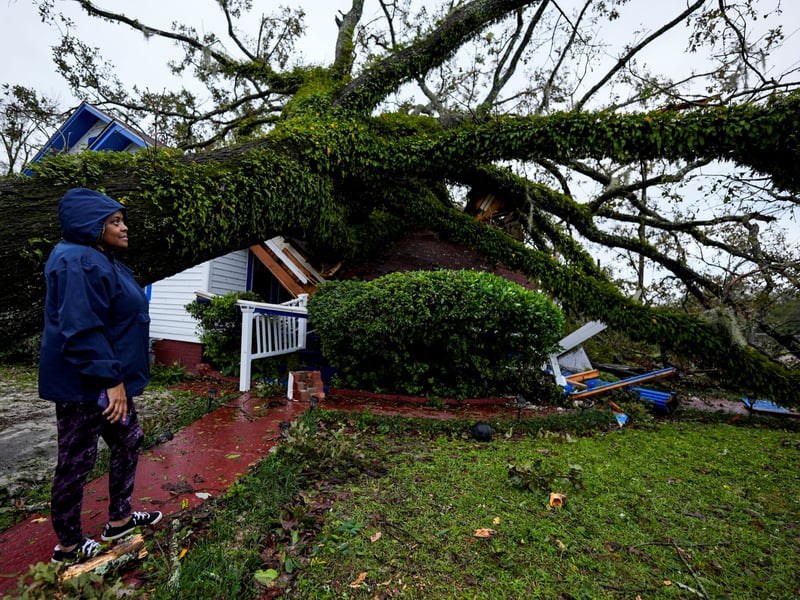
TAMPA BAY, Fla. (CN) — Hurricane Helene ripped through Florida’s Big Bend region late Thursday night as a major Category 4 storm, bringing unprecedented storm surge and hurricane force winds of 140 mph that extended miles inland into Georgia.
As of 5 a.m. EDT, Helene was a tropical storm moving into Georgia, about 100 miles southeast of Atlanta. But “life-threatening storm surge, winds and heavy rains continue,” the National Hurricane Center said.
The extent of the damage to the Panhandle is still unknown, as the storm made landfall near midnight and rescue crews were forced to wait until the storm had passed.
But already there are casualties. A motorist died in Tampa after a sign hit their car, according to the Associated Press, along with two others killed in a tornado in Georgia.
More than a million Floridians are without power, along with another 2 million in Georgia and the Carolinas.
Hurricane Helene is the strongest storm to hit the Panhandle region since Hurricane Michael in 2018, which flattened communities from Panama City to Apalachicola.
But the effects of Helene, a massive 350-mile-wide tropical system, were felt across the Gulf Coast on Thursday, with high gusts and flooding.
In Pinellas County, beach communities were already under water before the storm passed by. All bridges in the Tampa Bay area were closed by Thursday afternoon. Even counties outside of the forecast cone saw tornadoes.
As meteorologists predicted, Helene rapidly intensified from a tropical wave to a hurricane in less than 72 hours, moving along the Gulf of Mexico into a Category 4 with winds of 130 mph.
Many longtime Floridians warned residents that this storm was to be taken seriously.
The Taylor County Sheriff’s Office, where the storm made landfall, posted on Facebook Thursday telling those not evacuating to “write your name, birthday and important information on your arm or leg in a permanent marker so that you can be identified and family notified.”
In what was already supposed to be an active storm year, Helene came out of the back end of the season, catching some off guard.
But for residents in Florida’s Big Bend, a largely rural area that has already been struck by two other hurricanes in the last year, Helene took on a new meaning.
“Hurricane Idalia was a wake-up call to many from Perry,” said Cody Walker. “I’m in my 30s and most folks my parents’ age have never experienced a weather event as strong as Idalia.”
Idalia hit the region in August 2023.
“Once we knew this hurricane was going to be heading for us, it didn’t take much to convince my mother and my girlfriend’s mother to leave this time,” he said, adding he was heading to Alabama. “We are all waiting right now in anticipation with a side of dread because we fear this hurricane could finish off our home.”
 Follow @alexbpickett
Subscribe to our free newsletters
Our weekly newsletter Closing Arguments offers the latest about ongoing trials, major litigation and rulings in courthouses around the U.S. and the world, while the monthly Under the Lights dishes the legal dirt from Hollywood, sports, Big Tech and the arts.