
 Search Articles


CHARLOTTE, N.C. (CN) — As a December trial races closer, teams tangled in an antitrust case against NASCAR have secured another notable pretrial win.
U.S. District Judge Kenneth Bell issued an evening order Tuesday, denying NASCAR’s motion for summary judgment and granting a partial decision in favor of Front Row Motorsports and 23XI Racing.
Front Row Motorsports and 23XI Racing had asked Bell to rule on two core elements of their antitrust claims and define the relevant market and whether NASCAR has monopsony within that market. NASCAR had argued the teams were outside the statute of limitations in their suit, could not prove damages at trial and lacked standing to challenge the company.
In its counterclaim, NASCAR defined the relevant market. But after the teams’ partial summary judgment request, its attorneys danced around the definition in court.
There is a “quintessential fact dispute about the relevant market,” Chris Yates, counsel for NASCAR, told Bell two weeks ago. Jeffrey Kessler, attorney for the teams, argued in October that the stock car racing giant can’t choose now to deny that NASCAR is the only buyer of stock car racing services and has been for decades.
NASCAR admitted the relevant market in its countersuit, Bell said, and its definition was “effectively the same” definition the teams used. NASCAR has already told the court how it defines the market and cannot change that argument now, he contended.
“The same transaction – the sale and purchase of premier stock car racing services – cannot be a different relevant market depending only on which side is complaining,” Bell said. “Most simply put, NASCAR made a strategic decision in asserting its counterclaim and must now live with the consequences.”
“In opposing plaintiffs’ relevant market, NASCAR now contends that the same motorsports that could not supply racing teams to the Cup Series are suddenly readily available substitutes for the Cup Series teams like Plaintiffs to sell their services,” Bell said. “Not only is it illogical, but there is no record evidence that racing teams in the various motorsports can only move from NASCAR to another motorsport but not vice-versa. Again, NASCAR wants to (but cannot) have it differently on each side of the same coin — heads we win, tails you lose.”
NASCAR has also not disputed the geographic area of the market — the United States — or identified competitors outside the U.S., nor did its experts challenge the location in defining the market.
“NASCAR’s argument that the plaintiffs’ relevant market is a ‘fail-safe’ or ‘gerrymandered’ market because — according to both parties — the NASCAR Cup Series is the only buyer of premier stock car racing team services in the United States, is incorrect,” Bell said. “Just because there is only one racing league currently in the market does not mean that there could not be others.”
NASCAR has a 100% market share, Bell said, as there is no disagreement that the Cup Series is the only premier stock car racing series in the U.S.
NASCAR has and exercises monopsony power over the racing market, he said, and has been the only company operating the only premier stock car racing series in the United States for many years. The barriers to entry for a third party wanting to compete — including lack of large racing tracks or highly qualified racing teams — are “obvious.”
NASCAR’s argument for judgment against the teams is “scattershot,” Bell said in his dismissal.
The teams have presented evidence of various instances of anticompetitive conduct within the period of limitations, and they have antitrust standing as the only suppliers of premier stock car racing services to NASCAR, he said.
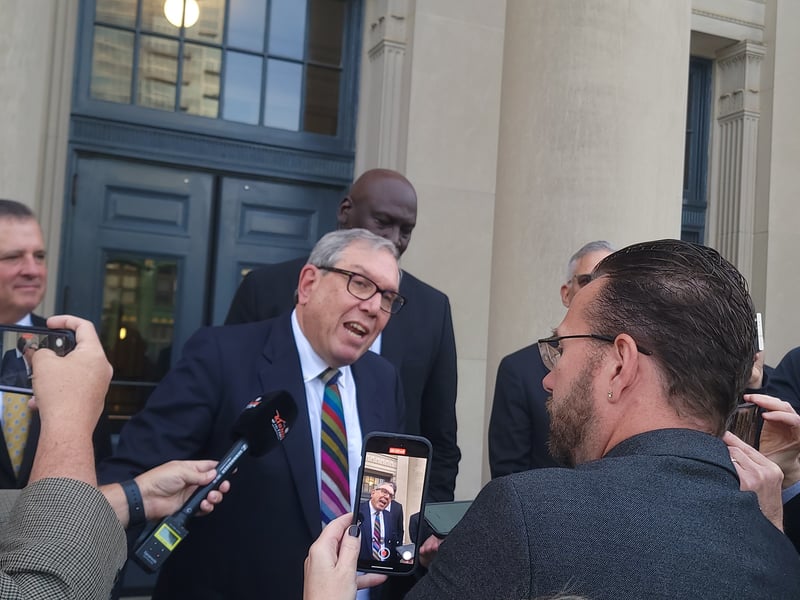
“We are very pleased with the court’s decision today, ruling in our favor,” Kessler said after Tuesday’s order. “Not only does it deny NASCAR’s motion for summary judgment, but it also grants our partial summary judgment motion, finding that NASCAR has monopoly power in a properly defined market. This means that the trial can now be focused on whether NASCAR has maintained that power through anticompetitive acts and used that power to harm teams. We’re prepared to present our case to the jury and are focused on obtaining a verdict that benefits all of the teams, partners, drivers, and the fans.”
A representative for NASCAR told Courthouse News, “NASCAR looks forward to proving that it became the leading motorsport in the United States through hard work, risk-taking, and many significant investments over the past 77 years.
“The antitrust laws encourage this — and NASCAR has done nothing anticompetitive in building the sport from the ground up since 1948. While we respect the court’s decision, we believe it is legally flawed, and we will address it at trial and in the Fourth Circuit if necessary. NASCAR believes in the charter system and will continue to defend it from 23XI and Front Row’s efforts to claim that the charter system itself is anticompetitive.”
Last week, Bell ended NASCAR’s countersuit against the teams, finding that NASCAR fell short of proving that their involvement in joint contract negotiations violated antitrust law. NASCAR didn’t suffer an antitrust injury or provide that there was unreasonable restraint of trade, he said, and the joint negotiations could potentially enhance competition in a market where NASCAR is the only buyer of services.
The parties have attempted to settle multiple times but have been unsuccessful thus far. Trial in the case is expected to begin Dec. 1 and last two weeks.
 Follow @SKHaulenbeek
 Follow @shaulenbeek.bsky.social
Subscribe to our free newsletters
Our weekly newsletter Closing Arguments offers the latest about ongoing trials, major litigation and rulings in courthouses around the U.S. and the world, while the monthly Under the Lights dishes the legal dirt from Hollywood, sports, Big Tech and the arts.