
 Search Articles


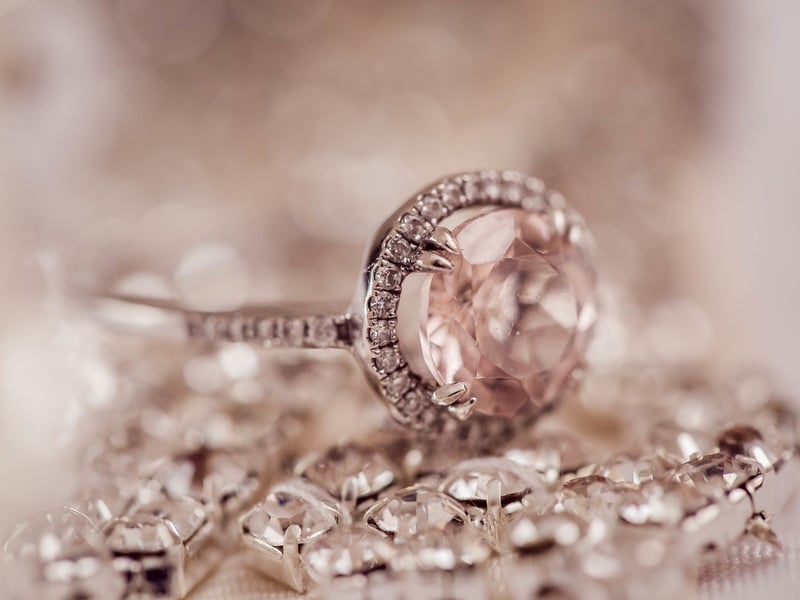
BOSTON (CN) — A couple who spent almost seven years litigating over who gets to keep a ring after calling off their three-month engagement brought their squabble to the Massachusetts Supreme Court on Friday, with the justices appearing both amused and uncomfortable at having to pass judgment on a romantic imbroglio.
“We … look silly trying to do this,” complained Justice Scott Kafker.
Bruce Johnson gave a $70,000 Tiffany ring to Caroline Settino when they got engaged in August 2017. But according to Johnson, the relationship quickly went downhill — Settino began calling him a “moron,” treated him like a child, didn’t support him when he had cancer treatments and verbally abused him in public, to the point where a waitress who observed Settino’s behavior advised him, “You know, you don’t have to put up with that.”
In November, after Settino stormed off following an argument, Johnson looked through her phone and found voice messages from a man named Steven Henault who referred to Settino as “cupcake” and lamented that they didn’t spend enough time together. He also found a text in which Settino told Henault, “Bruce is going to be in Connecticut for three days. I need some playtime.”
According to Johnson, Settino denied having an affair and explained that Henault was her best friend — although she had never mentioned him before.
Johnson called off the wedding and sued in January 2018 to get the ring back.
A trial judge sided with Settino, finding that Johnson wasn’t able to prove that she had an affair and was at fault for the breakup because he was the one who canceled the engagement. To make matters worse for Johnson, the judge ordered him to make good on an earlier promise to pay for Settino to have dental surgery.
The state appeals court disagreed in 2023, ruling that Johnson had “adequate cause to break the engagement” because he had lost trust in his fiancée.
Back in 1959, the Massachusetts high court held that who gets the ring depends on who was at fault for the split. But in accepting this case, the court announced that it was interested in revising this rule, which both Johnson and Settino complained in their court filings was “sexist.”
The high court requested amicus briefs from anyone who was interested in the topic. Nobody filed any.
Some other states have adopted a “no-fault” approach and say that if a marriage doesn’t go through, the giver of the ring gets it back no matter who was responsible. That’s the rule in Iowa, Michigan, Minnesota, New Jersey, New Mexico and Wisconsin.
Montana has a different approach: a ring is simply a gift and the recipient can keep it no matter what.
The 1959 rule, which requires judges to decide which partner caused the breakup, “seems old-fashioned and kind of silly,” Kafker observed.
Kafker said that Johnson would lose under the 1959 rule because the justices had to accept the trial judge’s finding that he was at fault because he mistakenly assumed that Settino had an affair.
But Justice Serge Georges disagreed and said the trial judge’s finding was “odd” because the judge also credited many of Johnson’s other complaints about Settino’s behavior. “There are factual findings that she called you a moron or she wasn’t there for you when you went for cancer treatments,” he said. “If you lie to someone 999 times, but the thousandth time it’s the truth, do you only look at the one time?”
Justice Dalila Wendlandt expressed frustration at the difficulty of assigning romantic blame. “This whole discussion,” she said, is “why we need to move to no-fault.”
On the other hand, she wondered, if someone who proposes can get a ring back, “what about a tennis bracelet? Or a car?”
“They move in together, they buy furniture,” Kafker said. “How does that all work?”
Johnson’s lawyer Stephanie Siden said the take-back rule should be limited to engagement rings because they “have a special meaning in our society.”
But after a breakup, Kafker said, “the ring has no value. It doesn’t represent love anymore.”
Justice Frank Gaziano disagreed that the ring had no value. “It’s $70,000!” he quipped.
Arguing for Settino, Nicholas Rosenberg urged the court to follow Montana’s lead and say that a ring is a gift pure and simple. “To say that it’s a conditional gift cheapens it. It’s like, I’m giving this to you but I might take it back.”
But Justice Elizabeth Dewar said there was nothing wrong with a conditional gift. She compared it to giving her daughter $20 to spend at a candy store if she’s good all day, “but if she isn’t good, I can take it back.”
Georges said that the real issue is whether Settino would be unjustly enriched if she got the ring but not the fiancé. But Rosenberg, of Gardner & Rosenberg in Boston, countered that she wasn’t being unjustly enriched “because she’s the one who was willing to stick it out and go through with it.”
And Kafker suggested that the larger policy issue was enabling people to call off a wedding if it proves to be a bad idea. “We don’t want to encourage bad engagements, or bad marriages,” he said. “We don’t want to get into that business.”
Subscribe to our free newsletters
Our weekly newsletter Closing Arguments offers the latest about ongoing trials, major litigation and rulings in courthouses around the U.S. and the world, while the monthly Under the Lights dishes the legal dirt from Hollywood, sports, Big Tech and the arts.