
 Search Articles


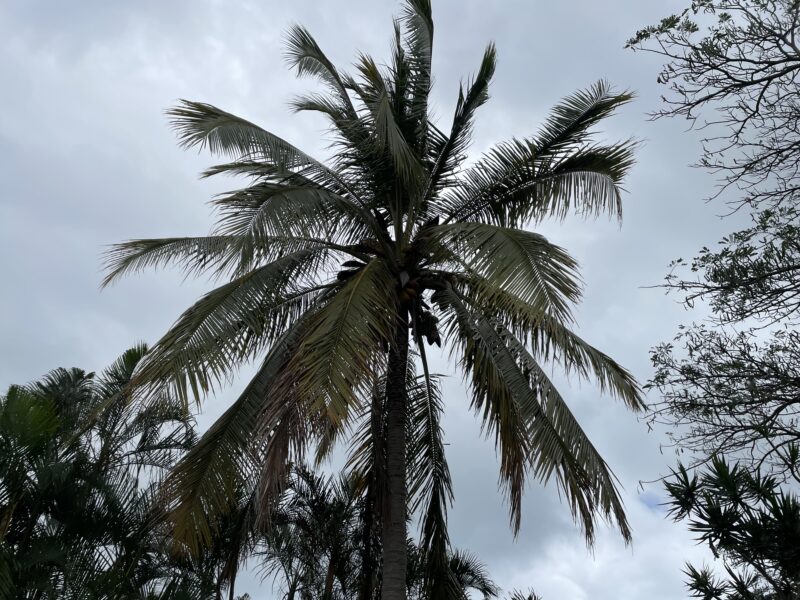
HONOLULU (CN) — The coconut tree has long been central to life in Hawaii. Its fruit is consumed on the islands, its fronds woven into baskets and hats, its roots embedded in local culture.
Now, as the rhinoceros beetle strips those trees from the landscape, a group of state lawmakers is seeking to formally codify that significance in state law. On Tuesday, the Senate Ways and Means and Commerce and Consumer Protection committees advanced SB 2925 without objection.
Introduced by Senators Mike Gabbard, Jarrett Keohokalole and Tim Richards, the legislation would make Hawaii the first state to formally designate the coconut tree as a food source, a water source and a cultural treasure.
The bill pairs that declaration with a set of mandates. It would authorize coconut seed banks, require labeling standards distinguishing consumable coconut trees from ornamental landscape palms and create a new state income tax credit for property owners who maintain coconut trees through natural management.
The coconut rhinoceros beetle, a large armored insect native to South Asia, was first detected on Oahu in 2013, marking the first established population in the United States.
In the years since, it has killed thousands of coconut trees across the island by boring into their crowns and severing the fronds the palms need to survive. The pest has since spread to Kauai, Hawaii Island and Maui.
The Office of Hawaiian Affairs submitted written testimony in support, arguing the bill speaks to something deeper than pest control.
“Niu is part of a network of pilina (relationships) between Native Hawaiians and ʻāina that sustained communities since time immemorial,” OHA wrote. “Recognizing niu as a food and water source and affirming its cultural significance ensures that these relationships to ʻāina are preserved and carried forward for future generations.”
OHA also made a practical case for the bill’s tax credit, saying it would recruit private landowners into the fight against the beetle rather than relying solely on state agencies, which the office described as already underfunded.
The Department of Land and Natural Resources offered conditional support, pointing to Hawaii’s vulnerability to food supply disruptions. The state imports approximately 85 to 90% of its food.
Not all testimony was enthusiastic. The Department of Agriculture and Biosecurity, which would be tasked with implementing much of the bill, raised objections to its design. Chairperson Sharon Hurd wrote that the department is concerned pesticides are not considered among the tools to combat CRB.
“The department appreciates the intent to promote pest management for coconut rhinoceros beetles, CRB,” Hurd wrote. “However, the department is concerned that pesticides are not considered as one of the tools to combat CRB as it limits the options available to industry, agencies, and the public.”
Hurd recommended replacing the bill’s emphasis on natural management with integrated pest management, a framework that allows for pesticide use alongside other approaches.
The Coordinating Group on Alien Pest Species, which works on invasive species management statewide, also weighed in on the pesticide question.
“For each of these islands, the use of pesticides is vital during an eradication attempt due to their efficacy,” CGAPS wrote. “While pesticides are effective at killing CRB, their use requires the removal of flowers to prevent impacts to bees and prevents the harvest of coconuts for consumption.”
The Hawaii Farm Bureau offered comments rather than outright support, urging careful consideration of how the bill’s labeling requirements and rulemaking provisions might affect agricultural operations and producers managing land under diverse conditions.
The bill is not the first attempt to enshrine the coconut tree in state statute. During the 2025 session, Senator Brenton Awa introduced a similar measure that passed the Senate but stalled in the House.
That effort was carried into the current session and folded into SB 2925’s broader coalition. With Tuesday’s committee advancement, the bill now moves closer toward a full Senate vote.
 Follow @JeremyYurow
Subscribe to our free newsletters
Our weekly newsletter Closing Arguments offers the latest about ongoing trials, major litigation and rulings in courthouses around the U.S. and the world, while the monthly Under the Lights dishes the legal dirt from Hollywood, sports, Big Tech and the arts.