Search Articles


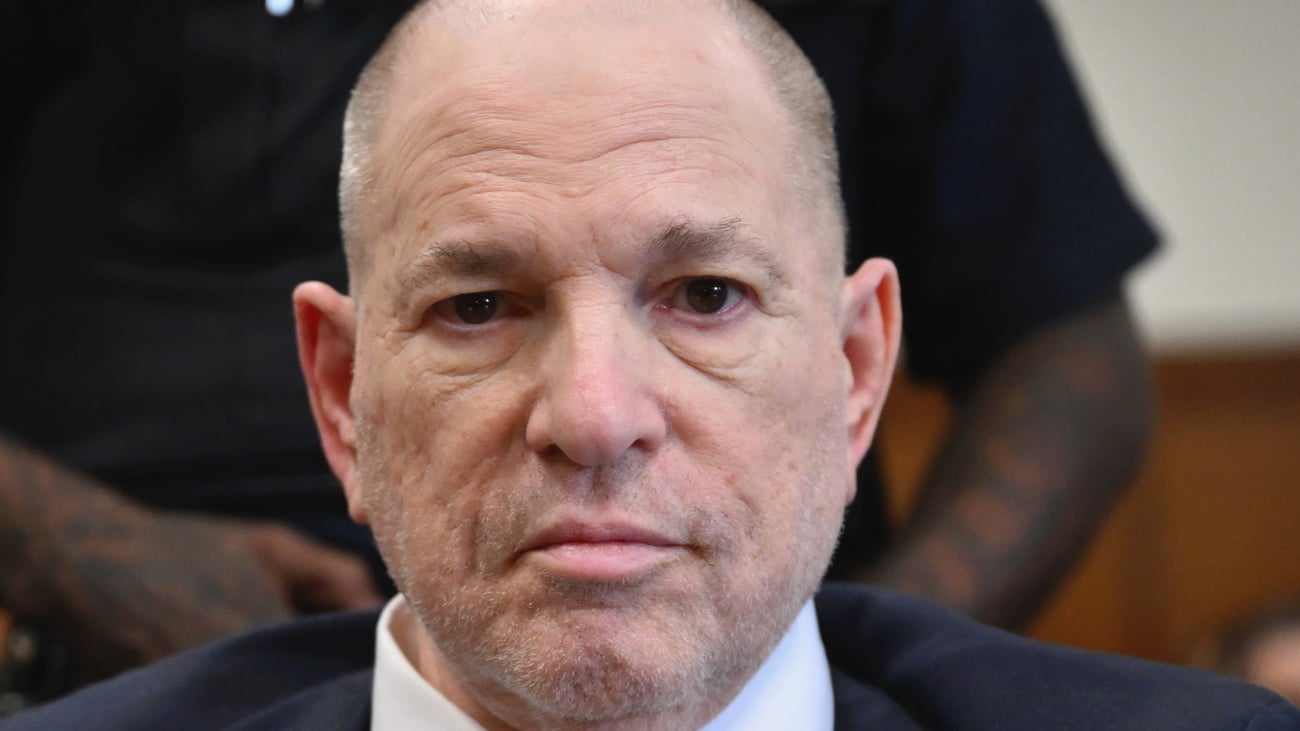
LOS ANGELES (CN) — The California Court of Appeals on Friday affirmed Harvey Weinstein’s 2022 rape conviction but vacated his 16-year prison sentence and sent the case back to the trial judge to resentence the disgraced Hollywood mogul.
“The sentence is vacated and the matter is remanded for resentencing,” the Second Appellate District panel in Los Angeles said in a minute entry on the case docket. “In all other respects, the judgment is affirmed.”
The panel’s detailed opinion wasn’t immediately available on the court’s website late Friday.
A spokesperson for the LA District Attorney’s Office said they couldn’t comment because they haven’t been able to access the opinion yet. Attorneys for Weinstein didn’t immediately respond to requests for comment on the ruling.
Weinstein, 74, became the poster child of the “#MeToo” movement in 2017 when dozens of women, including numerous movie actresses, came forward with claims he had sexually harassed or assaulted them.
A California jury convicted him of raping an Italian model in 2013 after barging in her LA hotel room. The jury deadlocked on additional charges that Weinstein had raped Jennifer Siebel Newsom, the wife of California Governor Gavin Newsom, when she was an aspiring filmmaker and that he had sexual assaulted an aspiring screenwriter. They acquitted him of sexual assaulting a massage therapist in his hotel room.
Los Angeles County Superior Court Judge Judge Lisa Lench sentenced him to 16 years in prison — eight years for forcible rape, six years for forcible oral copulation, and two years for sexual penetration by a foreign object, the three counts he was found guilty of, to be served consecutively.
At the April hearing on Weinstein’s appeal, his attorney Jennifer Bonjean argued that the judge presiding over the 2022 trial had wrongly excluded evidence in support of her client’s innocence — in particular, communications between the Italian woman, only identified as Jane Doe in court, and the organizer of the LA Italia Film Festival that showed they had a sexual relationship.
“Simply put, the lower court all but gutted Mr. Weinstein’s defense,” Bonjean told the three-judge panel.
According to Weinstein, explicit text messages between Doe and festival organizer Pascal Vicedomini, both before and after the festival in February 2013, showed that they were more than just friends, as they had represented at trial, but were in a sexual relationship.
If the jury would have had this information in what Bonjean said was a very close trial, they might have assumed Doe was with her lover when she claimed that Weinstein burst in her room and sexually assaulted her. It would also undermine the suggestion by the prosecution that Vicedomini had told Weinstein where the woman was staying, she said.
Associate Justice Gregory Weingart noted, however, that Weinstein’s trial lawyers hadn’t tried to introduce into evidence the messages Doe and Vicedomini exchanged months after the festival — which, according to Bonjean, showed the two were together on the morning that she said Weinstein raped her.
“Those only came up at the new trial motion,” Weingart pointed out. “They were not offered into evidence as far as I can tell.”
Bonjean, in response, claimed Weinstein’s trial attorneys had brought up these later messages in the context of Vicedomini’s so-called conditional examination — where a witness is questioned under oath in case they can’t appear in person to testify at the trial — but hadn’t pursued the argument because the trial judge had already indicated that she would only admit a small, “sanitized” part of the earlier exchanges.
California Deputy Attorney General David Glassman told the panel at the April hearing that Weinstein’s attorney was entirely wrong in suggesting that the defense was precluded from introducing their theory that Doe and Vicedomini were in a relationship and were together the morning after Weinstein had assaulted her.
“The entire dynamic between her and Vicedomini, which is irrelevant to this case, was aired to the jury,” Glassman said, citing passages from Weinstein’s trial attorney’s closing statement.
 Follow @edpettersson
Subscribe to our free newsletters
Our weekly newsletter Closing Arguments offers the latest about ongoing trials, major litigation and rulings in courthouses around the U.S. and the world, while the monthly Under the Lights dishes the legal dirt from Hollywood, sports, Big Tech and the arts.