
 Search Articles


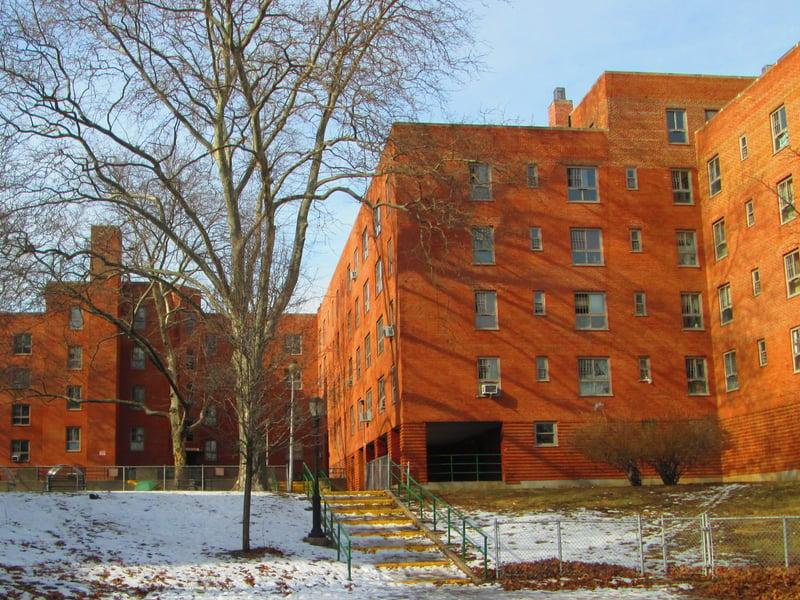
MANHATTAN (CN) — Tenants of a storied Harlem public housing complex asked a Second Circuit panel Friday to protect their rights as the city proceeds with a plan to convert their homes over to private management, saying they fear the deal will serve as a pretext for the new landlords to displace longtime residents.
Opened in October 1937, the Harlem River Houses are of one of the first two housing projects built in New York City, funded by the federal government as part of Franklin D. Roosevelt’s New Deal social program.
The uptown housing project, which boasts 574 apartments, had been managed by the city’s public housing authority, New York City Housing Authority (NYCHA), until 2022 when U.S. Department of Housing and Urban Development (HUD) converted Harlem River Houses’ management over to a private landlord as part of a 2018 city plan to convert total of 62,000 units — nearly 9% of all the apartments owned by the New York City Housing Authority — to Section 8 private management under the federal Rental Assistance Demonstration (RAD) program.
Represented by civil rights attorney Arthur Schwartz, tenants of the Harlem River Houses brought a class action in March 2022 against HUD, NYCHA, and the new private management of the projects, under the Administrative Procedure Act seeking to block the conversion of the housing project and a declaration that the “troubled” New York City housing authority was not eligible to participate in the Obama administration’s RAD program.
On appeal, Schwartz told a three-judge panel Friday that tenants fear the new private management will require them to move out during the buildings’ renovation, without any assurance about whether they will return to their apartment or about how long they will be forced out of their apartment.
“In plain English, failing housing authorities are not permitted by federal law and regulation to participate in the conversion program, presumably because they still own the properties involved, and because they are charged with supervising the new ownership,” he wrote in an appeals brief.
“Although the NYCHA Developments were built as models of affordable public housing, NYCHA has failed in its responsibilities to its residents (including plaintiffs and members of plaintiffs’ class) and allowed the NYCHA Developments to fall into disrepair, rendering such housing unsanitary, dangerous, and often uninhabitable. This is true of the buildings plaintiffs live in.”
U.S. Circuit Judge Dennis Jacobs told the tenants’ attorney what they’re asking for it “extremely complicated and cannot be undone.”
“It’s like unringing a bell and putting toothpaste back into a tube,” the George H.W. Bush appointee added.
Jacobs also questioned why the Advocates For Justice attorney had the authority to determine how New York City’s public housing authority is run, over the decisions of the city, state, and federal agencies.
Attorney Mark Osmond, an attorney for HUD, said the fears of tenant displacement are “purely speculative.”
“There’s no allegation that anybody has not been able to return to their apartment,” he said during oral arguments, noting that NYCHA’s process of so-called “right-sizing” the number of bedrooms in apartments to comport with family size would apply to both the former public management and the privatized buildings.
Seeking the appeals panel’s affirmation of the lower court’s dismissal for lack of subject matter jurisdiction, Osmond told the panel the tenants took too long to a file a complaint in 2022 and did not seek preliminary relief when they could have.
“Now we’re two years after the closing,” he said. “There’s a $220 million renovation that is ongoing. Various apartments are in various states of rehabilitation, demolition. If this conversion were undone, these improvements would presumably stop, which would only harm Harlem River residents.”
Judge Jacobs was joined on the panel by Joe Biden-appointed U.S. Circuit Judges Alison Nathan and Beth Robinson.
The panel did not indicate how or when it would rule.
U.S. District Judge Loretta Preska had concluded there was no feasible way to revert the apartments back to Section 9 because “the conversion is already complete and has been effected through multiple transactions that have changed Harlem River Houses’ corporate structure, generated debt greater than $209 million, and released the project’s original declarations of trust.”
NYCHA agreed to federal monitoring in 2018 after it was accused of chronic safety issues, including lead-paint hazards, mold, heating failures, disabled residents without access to functioning elevators, and chronic mismanagement.
New York City’s plan to convert NYCHA projects to private management and maintenance deploys RAD funds with other federal housing under a privatization program called Permanent Affordability Commitment Together (PACT).
The agency serves more 350,000 residents in 177,569 apartments in 2,411 buildings, across 335 conventional public housing and Permanent Affordability Commitment Together programs as well as housing subsidized under the Housing Choice Voucher program, also known as Section 8.
This month, federal prosecutors indicted 70 NYCHA building superintendents who they say took more than $2 million in kickback bribes in connection to $13 million in no-bid city contracts with the New York City Housing Authority, setting a Department of Justice record for the most bribery charges in a single day.
 Follow @jruss_jruss
Subscribe to our free newsletters
Our weekly newsletter Closing Arguments offers the latest about ongoing trials, major litigation and rulings in courthouses around the U.S. and the world, while the monthly Under the Lights dishes the legal dirt from Hollywood, sports, Big Tech and the arts.