
 Search Articles


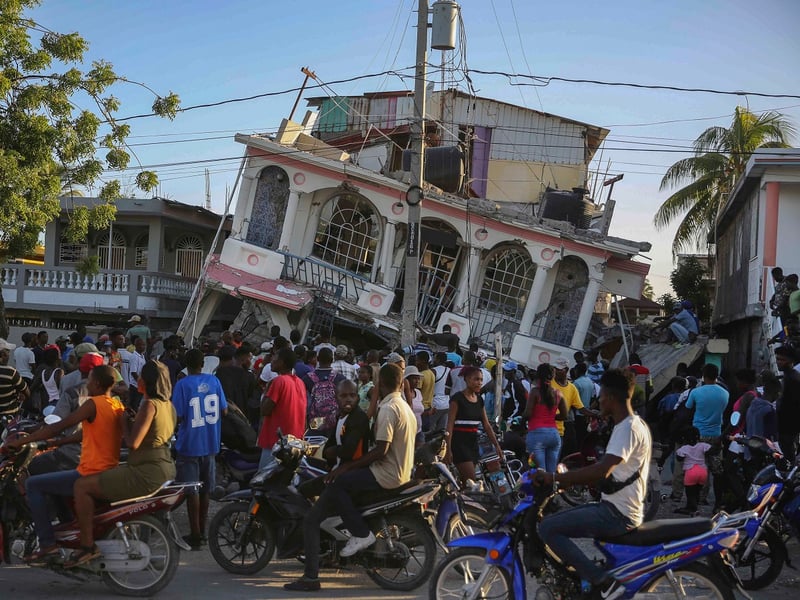
(CN) — A Haitian American organization accused the American Red Cross and its affiliates on Monday of deliberately misappropriating donations intended to aid victims of a 2010 earthquake and using the funds to cover the organization’s own debts.
The Haitian Diaspora Political Action Committee says in a class action filed in the Southern District of Florida that the American Red Cross, the International Red Cross and Haitian Red Cross have collected nearly $1 billion from donors since the magnitude 7.2 earthquake rocked the island nation.
But how that money has been spent is a mystery, according to the committee. Claims that the donations were used to build hospitals and repair homes are “demonstrably false,” the committee says, while other projects were severely delayed or never got off the ground.
Calling the Red Cross and its affiliates “poverty pimps,” the plaintiffs — comprised of the committee, along with representatives for a donor class and an intended recipient class — say the Red Cross “view the poor as commodities. They exploit the plight of the poor to extract resources from society, claiming to act in their name while serving their own interests,”
“Fully aware that they had no intention of using the funds to directly aid Haiti, the defendants nevertheless misled the public through a series of public statements, using emotional images, poignant words, and videos depicting the suffering of Haitians to compel donations,” the plaintiffs wrote.
The committee and its members claim $100 million in donations collected between 2010 and 2024 was used to cover the Red Cross’ $150 million financial deficit while another $400 million was spent on projects unrelated to Haiti or its people.
“Between 2010 and 2024, the defendants actively prepared for disasters in Haiti, not with the intention of providing genuine aid to victims, but to exploit their suffering and misfortune,” they said. “These preparations were focused on leveraging the devastation to manipulate donors into contributing more money.”
A financial report on the American Red Cross’ website details projects funded by the nonprofit, including tens of millions of dollars spent on emergency relief in the immediate aftermath of the earthquake.
But the efficacy of that spending has been called into question.
A 2015 investigation by ProPublica and NPR found that the relief agency vastly overstated the number of homes it built in the quake’s aftermath while making dubious claims about the number of people served by its programs. Internal documents showed that administrative fees ate up donations while staffing changes and other bureaucratic issues delayed projects.
The committee and its members seek damages totaling more than $1 billion for claims that include fraud, unjust enrichment, bad faith and embezzlement.
U.S. Chief District Judge Cecilia Altonaga, a George W. Bush appointee, has been assigned the case.
Nicole Maul, a spokesperson for the American Red Cross, said Monday there was “no merit” to the lawsuit.
She said money donated for earthquake relief was kept in a restricted account that could only be used for programs and services for Haiti, adding that such funds are never used for operational deficits or debt payment.
“The American Red Cross has spent and distributed all funds designated for Haiti relief on shelter, emergency relief, health, cholera prevention, water and sanitation, livelihoods, and disaster preparedness,” she said.
The earthquake on Jan. 12, 2010, killed an estimated 160,000 people and caused billions of dollars in damages. Rubble left roads impassable in the capital city of Port-au-Prince for months as more than 1.5 million people crowded into relief camps with no running water, electricity or sewage disposal.
The United States and dozens of other countries pledged to provide more than $5.3 billion for recovery and relief efforts in the quake’s aftermath while millions more flooded toward humanitarian agencies.
 Follow @SteveGarrisonPC
Subscribe to our free newsletters
Our weekly newsletter Closing Arguments offers the latest about ongoing trials, major litigation and rulings in courthouses around the U.S. and the world, while the monthly Under the Lights dishes the legal dirt from Hollywood, sports, Big Tech and the arts.