Search Articles


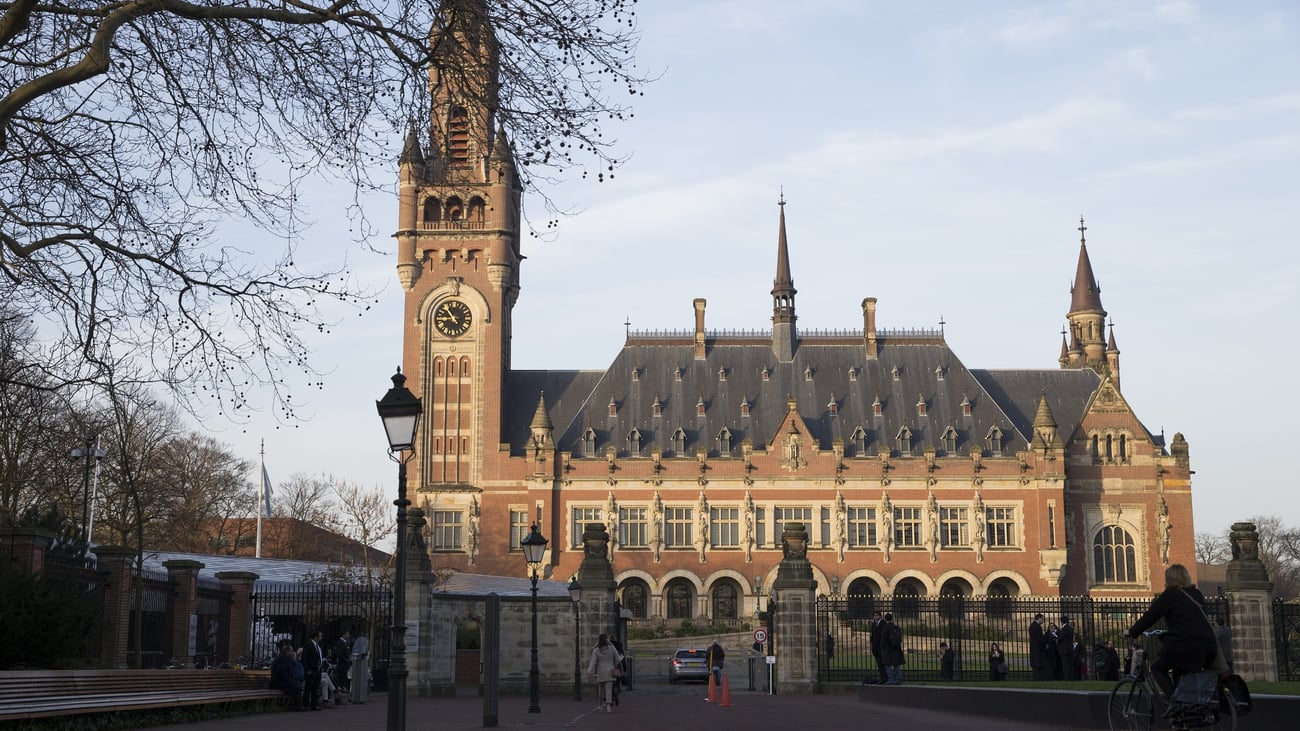
THE HAGUE, Netherlands (CN) — A dusty 1899 map has resurfaced in The Hague, dragging a century-old border fight back into the spotlight and setting off a weeklong round of hearings that began Monday.
At the International Court of Justice, Guyana wants judges to lock that line in place while Venezuela wants to rip it up and start over. The prize is Essequibo, a vast, resource-rich stretch of land that makes up most of Guyana and has turned a long-simmering dispute into a modern geopolitical flashpoint. The Hague-based court, the United Nations’ top judicial body created after World War II to settle disputes between countries, now finds itself at the center of the fight.
The line was drawn at the height of empire when Britain, then Guyana’s colonial ruler, faced off with Venezuela in arbitration. The result handed most of the contested territory to Britain, and Venezuela went along with it at the time. The boundary was surveyed, marked and treated as settled. Then history caught up. As Guyana moved toward independence in the 1960s, Caracas changed its tune and called the award tainted.
That pivot led to the 1966 Geneva Agreement, a last-minute political fix involving Venezuela, Britain and the soon-to-be independent Guyana. It did not settle the border. It effectively hit pause on the old map and pushed the parties back to the table, with a mandate to find a practical solution. Decades of talks followed, along with U.N.-led mediation efforts, but the line on the map never moved and the dispute never disappeared.
By 2018, patience had run out. The U.N. sent the case to the world court to answer the question the parties could not. Since then, the fight has played out in procedural rounds, with judges confirming they can hear the case and clearing the way for a full hearing on the merits.
Now, after years of legal sparring and diplomatic deadlock, both sides are finally arguing the point that has lingered for generations: whether a map drawn in a colonial-era deal still decides who owns the land today.
When arguments opened Monday, the split came into focus right away. Guyana laid out its case first, with Venezuela set to present its arguments later in the week.
Caracas has long argued the 1899 arbitration was not a neutral legal process. Its position is that the tribunal was shaped by great power politics, with British and American influence sidelining Venezuela and ultimately handing most of the territory to Britain. Venezuelan officials say the outcome reflected backroom bargaining rather than a fair process and should be treated as invalid from the start. They also point to the 1966 Geneva Agreement as evidence that the dispute was never fully settled and required negotiation.
Guyana pushed back just as directly. Foreign Minister Hugh Hilton Todd told judges, “This case has an existential quality for Guyana,” stressing that more than two-thirds of the country’s territory is at stake.
Its legal team said Venezuela is simply recycling arguments the court has already dismissed. “These arguments are not new in any way and have already been rejected by the Court,” said Pierre d’Argent, urging judges not to reopen settled ground. He described the strategy as an attempt to “postpone this moment of truth.”
They also leaned on a broader legal principle about how to judge the case. “A juridical fact must be appreciated in the light of the law contemporary with it,” said Alain Pellet, a counsel for Guyana, arguing the arbitration should be assessed by late nineteenth-century standards, not modern expectations about reasoning or transparency.
Outside the courtroom, the dispute is already running hotter. Guyana pointed to Venezuela’s recent referendum and new laws staking a claim to the region as signs this is no longer just a fight over history. Judges have stepped in once already, ordering Caracas to hold the line while the case plays out.
That tension is not abstract. The disputed waters are home to massive offshore oil projects, and recent naval incidents have raised fears the conflict could spill beyond the courtroom.
Washington has taken notice. U.S. Secretary of State Marco Rubio warned any move against Guyana or its oil operations would carry consequences, saying it would be “a very bad day” for the Venezuelan government.
For now, both sides are digging in ahead of the court’s final call. Once hearings wrap, judges will deliberate in private, with a ruling likely months away, possibly later this year or early next. Their decision will be final, deciding not just where the border runs, but whether a century-old settlement still stands.
Courthouse News reporter Eunseo Hong is based in the Netherlands.
Subscribe to our free newsletters
Our weekly newsletter Closing Arguments offers the latest about ongoing trials, major litigation and rulings in courthouses around the U.S. and the world, while the monthly Under the Lights dishes the legal dirt from Hollywood, sports, Big Tech and the arts.