
 Search Articles


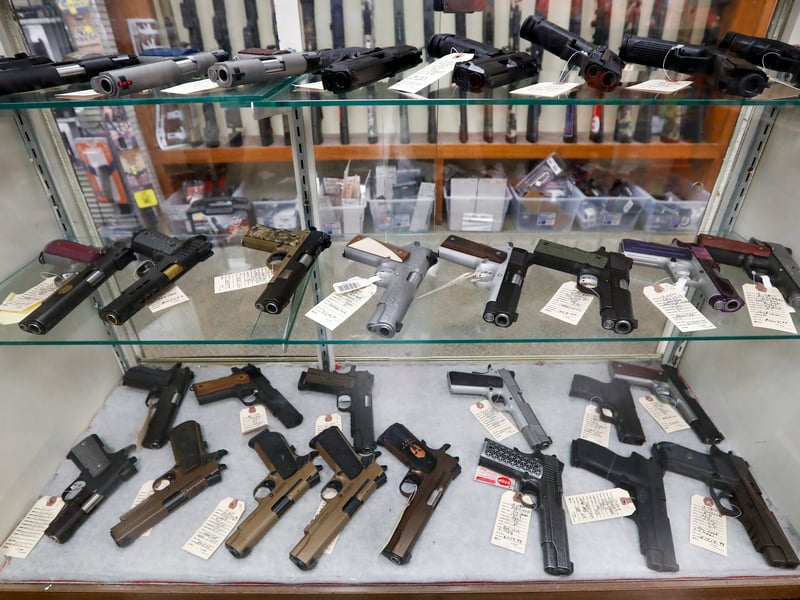
MANHATTAN (CN) — A Second Circuit panel Thursday grappled with whether federal regulations on interstate gun transportation violate the constitutional right to bear arms, as New Yorker Steven Perez claims.
In 2020, Perez illegally received firearms from an unlicensed dealer in South Carolina, who sent the guns to Perez in New York City. Federal prosecutors say that Perez ran afoul of a provision in U.S. law that prohibits the transfer or receipt of out-of-state firearms other than through a federally licensed dealer.
Perez was later arrested, charged and convicted for the violation. He’s serving a 16-month prison sentence, which will be followed by three years of supervised release.
But Perez claims his conviction should be vacated, as the crimes he was charged for violate his Second Amendment rights.
“The statute at issue in this case regulates and imposes burdens on an individual’s acquisition of firearms,” Kendra Hutchinson, a federal public defender representing Perez, told a trio of Second Circuit judges on Thursday. “This critical right to acquire firearms is core to the Second Amendment right to keep and bear arms.”
To make her case, Hutchinson tapped the landmark 2020 U.S. Supreme Court decision New York State Rifle & Pistol Association, Inc. v. Bruen, in which the court struck down a requirement to show proper cause when applying for a concealed carry permit.
The bombshell ruling was a big win for gun rights advocates, making it increasingly more difficult for regulators to limit the sale of firearms nationwide. It requires that the government show a historic tradition exists to justify any gun regulation it wishes to implement.
Perez says the statute he violated doesn’t meet that bar.
Hutchinson said, “The historical precedent that the government brings up, it all concerns sale. It all concerns a person’s disposition of a firearm, in this case, to the undesirables of the time, Native Americans. None of the regulations that the government brings up prohibit someone from acquiring.”
Hutchinson added that, since her client bought the gun legally in South Carolina, there’s no historical precedent to suggest that having the gun transported across state lines should be against the law.
U.S. CIrcuit Judge Beth Robinson, a Joe Biden appointee, challenged that notion.
“The statute doesn’t say your client can’t receive or import,” the judge said. “It just says if your client is going to do that, here’s the mechanism through which it happens — through a federally licensed dealer.”
Assistant U.S. Attorney Lucas Issacharoff, who argued Thursday on behalf of the government, made the same argument. He reiterated that the law in question, U.S. Code § 922 A3, merely prohibits the transfer or receipt of out-of-state firearms through unlicensed dealers.
“It does nothing to restrict the ability to obtain arms from within the state and even out of state,” Issacharoff said.
Hutchinson countered that the measure creates a burden nonetheless, one that carries a criminal penalty if violated.
The case prompted a coalition of 22 state attorneys general, led by New York Attorney General Letitia James, to file an amicus brief in Perez’s appeal dissuading the Second Circuit from undermining the federal laws regulating interstate gun transportation.
James and the coalition argue the regulations prevent the misuse of firearms, allow law enforcement to effectively investigate gun crimes and are consistent with the Second Amendment.
“States and the federal government should be allowed to enforce basic regulations about who can buy and sell guns to ensure they don’t end up in the wrong hands and to protect our communities,” James said in August. “We know that these common sense laws work and have prevented people from illegally obtaining firearms that could pose a significant threat to others.”
Robinson and the two other judges on Thursday’s panel, U.S. Circuit Judges Myrna Perez and Allison Nathan, both Joe Biden appointees, didn’t immediately issue a ruling following the arguments.
 Follow @Uebey
 Follow @uebey.bsky.social
Subscribe to our free newsletters
Our weekly newsletter Closing Arguments offers the latest about ongoing trials, major litigation and rulings in courthouses around the U.S. and the world, while the monthly Under the Lights dishes the legal dirt from Hollywood, sports, Big Tech and the arts.