
 Search Articles


(CN) — What’s in a name? Sometimes, a whole lot of bureaucratic and diplomatic headaches.
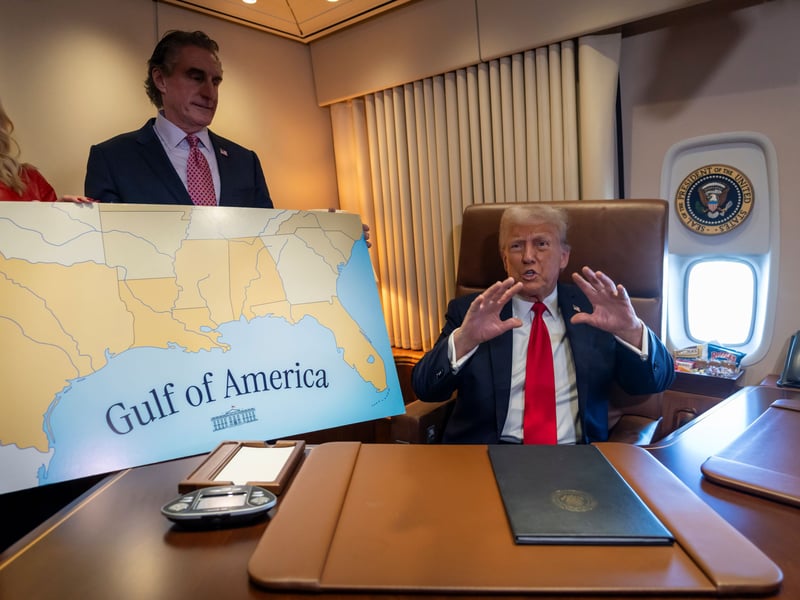
Look no further than President Donald Trump’s first-day executive order to rename the Gulf of Mexico, which has caused a wave of aftershocks both domestically and abroad.
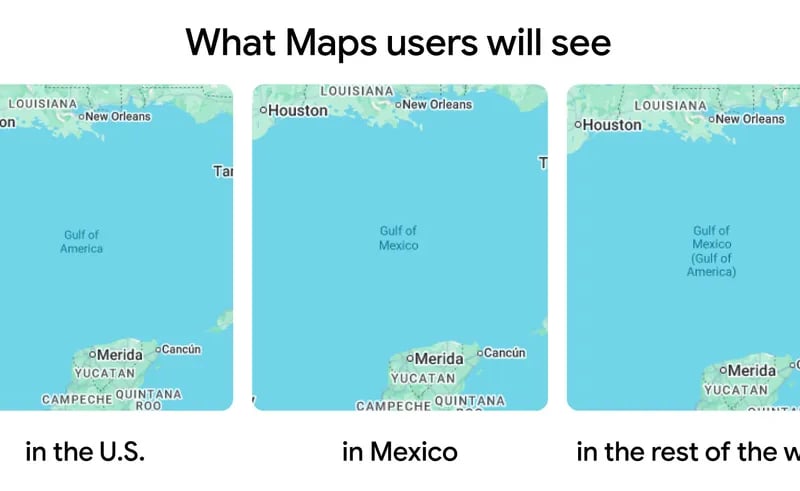
Agencies like the Federal Aviation Administration are racing to update official documents and maps. Gulf states like Florida are enacting legislation to adopt the name in educational and governmental materials. Google Maps is using the new “Gulf of America” name, but the Associated Press is not, prompting a stand-off with the Trump administration. And in Mexico, the change has faced obvious resistance, as President Claudia Sheinbaum has reiterated the Gulf’s traditional nomenclature.
Trump’s order — entitled “Restoring Names that Honor American Greatness” — targeted two North American place names. Besides the Gulf, he also took aim at Alaska’s Denali aka Mount McKinley, the highest mountain peak in North America.
The indigenous Koyukon people have long used the name Denali. The state of Alaska has since 1975, and former President Barack Obama adopted it at the federal level in 2015.
In his order, Trump called Obama’s change “an affront to President McKinley’s life, his achievements, and his sacrifice.” He ordered it renamed Mount McKinley. As for the Gulf of Mexico, Trump described it as “an integral asset” and “an indelible part of America.” His order directs the Secretary of Interior to “take all appropriate actions” to rename the Gulf, including updating the Geographic Names Information System to “remove all references to the Gulf of Mexico.”
Across the U.S. government and beyond, Trump’s executive order has resulted in new challenges and unexpected expenses, as Americans grapple with the sudden official change to a major U.S. place name.
It’s not even clear how much the change will cost — though recent history can offer some clues. When the Defense Department in 2020 decided to remove all Confederate names from military installations, that effort was estimated to have cost taxpayers $62.5 million. But that was just one agency; Trump’s order applies across the federal government.
Since launching in the 1970s, the Geographic Names Information System or GNIS has operated as the official U.S. geographic dictionary, providing a standardized reference guide for all national place names.
As the parent agency in charge of the GNIS, the Interior Department has a central role in renaming efforts. Per Trump’s executive order, the agency must “take all appropriate actions” to update the GNIS and “remove all references to the Gulf of Mexico.” Interior Secretary Doug Burgum in February issued his own order advancing the change.
In an email in April, an Interior spokesperson told Courthouse News the agency had completed that process. Other federal agencies were responsible for updating their own materials, the spokesperson stressed, “per their own budgetary needs and scheduling.”
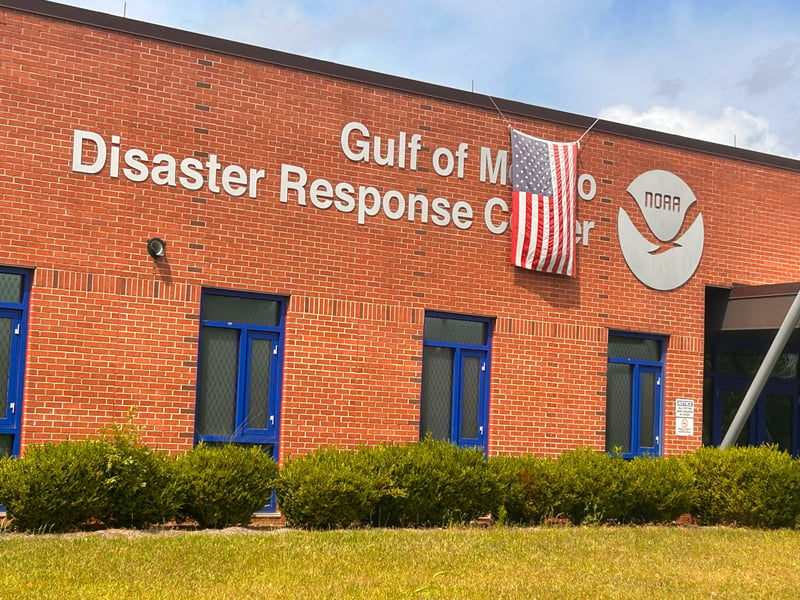
That work is far from complete. Take the National Oceanic and Atmospheric Administration. The agency operates the Gulf of Mexico Disaster Response Center, which works with state, federal and local officials to coordinate responses to disasters like hurricanes.
Officially, that office is now the Gulf of America Disaster Response Center. At its headquarters in Mobile, Alabama, an American flag conceals the word “Mexico” on the building’s facade. And yet NOAA still repeatedly uses the former name on its website. A disclaimer at the top of the webpage notes the agency is still “in the process of implementing a formal name change for Federal facilities.”
“NOAA is in the process of implementing the executive order,” an agency spokesperson wrote in an email to Courthouse News, echoing the same boilerplate language on NOAA’s website. “We will not be doing interviews about it.”
NOAA is hardly the only federal agency with significant presence in the Gulf — and others are being similarly cagey about renaming efforts.
Just one day after the executive order was issued, the U.S Coast Guard was one of the first agencies to adopt the renaming when it used the term “Gulf of America” in a news release. But official amendments to the agency’s regulations were not filed in the federal register until March 18, indicating more significant work behind the scenes. That rule change claims the rename “will not impose any additional costs.”
The Bureau of Ocean Energy Management, a Department of Interior subagency responsible for oil and gas production in the Gulf, similarly claims that renaming efforts will not result in additional expenses.
“BOEM staff are updating and creating new maps as needed,” a spokesperson said. And yet even at this Interior Department agency, the term “Gulf of Mexico” will still abound. Web pages and documents from before Feb. 7, 2025 — that is, the date of Secretary Burgum’s order — “are considered historical documents and were not changed,” the spokesperson said.
Place names be political, especially in conflict zones and disputed territories. From Palestine to Northern Ireland, it’s not uncommon for people to use different geographic names depending on their sympathies. Londonderry is just Derry to Irish nationalists; Jerusalem is Al-Quds to Palestinian nationalists. And now, it’s the Gulf of America for American nationalists — though in this particular case, the United States and Mexico have not seen open conflict in well over 100 years.
John Sledge, a retired historian at the City of Mobile, Alabama, and a prolific writer and author, has spent more time than most thinking about the Gulf’s name. In 2019, he published “The Gulf of Mexico: A Maritime History.”
In precolonial times, the Gulf is not believed to have had any standardized name, Sledge said. Various Indigenous groups lived along its shore. Many simply called it “Big Water.” The arrival of European colonizers did little to clear up nomenclature. Believing they’d reached Asia, “some of the earliest explorers referred to it as the Chinese Sea,” Sledge said in a phone interview.
For decades after, the Gulf of Mexico saw a variety of different names: the Sea of Cortez, Seno Mexico, the Sea of the North or the Spanish version: El Mar del Norte.
As time went on, Spain established itself as the dominant player in the region. “Beginning around 1550, you see it referred to as the Gulf of Mexico,” Sledge said. That name stuck.
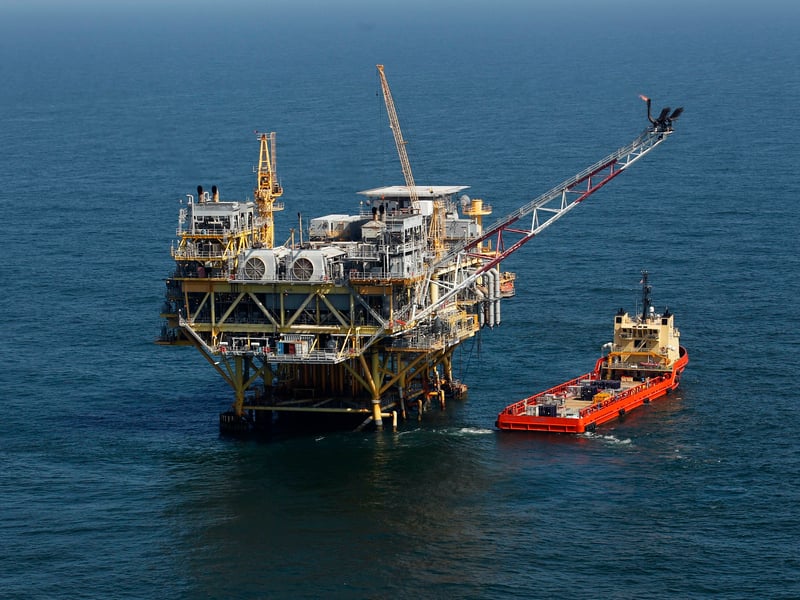
Fast forward to the 20th century, and Spain was no longer the great power in the neighborhood. As the United States expanded, the Gulf “became a de facto American sea in terms of our power and interest,” Sledge said — “essentially an American lake with vast importance for natural resources, oil and gas.”
In that sense, this latest name change can be seen à la Monroe Doctrine as a belated effort to project U.S. strength and power throughout North America. (See also: Trump’s repeated threats to turn Canada into the 51st state.)
“Typically, name changes reflect who holds the power and the economic sway in the region,” Sledge said. “Whether or not this name change sticks, time will tell.” Still, Trump’s Gulf rename may be about more than just symbolism: In a move criticized by the International Seabed Authority, the Trump administration now says that U.S. companies have the right to mine in international waters.
Domestically, Trump’s Republican allies are all aboard. Since January, at least four Gulf states, all with Republican supermajorities, have taken action to formally adopt the new name.
In March, Louisiana Governor Jeff Landry signed his own executive order renaming the Gulf. In April, Florida Governor Ron DeSantis signed a bill acknowledging the name change. Republican lawmakers in Texas have introduced similar legislation.
In Alabama, a renaming bill by Republican Representative David Standridge passed the House 72-26 and is now pending in the Senate. It prompted lively debate in the Alabama House of Representatives in April, as Democrats panned the measure as unnecessary and divisive.
“The name ‘Gulf of Mexico’ carries deep historical and cultural significance that reflects the rich history of the region,” Representative Kenyatté Hassell, a Democrat from Montgomery, argued on the House floor. “Instead of fostering unity, this proposal could deepen division between different cultural perspectives, creating unnecessary strife among the constituents we serve.”
Local governments are also having to grapple with the change. In a case of very unlucky timing, the city of Mobile, Alabama, last year spent around $100,000 rebranding and renaming its GulfQuest National Maritime Museum as the National Maritime Museum of the Gulf of Mexico.
That new name may be less clunky. Now, it appears to be a political nonstarter. In interviews, city spokesperson Dale Leisch said Mobile would preemptively change the name again, this time to the National Maritime Museum of the Gulf. The city expects the newest rebranding to cost significantly less because it will not involve a new website.
Outside of government, untold businesses and nonprofits are also deciding whether to use the new name.
One example is the Gulf of Mexico Alliance, founded in 2004 as an economic and environmental steward for the region. Led by the five Gulf states, it has more than 150 partner organizations, including federal agencies like the Environmental Protection Agency and the U.S. Fish and Wildlife Service as well as academic institutions, business groups and nonprofits.
The group changed its name toGulf of America Alliance in early March, citing a desire to “ensure consistency while reinforcing our commitment to the region.” In a statement, the group stressed that its mission to protect the Gulf “remains unchanged.” Other groups have made similar calculations. The Nature Conservancy has also adopted the new name, arguing the change was “required” to “ensure our programs continue, in accordance with clear directives from federal agencies.”
Which name will you adopt? The answer might come down to personal politics. For Trump supporters, the new name is a patriotic rebrand for a major U.S. body of water. Detractors see it not as a sign of strength but of weakness, yet another example of the Trump administration mucking up the federal government and alienating allies for no clear reason.
Ironically, one of the earliest known uses of the term “Gulf of America” came not from Republicans but from a Democrat. In 2008, former Mississippi state Representative Steve Holland introduced a bill proposing just such a name change.
In a phone interview, Holland said his bill was a joke. “Republicans had achieved a supermajority in Mississippi, which rendered us Democrats basically powerless except for what we might do in committees,” he recalled. At the time, a wave of anti-immigrant zeal was washing over the statehouse, and “I just got pissed off,” Holland said. Republicans “were trying to change every law in the state of Mississippi that dealt with immigrants and be punitive about it.” He intended his bill as a disapproving statement on jingoism and xenophobia.
Naturally, this strange, Democrat-sponsored bill made it nowhere in the Mississippi state legislature. But as news of Trump’s executive order broke this year, Holland’s phone soon lit up with text messages.
Like his own bill, Holland described Trump’s efforts to rename the Gulf as absurd. “It’s so silly,” he said. “You have to ask yourself, of this and other executive authority stuff that Trump has done: Is it really meaningful?”
This time, though, the name change is not a joke.
 Follow @gabetynes
Subscribe to our free newsletters
Our weekly newsletter Closing Arguments offers the latest about ongoing trials, major litigation and rulings in courthouses around the U.S. and the world, while the monthly Under the Lights dishes the legal dirt from Hollywood, sports, Big Tech and the arts.