
 Search Articles


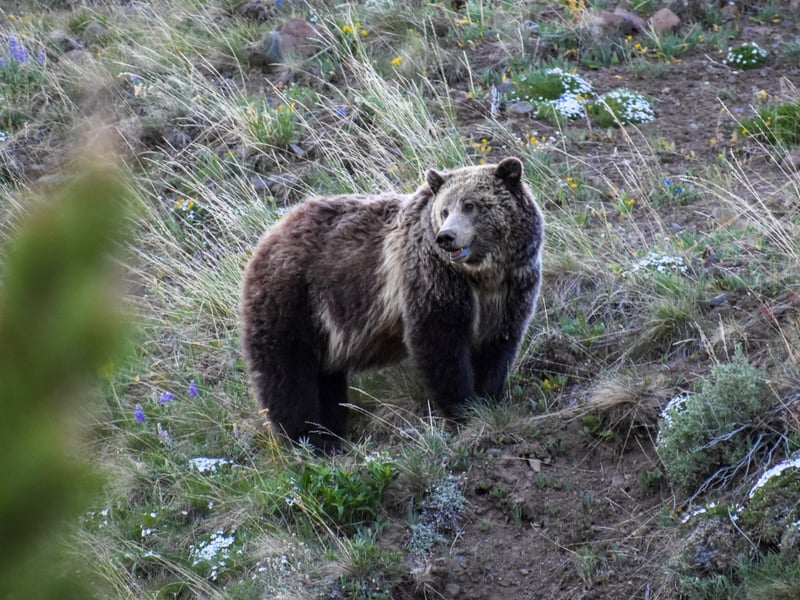
(CN) — Grizzly bears will keep their federal protections under the Endangered Species Act, the U.S. Fish and Wildlife Service announced Wednesday, to the praise of environmentalists and the chagrin of the western states that unsuccessfully petitioned against protections.
Both Montana and Wyoming had petitioned the agency to remove their states’ grizzly bear populations (Northern Continental Divide Ecosystem and Greater Yellowstone Ecosystem, respectively) from the list of threatened species. The federal agency determined the petitioned actions as “not warranted” and found that the two ecosystems’ grizzly bear populations don’t qualify as distinct population segments.
Instead, Fish and Wildlife is proposing a rule to establish a single distinct population segment that includes areas in Idaho, Washington, Wyoming and Montana where grizzlies live or are expected to live as their populations recover.
Grizzly bears have been listed under the act in the lower 48 states since 1975, even in areas exceeding the historical range of the animals.
The single, distinct population segment would retain its threatened status under the act and the federal protections that accompany it.
Areas where grizzlies don’t reside and aren’t expected to inhabit in the future will not be subject to protection, including California, Colorado, New Mexico and Oregon.
“This reclassification will facilitate recovery of grizzly bears and provide a stronger foundation for eventual delisting,” Martha Williams, the director of Fish and Wildlife, said in a statement.
She said the proposed rule will also give management agencies and landowners “more tools and flexibility” to deal with conflicts between humans and bears.
The proposed changes are the first step in fulfilling a settlement agreement with Idaho, which required an evaluation of grizzly bears’ protected status before January 2026.
Montana Governor Greg Gianforte took issue with the agency’s decision, condemning the agency for rejecting the state’s petition and accusing President Joe Biden of embracing a “scorched earth strategy” as he exits office.
“The full recovery of the grizzly bear across the Rocky Mountain region should be acknowledged and celebrated — period,” Gianforte said in a statement. “It’s time for U.S. Fish and Wildlife Service to catch up with the science, follow the law, and return management of grizzlies to the states, where it belongs.”
Conservation groups, on the other hand, celebrated the move.
“I’m relieved that the Fish and Wildlife Service found that grizzly bears still need Endangered Species Act safeguards,” Andrea Zaccardi, carnivore conservation program legal director at the Center for Biological Diversity, said in a statement. “With ongoing federal protections, grizzlies in the Northern Rocky Mountains and North Cascades will have a real chance at long-term recovery, instead of being gunned down and mounted on trophy walls.”
The proposed single distinct population segment (which stretched from the Washington coast to the east of Montana’s Big Sheep Mountain range) encompasses all six grizzly bear recovery zones.
The agency’s proposed rule change also allows for “greater flexibility and tools to take bears in the context of research and conflict management,” the agency said. Conservation groups expressed less excitement for that change.
“While grizzlies won’t be killed by state-sponsored trophy hunts, I’m concerned that their recovery will be harmed as more bears die at the hands of the livestock industry,” Zaccardi said. “We’ll advocate to maintain all protections that keep grizzly bears alive until recovery is reached.”
Subscribe to our free newsletters
Our weekly newsletter Closing Arguments offers the latest about ongoing trials, major litigation and rulings in courthouses around the U.S. and the world, while the monthly Under the Lights dishes the legal dirt from Hollywood, sports, Big Tech and the arts.