
 Search Articles


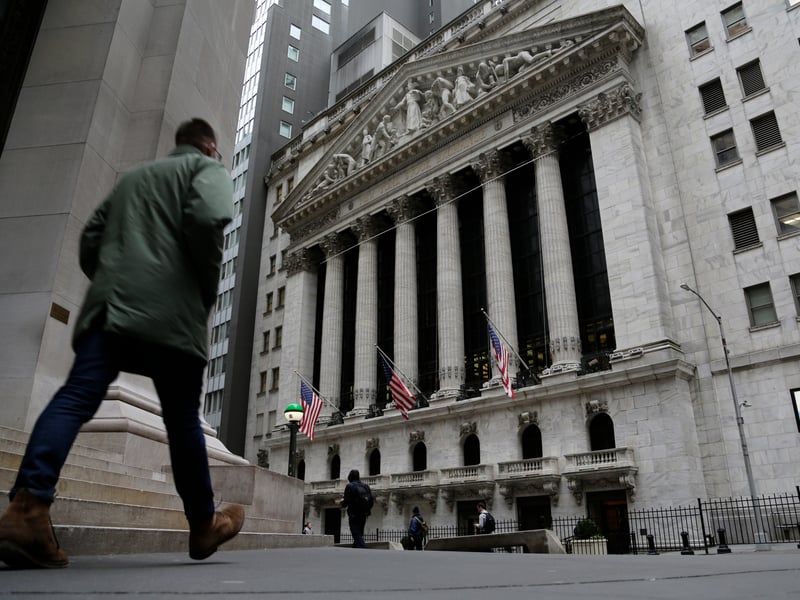
MANHATTAN (CN) — Things looked bleak for investors after provocative remarks by President Donald Trump this past weekend regarding tariffs on Europe, but markets quickly revived once the president stopped rattling his saber.
On Jan. 17, Trump threatened additional 10% tariffs on Europe over opposition to his plans to take over Greenland via purchase or other means. Those tariffs were set to increase to 25% by June if Trump didn’t get his way, spurring European officials to suspend a trade agreement with the United States.
Markets plummeted following the threats, wiping out nearly all the gains for 2026. However, following the rout, Trump backpedaled on the tariff threats, said he would “not use force” to gain Greenland, and hinted at a “framework of a future deal” for the Arctic territory. As a result, equities quickly regained lost ground.
By the closing bell on Friday, the Dow Jones Industrial Average — which on Tuesday shed 871 points — had fallen just 261 points for the week, while the S&P 500 and Nasdaq lost 25 points and 14 points, respectively.
However, some analysts worry foreign investors could take up the same “sell America” approach seen in the first half of 2025 after the “Liberation Day” tariffs caused bond yields to spike and then settle. Near-record highs for gold and silver prices this week also point to nervous investors.
“While investors should expect more volatility this year, the case for a continued bull market remains strong,” said Gina Bolvin, president of Bolvin Wealth Management Group. “Consumer spending is holding up, and declining interest rates should help ease pressure through lower mortgage rates, credit card interest, and auto loan costs.”
Consumers don’t seem overly perturbed by the kerfuffle over Greenland. The January report by the University of Michigan—which surveyed consumers until two days after Trump’s newest tariff threats—showed a minor uptick in sentiment, from 52.9 to 56.4, while the “expectations” and “current conditions” indices also saw small increases.
“At this time, consumers do not appear to be connecting foreign developments to their views of the economy,” said Joanne Hsu, the survey’s director. “A key exception is tariff policy, which was spontaneously mentioned by nearly 40% of consumers this month.”
The latest inflation data got lost in the headlines over Greenland, but the personal consumption expenditures report issued Thursday by the U.S. Bureau of Economic Analysis showed only a 0.5% increase in inflation for both October and November.
The headline print, which included both months due to the 2025 government shutdown, was higher than the 0.2% most analysts predicted, though the 2.8% year-over-year increase for November was in line with expectations.
The report was a good one for investors, as it came in slightly below the 3% annualized projection for the fourth quarter of 2025, which should give the Federal Reserve justification for further interest rate cuts this year, Thomas Ryan, economist at Capital Economics, wrote in an investor’s note.
“Hence, based on the price data alone, most Fed officials should still be comfortable with at least some further monetary loosening this year,” he wrote.
 Follow @NickRummell
Subscribe to our free newsletters
Our weekly newsletter Closing Arguments offers the latest about ongoing trials, major litigation and rulings in courthouses around the U.S. and the world, while the monthly Under the Lights dishes the legal dirt from Hollywood, sports, Big Tech and the arts.