
 Search Articles


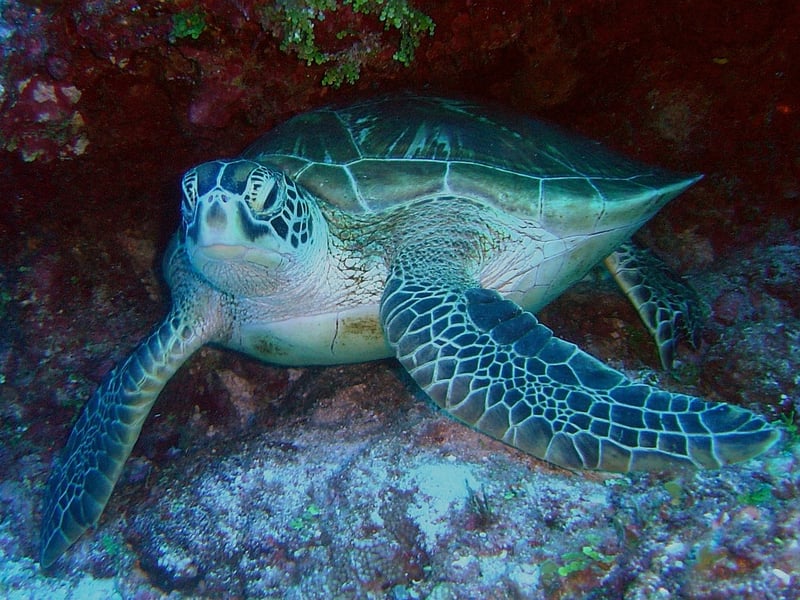
(CN) — Green sea turtles, long known as creatures of habit, may have been feasting on the same North African seagrass beds for millennia, according to research published in the Proceedings of the National Academy of Sciences on Monday.
A collaborative research project combining contemporary satellite data with analysis of ancient turtle remains found evidence of the animal’s food fidelity dating back thousands of years.
Baby sea turtles hatch alone on the seashore and then embark on a legendary migration between feeding and breeding grounds. While young turtles feed as opportunistic omnivores, that changes as they grow older. Around five years old, turtles don’t just stick to a diet of seagrass, they take to eating in the same meadows as their parents.
Until now, no one could trace this generational hyperfixation feeding back any farther than the modern satellites that collected data on turtle migration.
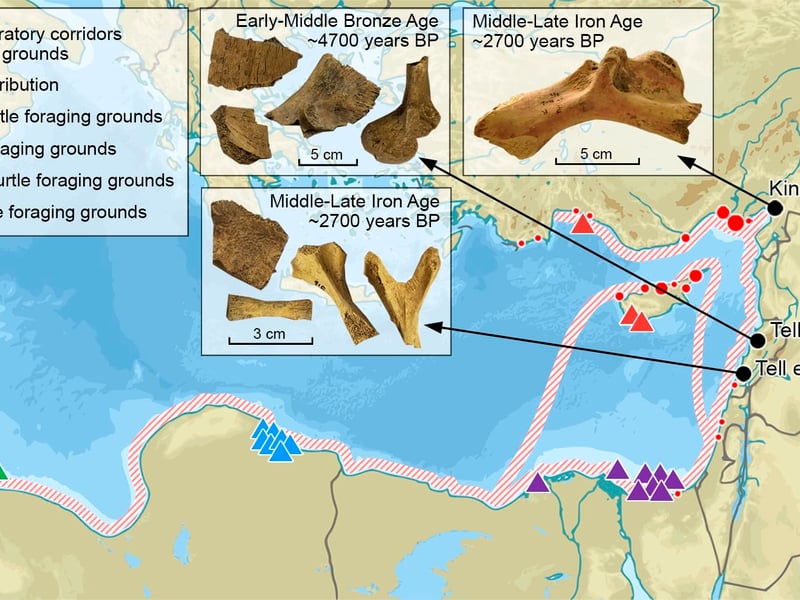
Willemien de Kock, a historical ecologist at the Netherland’s University of Groningen, now believes turtle migration patterns may date back to the Bronze Age. De Kock analyzed turtle bones stored in the attic of the university’s Institute of Archaeology found on digs from around the Mediterranean Sea.
Found among artifacts left behind by the Kinet Hoyuk during the Iron Age, and by the Tell-Fadous-Kfarabida during the Bronze Age, were turtle bones — marked by knives and likely eaten. To this day, turtles swim past these sites in modern Turkey and Lebanon on their migration route.
In addition to identifying two species — green turtles and loggerheads — researchers found evidence of what the animals ate by analyzing bone collagen with a mass spectrometer. Green sea turtles that consistently feasted on seagrass beds thousands of years ago contained traces of it in their bones. Loggerheads, which have a varied diet, were much harder to trace to back to specific feeding grounds.
Comparing their findings to satellite tracking data of modern sea turtles, provided by the University of Exeter, researchers say ancient sea turtles may have followed the same routes as their contemporaries, feeding along the coasts of Egypt and West Libya.
Researchers at the University of Exeter additionally collected skin samples from modern sea turtles which contained the same dietary markers as the ancient remains.
The findings can lead to better conservation, in line with the United Nation’s decade-long goal to “protect and restore ecosystems and biodiversity” in the oceans.
Today, the green turtle, Chelonia mydas, is considered endangered and the loggerhead turtle, Caretta caretta, is listed as vulnerable by the International Union for Conservation of Nature.
Conservation in the Anthropocene Age is often compromised by baseline fallacy — conservationists tend to base goals off the state of habitat as observed in their lifetime, conditions which may have already been drastically altered by the presence of humans. It’s therefore important to know turtle migration has centered around seagrass beds for thousands of years — not just for as long as ecologists have been watching.
“Even long-term data goes back only about 100 years, but tracing back further in time using archaeological data allows us to better see human-induced effects on the environment. And it allows us to predict a bit,” De Kock said in a statement.
Knowing that green sea turtles have fed in the same spots for thousands of years makes a strong case to prioritize protecting those seagrass meadows.
“We currently spend a lot of effort protecting the babies but not the place where they spend most of their time: the seagrass meadows,” De Kock said in a statement.
The methods used may also be used to identify other sites with both historical and ecological importance to vulnerable organisms.
 Follow @bright_lamp
Subscribe to our free newsletters
Our weekly newsletter Closing Arguments offers the latest about ongoing trials, major litigation and rulings in courthouses around the U.S. and the world, while the monthly Under the Lights dishes the legal dirt from Hollywood, sports, Big Tech and the arts.