
 Search Articles


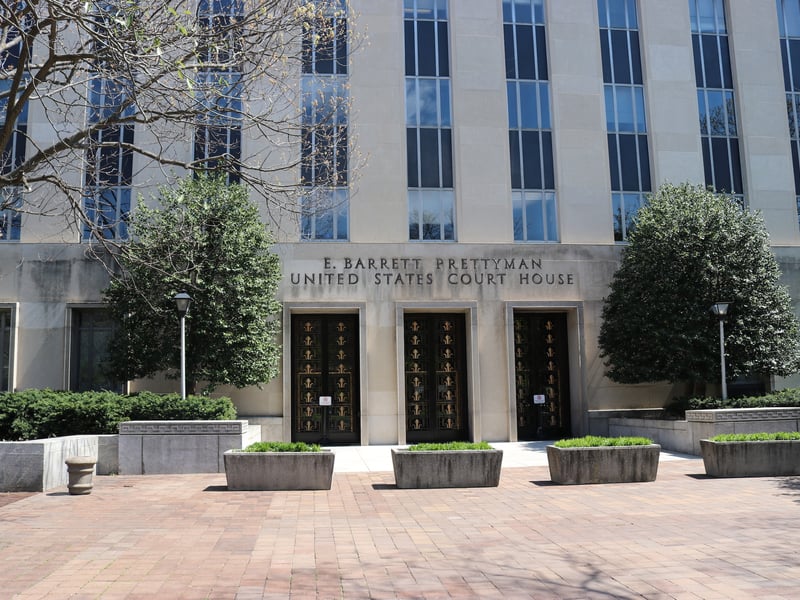
WASHINGTON (CN) — Funding shortfalls in the U.S. judiciary continue to threaten the security of federal judges and courthouses, the judicial system’s top policymaking body warned Tuesday.
But even as officials from the U.S. Judicial Conference urge congressional appropriators to fully fund the federal judiciary for the forthcoming fiscal year, lawmakers are proposing yet another stopgap budget that would freeze court accounts at levels the judiciary has long said are unsustainable.
During the Judicial Conference’s annual meeting, members of the federal court system’s lead policymaking body were told the judiciary funding gap could get worse next year, according to a press release published by the organization Tuesday. The situation could be even more dire, the release read, if federal courts were forced to continue operating at current funding levels under a full-year budget patch, known as a continuing resolution.
Budget negotiations for the 2026 fiscal year have stalled on Capitol Hill, as lawmakers face a Sept. 30 spending deadline and an impending government shutdown. To avoid that possibility, House Republicans on Tuesday unveiled a so-called “clean” continuing resolution, which would freeze the budgets of most government programs at current levels through November.
Among the budget items subject to the spending freeze would be funding for the judiciary, including for its judicial security program, which provides services to protect federal judges and courthouses.
“The continuing resolution will keep us frozen again at 2024 levels,” Judge Amy St. Eve, chair of the Judicial Conference’s budget committee, told reporters during a press call Tuesday. “With security, that would keep us frozen at [fiscal year] 2023 levels.”
St. Eve pointed out that while the proposed budget patch includes roughly $28 million for the Supreme Court’s security account, it does not provide additional funding for beefing up security at lower courts, such as federal district courts and appellate courts.
Judiciary officials for months have warned lawmakers that the extended funding shortfall for judicial security has made it difficult to secure courthouses and protect federal judges at a moment when threats against the judiciary have risen dramatically. Chief Justice John Roberts himself sounded the alarm about the safety of federal judges in his 2024 year-end report, citing what he called a “significant uptick” of threats against judges.
The Judicial Conference has pointed to dozens of such incidents, telling Congress in April that the U.S. Marshals Service has even been required in some cases to provide additional security to federal judges.
And St. Eve on Tuesday reiterated the policymaking body’s previous concerns that a lack of appropriate funding will prevent federal courthouses from updating far-outdated security equipment.
“We have courthouses that have some equipment that’s obsolete, that needs to be replaced and should have been replaced three, four, five years ago,” she told reporters. “We just don’t have the funding from our judicial security account to do that.”
The judiciary has requested roughly $9.4 billion in funding for the upcoming fiscal year. In a full-year spending package passed in the House Appropriations Committee earlier this month, the federal court system was allocated around $8.9 billion of that request. The Judicial Conference noted Tuesday that the proposed budget bill would fully fund its court security program, a line item of about $892 million. But, the conference said, the nearly $9 billion outlay still fell millions short of the judiciary’s request.
“We’ve informed Congress of our concerns,” St. Eve said. “We’re grateful to the appropriators listening to us and hearing us out on our concerns and what our critical needs are in order to carry out our constitutional duties.”
The Senate has yet to take up its version of the appropriations bill, which includes judiciary funding — and with time running out to pass a dozen individual budget packages, a continuing resolution appears to be a necessary step for lawmakers hoping to sidestep a shutdown.
The Judicial Conference told congressional appropriators in April that funding constraints for judicial security programs have forced the judiciary to reprioritize spending and delay upgrades to courthouse security systems. Without a budget hike, they told lawmakers, courts may need to further reduce security measures used to restrict access to secure areas and monitor activity in court buildings.
And concerns about extended funding shortfalls for judicial security come amid heightened tensions following the assassination of conservative commentator Charlie Kirk at a campus event in Utah last week. Just months prior, the top Democrat in Minnesota’s House of Representatives was killed in her home by a gunman, who also killed her husband and dog.
Public officials, including several lawmakers, have since sounded the alarm about increasing threats of political violence.
 Follow @BenjaminSWeiss
Subscribe to our free newsletters
Our weekly newsletter Closing Arguments offers the latest about ongoing trials, major litigation and rulings in courthouses around the U.S. and the world, while the monthly Under the Lights dishes the legal dirt from Hollywood, sports, Big Tech and the arts.