
 Search Articles


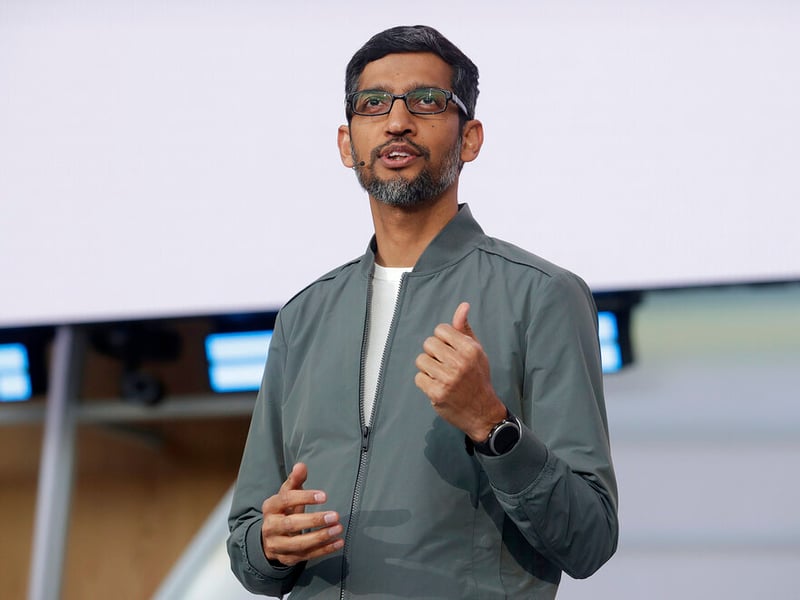
WASHINGTON (CN) — Google CEO Sundar Pichai testified Wednesday in the antitrust trial over the tech giant’s search monopoly that the Justice Department’s proposed remedies could crush Google Search.
The Justice Department has urged U.S. District Judge Amit Mehta to break up Google by selling off its Chrome browser, and potentially Android, while barring the company’s multibillion-dollar deals to make its engine the default on iPhones and other browsers like Mozilla.
Pichai, who previously testified during the liability phase of the monopoly trial, took the stand to blast the government’s proposal that Google share its search data with rivals to make them more competitive.
Pichai called the suggestion a “disaster,” “far-reaching” and “extraordinary.”
If the Barack Obama appointee orders Google to give up its search index — the database that a search engine relies on — and the way it ranks that data, it would “allow anyone to completely reverse engineer, end to end, any part of our technology stack,” Pichai said.
He expressed concern that releasing so much of Google’s search information to the company’s competitors would be a disincentive for the tech giant to continue investing as much as it has in search.
“It’s not clear to me how to fund all the innovation we do, if we were to give all of it away at marginal cost,” Pichai said.
The Justice Department has asserted that such data sharing is necessary to end the “vicious cycle” that stemmed from Google’s exclusive default deals, allowing the search engine to attract more traffic, gather more user information, improve the product and gather more revenue.
To break the cycle, the government has argued, Mehta must ban any default agreements and open Google’s trove of data to allow rival search engines like Bing and DuckDuckGo to match Google’s quality and restore competition to the market.
Chrome’s divestment is a key part of the Justice Department’s proposal as the largest browser on the market — Chrome garners 80% market share on Android devices, 68.4% on Microsoft and 60% of Macs, with just 12.9% on iPhones — and its integration with Google Search.
During the first week of the remedy trial, several tech executives expressed interest in purchasing Chrome, such as OpenAI, Perplexity and Yahoo.
Justice Department attorney Veronica Onyema asked Pichai whether another company could maintain the level of data security and privacy on Chrome as well as Google. Pichai replied no, because no other company had the same “cultural commitment” to Chrome and the internet as Google.
“No one has shown a commitment to the level of investment we put in,” Pichai said. “I haven’t seen, since we built Chrome, any other company make the kind of investments we have.”
While not an issue during the liability phase of the trial,artificial intelligence has become a feature of the remedy phase, which the Justice Department has expressed concern could allow Google to circumvent any ultimate remedies.
The company has characterized AI as likely to make its monopoly defunct and, with popular products like ChatGPT, has already become a major competitor to Google Search.
Pichai testified that AI would likely be the most important technology humanity has ever worked on, even more so than fire or electricity. He added that while AI has a role in search, there was little overlap between search and AI “assistants” like ChatGPT or Gemini.
Mehta noted how the integration of AI and search was a far-off issue during the liability phase, and pressed Pichai whether AI could make search obsolete.
Pichai did not directly answer the question, instead noting that its not a zero-sum battle between the two products before adding that AI would, in general, “deeply transform Google Search.”
Google has argued that Mehta should order limited remedies, such as opening up default deals to bidding from other search engines on a yearly basis rather than barring such deals entirely, and leave Chrome and Android with the company.
Pichai echoed those points on the stand and testified that Google has begun changing its agreements with companies like Apple. He told Onyema that Google is working to make Gemini one of several options in Apple Intelligence by the “middle of this year.”
 Follow @Ryan_Knappy
Subscribe to our free newsletters
Our weekly newsletter Closing Arguments offers the latest about ongoing trials, major litigation and rulings in courthouses around the U.S. and the world, while the monthly Under the Lights dishes the legal dirt from Hollywood, sports, Big Tech and the arts.