
 Search Articles


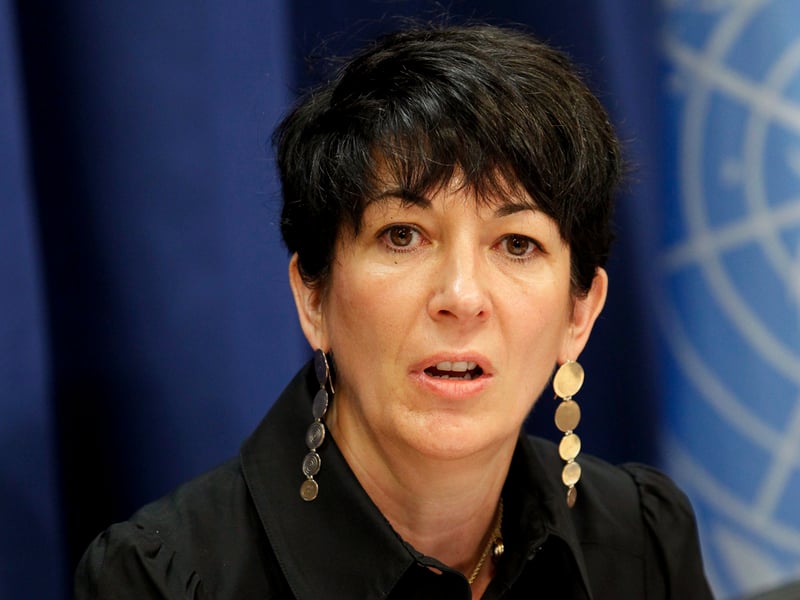
WASHINGTON (CN) — The Supreme Court refused on Monday to hear an appeal from convicted sex offender and longtime Jeffrey Epstein associate Ghislaine Maxwell, who is aiming to overturn her 20-year prison sentence.
The British heiress claimed that prosecutors violated a 2007 plea agreement that gave the late Epstein’s co-conspirators immunity. At the high court, Maxwell questioned whether the deal covered any prosecution in the United States or just those brought in Florida.
Maxwell was convicted on five counts of recruiting vulnerable teenage girls for predatory sexual abuse by Epstein during a 10-year period from around 1994 to 2004. Prosecutors said Maxwell was a direct participant in and facilitator of a sex ring wherein teenage girls were induced to give Epstein massages that later escalated into recurring episodes of sexual abuse.
Years later, Maxwell’s attempt to overturn her conviction coincided with a political firestorm over the release of Epstein’s supposed client list. President Donald Trump campaigned on unveiling the purported list of high-profile sexual predators who ran in Epstein’s orbit.
However, the Justice Department announced no such list would be released. Widespread outrage from voters consumed both sides of the aisle. Some advanced claims of a cover up as reporting dug up Trump’s close connections with Epstein — including the president’s name in the so-called “Epstein files.”
Todd Blanche, Trump’s former personal lawyer and current deputy attorney general, interviewed Maxwell in a closed-door meeting in July. After the interview, Maxwell was moved from a Florida prison to a low-security facility in Texas, which typically does not house sex traffickers.
Congressional Democrats demanded a transcript of the meeting, which they say was aimed at coaxing her into “favorable testimony or strategic silence” on her involvement in Epstein’s sex trafficking crimes.
The House Oversight Committee also subpoenaed Maxwell about her knowledge of those involved in Epstein’s crimes. Maxwell was moved to the Texas facility days before the scheduled interview at the Florida prison.
Epstein’s cushy 2007 plea deal and his subsequent death in jail have fueled rampant conspiracy theories.
Back in 2006, the FBI investigated Epstein after a 14-year-old girl reported that he paid her for a massage. Federal investigators found more victims, preparing a 60-count indictment.
Before the case could begin, however, Epstein and the United States Attorney’s Office came to a plea agreement. For pleading guilty to soliciting children to engage in prostitution, Epstein would serve 18 months in a county jail. He only ended up serving 13 months, during which he was allowed to leave the jail for 12 hours a day, six days a week as part of a work program.
Epstein’s controversial plea deal was the star of a scandal during Trump’s first administration. The federal prosecutor who approved the deal, Alexander Acosta, happened to be serving as Trump’s labor secretary before he was forced to resign.
David Super, a law professor at Georgetown, said that plea deals are more common when prosecutors want to target co-conspirators, not protect them. In the rare circumstances that these protections have been offered, Super said the agreements protect people of significance to the defendant.
“The fact that the U.S. attorney, Mr. Acosta, agreed to open-ended protection for unnamed and unknown co-conspirators may be further evidence of the highly accommodating attitude toward Epstein,” Super said.
If Epstein abided by the plea deal, the “United States” agreed not to seek criminal charges against any potential coconspirators. The dispute at the Supreme Court is whether the United States refers to the country as a whole, preventing Maxwell’s prosecution anywhere, or just those brought in Florida.
The Trump administration urged the justices to reject Maxwell’s petition, stating that the co-conspirators clause was meant to protect victims. The White House said that the United States referred to the United States Attorney’s Office.
 Follow @KelseyReichmann
 Follow @kelseyreichmann.bsky.social
Subscribe to our free newsletters
Our weekly newsletter Closing Arguments offers the latest about ongoing trials, major litigation and rulings in courthouses around the U.S. and the world, while the monthly Under the Lights dishes the legal dirt from Hollywood, sports, Big Tech and the arts.