
 Search Articles


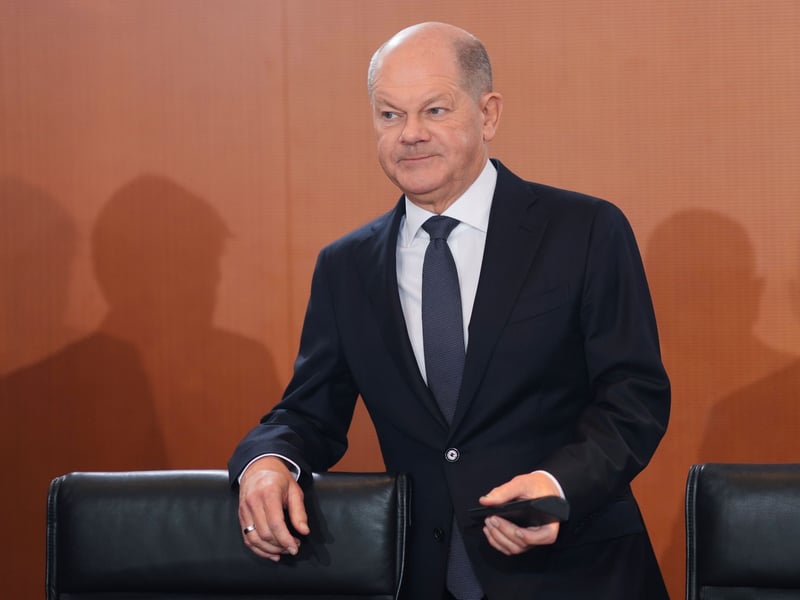
BERLIN (AFP) — Germany’s embattled Chancellor Olaf Scholz on Wednesday launched the process expected to lead to early elections on Feb. 23 in Europe’s biggest economy, which is mired in political and financial troubles.
The center-left leader requested a vote of confidence next Monday, which he is expected to lose, leading to the dissolution of Parliament and paving the way for the general elections.
In a brief televised statement, Scholz said he wanted “to clear the way” for the elections and stressed that until then his government and the legislature would remain “fully capable” of steering the ship of state.
As the winter-time election campaign gains pace, Scholz’s Social Democrats are lagging in opinion polls behind the conservative opposition CDU-CSU, led by Friedrich Merz.
The main issues for voters are the flagging economy and cost-of-living crisis, how to support Ukraine in its war with Russia, and a resurgent immigration debate, with upheaval in the Middle East.
Berlin’s political crisis comes at a turbulent time after the French government of Michel Barnier was ousted in a no-confidence vote last week and as Donald Trump returns to the U.S. presidency on Jan. 20.
Scholz’s three-year-old coalition collapsed in early November in a bitter dispute over fiscal policy between the chancellor’s Social Democrats and the liberal Free Democrats, who left the alliance.
This has left the Social Democrats in a minority government with the Greens and struggling to pass legislation through the Bundestag.
Scholz’s procedural move will allow for a Bundestag vote Monday where Merz’s CDU-CSU bloc and the other opposition parties are expected to declare they have no confidence in the government.
This will allow the head of state, President Frank-Walter Steinmeier, to dissolve the legislature within a maximum of 21 days and then call the elections within another 60 days.
This is expected to lead to elections on Feb. 23 under a timeline all the major players agreed on in principle several weeks ago.
Campaign heats up
Merz, 69, is the top candidate of the Christian Democrats, the party of former chancellor Angela Merkel, which is in a permanent alliance with the more right-wing Bavarian CSU.
The CDU/CSU grouping is leading in the polls at around 32%.
Polling second, at around 18%, is the far-right Alternative for Germany. The AfD, led by Alice Weidel, is set to remain in opposition as all other parties have vowed not to cooperate with the anti-immigration party.
Scholz, 66, will run again for the Social Democrats after he survived a heated debate weeks ago on whether his popular defense minister, Boris Pistorius, should be the party’s top candidate.
The Social Democrats are polling at around 15%, and 2 points higher in a recent survey, but Scholz hopes to repeat his performance from 2021 elections when he made a late comeback to win the race.
He has presented himself as a cool-headed “peace chancellor” on Ukraine, steering a course meant to support its war effort without risking a direct conflict between nuclear-armed Russia and NATO.
On the German economy, which is expected to shrink for a second year in a row, he has advocated boosting business investment and reducing sales tax on foodstuffs to support poorer households.
The left-leaning Greens under Robert Habeck, 55, are polling at around 12% to 14%, making them a likely partner in the next government, even though the CSU has strongly opposed this so far.
Smaller parties include the Free Democrats of former finance minister Christian Lindner, which has been badly bruised by revelations that its leadership had carefully plotted the break-up of the coalition.
On the far left, the Alliance Sahra Wagenknecht, with a nationalist, anti-immigration and Moscow-friendly stance, will compete with Die Linke party which Wagenknecht split away from early this year.
—
By FRANK ZELLER Agence France-Presse
Subscribe to our free newsletters
Our weekly newsletter Closing Arguments offers the latest about ongoing trials, major litigation and rulings in courthouses around the U.S. and the world, while the monthly Under the Lights dishes the legal dirt from Hollywood, sports, Big Tech and the arts.