
 Search Articles


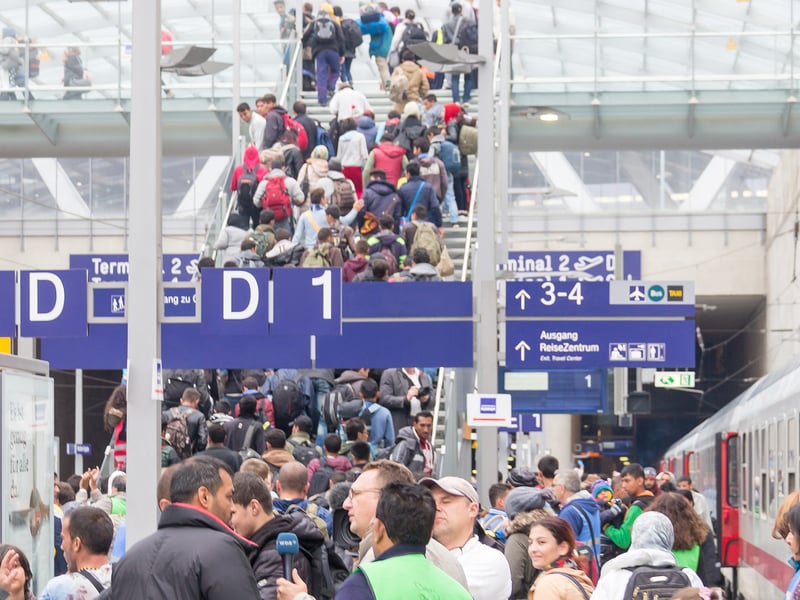
BERLIN (CN) — On Aug. 31, 2015, Germany’s then-Chancellor Angela Merkel uttered the line that would come to define her legacy: “Wir schaffen das,” or “We’ll get it done” — a forceful if vague declaration of Germany’s ability to handle a massive influx of refugees.
In 2015 and 2016, over 1 million refugees, most from Syria, Iraq and Afghanistan, entered Germany. Merkel’s emphasis on Germany’s “welcome culture” was a major draw.
“When she said ‘Wir schaffen das,’ the video was all over the place (in Syria). A lot of my friends were saying, ‘Look, the German chancellor is saying we are welcome and the borders are open,’” Antonios Hazim, a Syrian who arrived in Berlin in 2016, told Courthouse News. Hazim is pursuing his master’s at the Technical University of Berlin and volunteers at the Syrian-German community organization Hiwarat.
“Of course ‘we did it,’” Tareq Alaows, spokesperson on refugee policy at PRO ASYL, Germany’s largest immigrant advocacy organization, told Courthouse News.
“The question is who exactly the ‘we’ is referring to. I mean those that came to Germany. When you look at the numbers 10 years on, they indicate that a majority of those who came to Germany in 2015 are an important part of German society. Many of them remade their lives, have found work, and taken an active role in their community. Lots of them have become citizens and become active in politics,” said Alaows, who arrived in Germany from Syria in 2015.
Merkel’s decision helped hundreds of thousands like Alaows and Hazim find a home in Germany, but it also made her an enduring lightning rod for Germany’s ever-growing far right, which has successfully instrumentalized immigration and asylum politics to dominate media discourse and build support.
The ‘summer of solidarity’
At the time, Germans mobilized en masse to support incoming refugees, and a clear majority of the country supported letting them in.
“2015 was the summer of solidarity — people stepped up and took care of things that are usually the state’s responsibility, because they realized the state was simply incapable,” said Alaows.
“I’m still in contact with people who helped me when I arrived in Germany, helped me learn German and navigate the bureaucracy in 2015. I wouldn’t be where I am today without them. And those people are the same ones who took to the streets to support Ukrainians after Russia’s invasion,” he continued.
While the state was often overwhelmed by the gargantuan task of organizing the arrival, accommodation and early integration of so many people, permitting the entry and attempting to accommodate so many refugees was already a departure from previous policy.
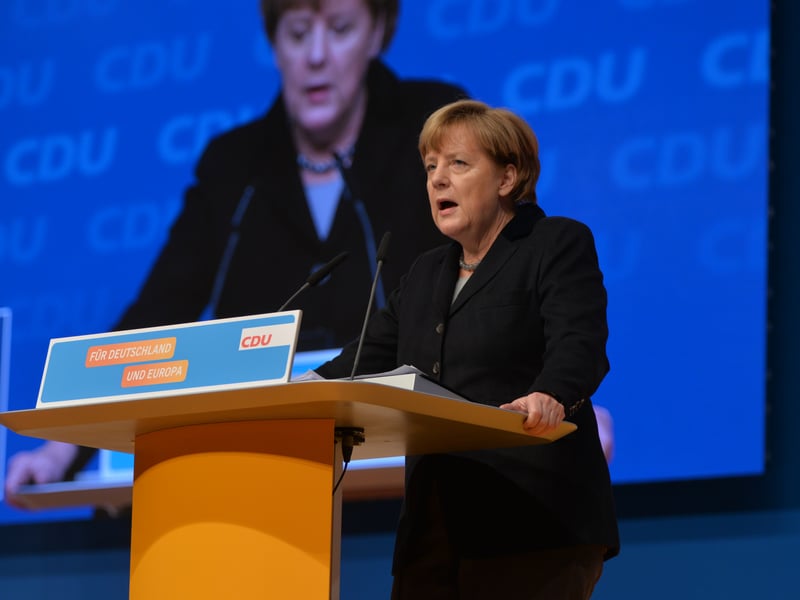
“The short period of this ‘open door’ policy in 2015 was a bit unusual for Germany, in that Germany had for decades considered migration in general, be it labor migration or even asylum, as a temporary phenomenon,” Marianne Samaha, a researcher at Berlin’s Free University focusing on the country’s asylum system, told Courthouse News.
According to Samaha, the shift was short-lived. “Shortly afterward, starting in 2016, we returned to more restrictions in terms of asylum applications, but also in terms of conditions for people residing in Germany as asylum-seekers and refugees,” she said.
Hundreds of thousands of new Germans
While a safe haven from war and conflict at home saved the lives of countless new arrivals, remaking those lives in Germany didn’t always come easy.
“Coexistence between those who have arrived in Germany and those already here was reduced to a to-do-list,” said Alaows. “Learn the language, get a job as fast as you can, etc. But that’s a very limited understanding of integration. Integration isn’t a one-way street. People enter a society and accept its values, but those that are already here also have to ensure that those who are coming are well-received and supported,” he said.
Despite limited resources and a narrow perception of integration from the state, even if reduced to a cold checklist, the cohort who arrived a decade ago is fairing fairly well.
“Today, around 68% of refugees who arrived around that time are employed,” said Samaha.
“And I think its used particularly often as a measure of success today in a country where there’s a lot of discussions about needing labor and contributions to the social welfare system and an aging society,” she continued, referring to the labor-shortage compounding the country’s beleaguered economy.
Nearly 200,000 of the roughly 1 million Syrians living in Germany have become citizens. While Samaha notes it took longer for many of them to achieve citizenship than in other European countries, it is at least a testament to formal integration.
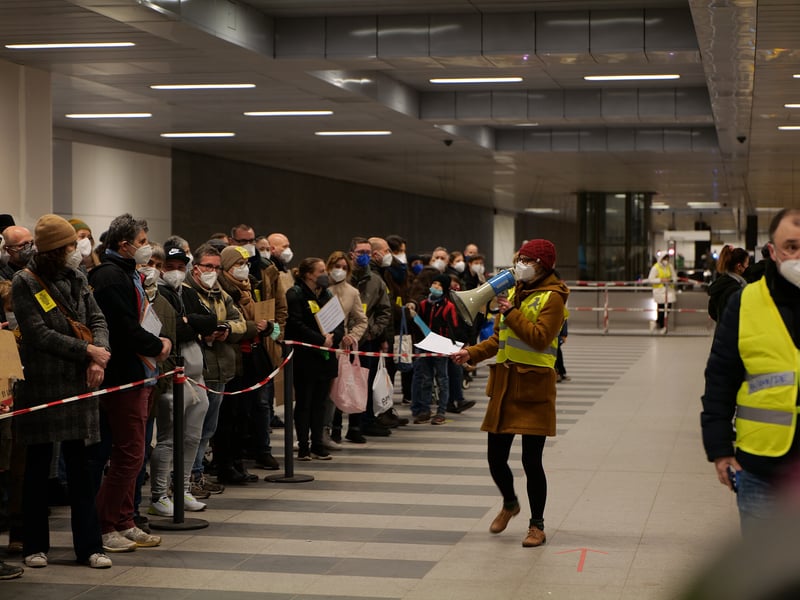
Hazim, who says he experienced a largely welcoming atmosphere in Berlin but faced racist outbursts shortly after his arrival, notes that varying legal and cultural responses to different groups fleeing wars have created a sense of hierarchy among refugees.
“Ukrainians were treated better than Syrians. But I would also argue that Syrians were treated better than those coming from Iran or Afghanistan,” he said. Ukrainians were spared the same asylum-seeking process of other refugees due to a special EU-wide directive, though Hazim argues that Germany was largely capable of handling the influx of 1.2 million Ukrainians due to the civil society infrastructure first developed in 2015.
In the right’s crosshairs
While Germany’s support for incoming Ukrainians to a degree highlights the longevity of it’s “welcome culture,” even the relative favored status of the more-recent refugees hasn’t shielded them from the wider clampdown on support for asylum-seekers and other migrants. Current conservative Chancellor Friedrich Merz has called for cutting benefits to Ukrainian refugees as his government scrambles to lower social spending.
Merz’s government has tightened asylum regulations and attempted to reject asylum-seekers at the border. Merz’s predecessor, Social Democrat Olaf Scholz, also adopted a tough stance, restarting deportations to Afghanistan despite criticism from the U.N.
A tougher approach to refugee policy and migration from across Germany’s political spectrum represents an attempt to win over runaway support for the far right party Alternative for Germany, known as AfD, which has used immigration as a wedge issue to become the country’s most popular party.
“Germany’s response to the ‘refugee crisis’ has always played an important role in right-wing recruitment and mobilization,” Mathias Wörsching, historian and political scientist at Mobile Counseling Against Right-Wing Extremism Berlin, told Courthouse News. “The far right has positioned itself against three main ’enemies’ while mobilizing in recent years, and the biggest one is certainly migration — particularly young, nonwhite male migrant groups.”
Many refugee advocates argue Germany failed to invest in holistic integration programs to weave as many new arrivals into society — and not just the job market — as possible. Given the country’s physical and social infrastructure have long been crumbling, many Germans feel they’re locked in a competition for limited resources with immigrants.
“Germany is one of the richest countries in the world, and yet we have problems in the health care sector, in our public transit system, with the roads, and in much of our social system. A lot has also gone wrong when it comes to integrating refugees and migrants. Not enough is being done to really integrate them and provide opportunities for them,” said Wörsching, who notes that though this doesn’t directly affect many Germans, the AfD has been able to effectively exploit the situation.
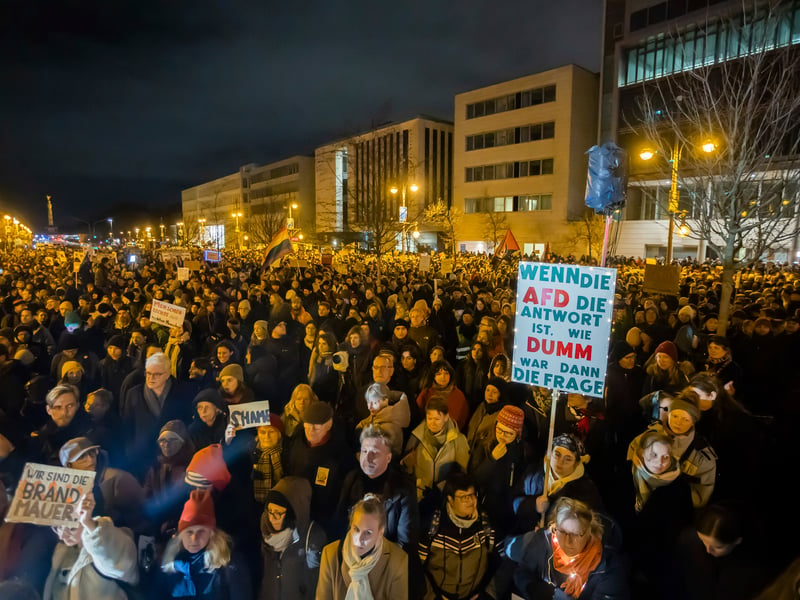
Tareq Alaows knows what it’s like to be a personal target of right-wing hate. He was forced to abandon a 2021 run for Parliament after receiving overwhelming racist abuse. Alaows expressed frustration that the concerns of the far right can often shift the entire political spectrum; statements of solidarity like last year’s mass protests against the far right often have little long-term political impact.
“Millions of people took to the streets last year to protest this rightward shift. And how did politicians respond? All I saw was selfies at the protests. I helped organize and moderated at the demonstrations, and there was truly no reaction or outreach from politicians afterward,” he said.
A new home, but for how long?
Anti-immigrant sentiment isn’t just prominent in the media or in right-wing political talking points — it’s shaping the reality of those who have come to call Germany home.
“We know from statistics as well as our own day-to-day work that Berlin experiences threats, harassment and even attacks on people of color every day,” said Wörsching. “And this has drastically increased in the last two years. When we visit refugee accommodations and speak to people about their experiences, they also go through this in their daily lives. Physical violence is more rare, but threats, abuse and all different kinds of derogatory behavior are regular occurrences,” he continued.
This has made the future a lot less certain for many who previously felt settled in Germany.
“When I did my interviews in 2022 and 2023, people shared a lot of challenges they faced in Germany, but in general, I would say a lot of people were thankful for being in Germany and part of its society,” said Marianne Samaha. “When I did my follow-ups on the interviews in late 2023 and early 2024, I had very different responses. I think people were feeling more and more insecure about their ability to stay in Germany, about the atmosphere and even talking about daily interactions on the street,” she said.
And while Merkel’s famous words once rang out around the world and helped attract hundreds of thousands in desperate need, Germany’s darkening atmosphere has been noticed by those abroad.
“I often speak with people outside of Germany and say, ‘Hey, you’re an IT expert, you’re exactly what Germany is looking for,’” said Alaows. “But people just laugh at that and ask why they should come to the country that deported their relative, or talks about deporting foreigners as though it could solve all its problems? They’d rather go to New Zealand or Canada, where they feel they’ll get respect.”Courthouse News correspondent Dave Braneck is based in Germany.
 Follow @braneck
Subscribe to our free newsletters
Our weekly newsletter Closing Arguments offers the latest about ongoing trials, major litigation and rulings in courthouses around the U.S. and the world, while the monthly Under the Lights dishes the legal dirt from Hollywood, sports, Big Tech and the arts.