
 Search Articles


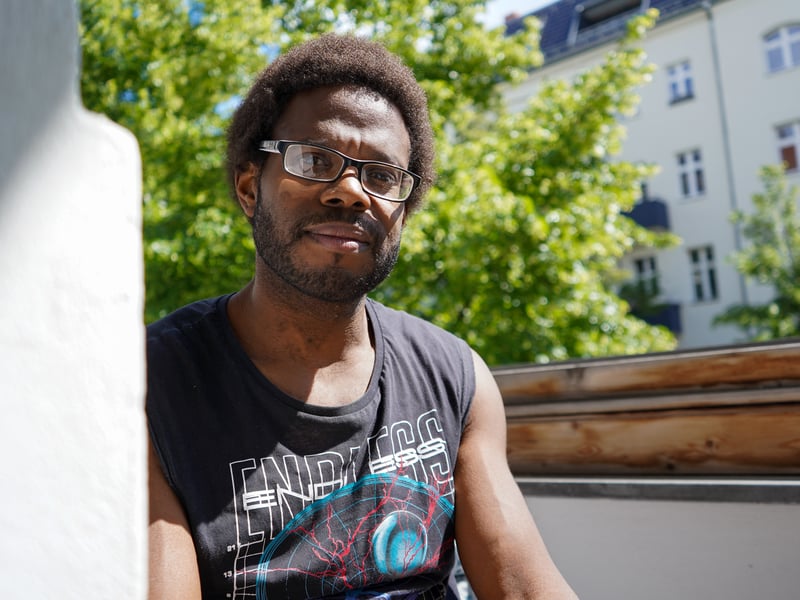
BERLIN (CN) — Growing up in the small city of Sherwood, Arkansas, Jeremy Osborne had an unlikely dream: He wanted to be an opera singer.
After earning musical degrees from Central Arkansas and Johns Hopkins universities, he found there were few professional opportunities to do so in the United States.
In 2014, Osborne, then in his late 20s, moved to Germany. He found singing work at operas in Dresden and Leipzig, as well as at Deutsche Oper Berlin, one of the country’s most prestigious opera houses.
At first, Osborne supplemented his singing jobs with other work. He took gigs as a translator, editor and voice artist. Eventually, he became established and was able to sing opera full-time.
Germany, Osborne said, gave him early career opportunities that would have been much harder to find stateside.
“Germany just puts on more opera than the U.S.,” the now 38-year-old said in an interview at his apartment in Friedrichshain, a bustling neighborhood in Berlin’s east. “That gives a lot more people a chance to sing.”
From Hamburg’s glittering modern Elbphilharmonie to Dresden’s ornate and historic Semperoper, opera houses remain a major part of life in Germany.
The country has more than 80 full-time opera houses, including some of the world’s most famous. Compare that to the United States, which has just a handful.
Even some small German cities boast one of these venues, massive shrines to classical music. Their prevalence reflects the country’s central role in these traditions, Simon Woods, president of the League of American Orchestras, said in an interview.
From Bach and Beethoven to Mozart and Wagner, “much of the repertoire that is played by orchestras around the world comes from here,” Woods said. “It was born here in Germany, or in Austria.” As a result, “it feels more normal for people to go to an orchestra concert than it does in many places in the U.S.”
Despite those deep roots, German opera culture is changing. Woods was recently a keynote speaker at Deutscher Orchestertag*,* an annual conference held in Berlin and dedicated to the future of the industry.
One major problem facing opera, he says, is that people just aren’t listening to classical music as much anymore.
“Orchestras don’t play the same role in society they once did,” he added. “That’s why so many orchestras are thinking so hard about how they could make a bigger footprint.”
Don’t mourn Germany’s opera houses just yet. Music and theater in the country receives plentiful public funding: 4.6 billion euros, orroughly 30% of the federal culture budget. Classical music institutions in Germany get about 80% of through funding from governmental grants, compared to just 5% in the United States.
Unlike in the United States, where a rising actor might have to scrape by in a pricey city like New York, Germany also offers a relatively low cost of living. That can insulate creative types from the low wages often found in the arts.
“Inflation has been a huge problem over the last couple years, but there’s still the remnants of a social safety net,” Osborne said. “A lot of artists can come here and do their thing for a while.”
But troubles loom on the horizon. Although Germany’s opera houses remaintourist attractions, these sites are no longer the cultural meccas they once were as the music world changes and opera fans age and die off.
“We’ve always had this assumption that as older audiences pass away, the next generation will become ready to have classical music in their lives,” Woods said. “I think that assumption just doesn’t hold true anymore.”
The situation has musicians and opera-house administrators looking for ways to keep classical music relevant in the 21st century. That means finding a balance between preserving tradition and drawing in more diverse audiences, a difficult task.
Efforts to safeguard German opera will have effects well beyond Germany. The country’s classical music traditions have made it a frequent stopover for performers hoping to make it big.
“Germany is often where people go to work on becoming a star,” Osborne said. “I would never have been able to sing at the Lyric Opera of Chicago if it wasn’t for the experience that I had gathered at the Deutsche Oper Berlin. I just wouldn’t have been able to do it.”
While an aging audience presents unique difficulties for opera houses, other challenges are more universal. Last year, Courthouse News reported on the decline of another quintessentially German venue: Berlin’s rowdy techno clubs.
Like those clubs, opera houses are also grappling with broader changes in German society, including shifting lifestyles and governmental priorities.
Start with public funding. Last year, Berlin abruptly cut its cultural budget by 130 million Euros. More austerity is likely, givenGermany’s economic woes andnew conservative government.
Compared to before the pandemic, Berliners are also around 10% less likely to participate in a wide range of activities, from attending sporting events to visiting the zoo, according to a recent study from the Institute for Research on Cultural Participation, a Berlin-based think tank. With its elderly audience, classical music has been hit particularly hard.
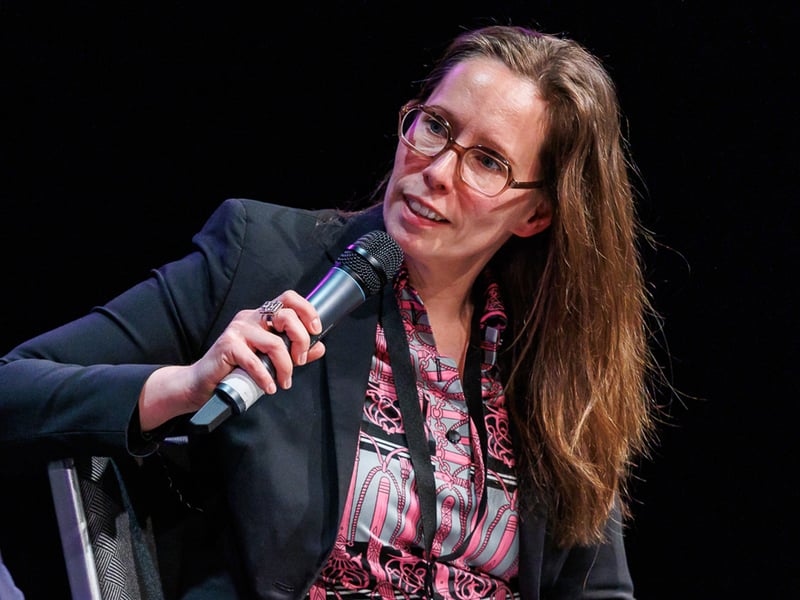
“A lot of people just stay at home, where they’re comfortable. They have their social contacts and their hobbies and don’t go out so much anymore,” Vera Allmanritter, the institute’s director, said in an interview. “That seems to be something you see throughout society, across age groups — though it is more extreme among the elderly.”
Still, Germany’s operas face a more existential issue than other venues: When young people are deciding what to listen to, classical music just isn’t very high on the list for many.
“Young people in Germany’s perception of what culture is has changed dramatically in the last 30 years,” Allmanritter said. “Thirty years ago, the answer might have been opera, theater and museums. Now, there’s a much broader understanding of culture” — and for many, that just doesn’t include a trip to the opera.
“It’s the same here as in many Western countries,” she continued. “When you look at the visitors of concert halls and operas in Germany, they tend to be older than the overall population, with high formal education levels and income.” It’s also an exclusive world, with customs like dress codes that can scare off younger and nonwhite audiences. That’s a problem, she says, because “the less diverse your audience is, the less future-proof you are.”
What can be done to bring in more diverse audiences? Opera houses are still working out the solution, but they say the key is making opera more attractive for younger and nonwhite people.
There’s space “for Taylor Swift as well as the Philharmonic,” said Annika Schmitz, senior manager of education and outreach at the Berlin Philharmonic Orchestra. “I don’t see it as a competition.”
Woods, the League of American Orchestras president, brought up what he called the price vs. value problem. The price problem is relatively straightforward: Consider an expensive and high-demand music event like Taylor Swift’s recent Eras Tour. Young people may really want to attend but struggle to afford the tickets.
“We have a value problem, which is very different,” Woods said. “Young people don’t see value from attending a classical concert. Unless it feels relevant to them and their lives, they won’t pay.” He thinks making classical music events splashier and more exciting (think: music festivals) could help bridge that gap.
In short, Germany’s operas and orchestras face a demographic problem — and not only when it comes to age. Roughly one-quarter of the German population is either an immigrant or the child of an immigrant, meaning Beethoven isn’t necessarily baked into every German’s bones the way he once was.
While famed concert halls might garner interest internationally with their classical German music, they’ve ironically become less representative of the country itself, said Allmanritter, the researcher.
“Just because musicians are international doesn’t mean they are representative of Berlin," she said. “We have a lot of people with a Turkish background in this city, but my impression is that this population isn’t really represented in these institutions.”

The simplest way to get bigger audiences at classical music concerts may be to simply offer them for free.
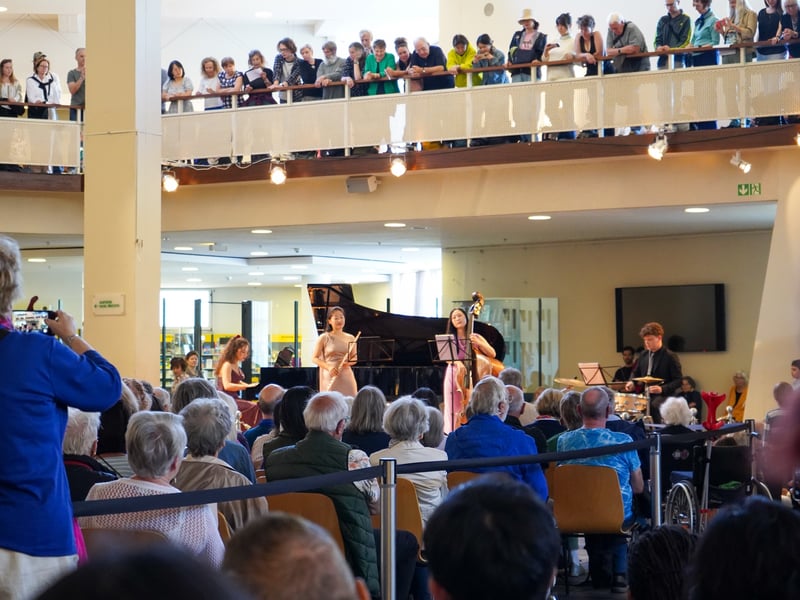
On a recent Wednesday, hundreds of Berliners filled the sun-dappled atrium of the Berliner Philharmonie, home of the Berlin Philharmonic Orchestra, to take in a free midday concert. The venue offers them roughly once a month.
“This is my first time here,” said Juliet, a 37-year-old South African who has lived in Berlin for nearly a decade. “I’m a fan of classical music, but sometimes it can be a bit expensive to go to concerts.”
Sarah, a 32-year-old from the United States, was also in attendance. She said she attends concerts at the Philharmonie a couple times a year.
“I like this style of music, plus I generally like to engage in free events,” she said.
Sarah makes a point to attend free concerts in the city. Prior to cultural budget cuts, she noted, Berlin’s public museums used to be free once per month.
“That’s the kind of thing that brought out a lot of my friends that wouldn’t usually go to a museum — especially with the cost of living creeping up,” she said. “If something’s free, it helps expose people."
In Sarah’s case at least, the Philharmonie’s strategy seems to be working: After attending some free shows, she says she bought tickets to other events and invited friends.
Still, Sarah and Juliet were already classical music listeners. To really grow their audiences, opera houses must find a way to create new fans.
That’s a longer game, and a bigger ask. As Osborne sees it, it all comes down to education and early exposure.
“Who is getting exposed to this art, and how entrenched is it in educational structures?” he said. “Most people I know who really got into opera usually had one special, really engaged teacher. Or, it’s just down to dumb luck.”
Classical music institutions are starting to find ways to draw in younger listeners. Collaborating with schools, the Berlin Philharmonic Orchestra plans to offer concerts geared specifically toward young people.
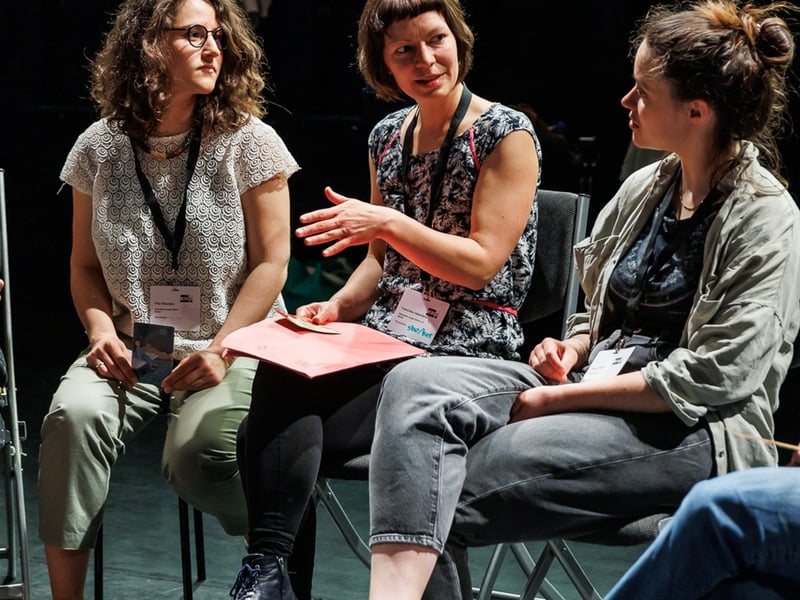
Also in Berlin, the nonprofit NJO is focused on getting young people more involved in classical music. “I think there’s a lot of movement to rethink things now, as well as developing a new repertoire of musicians who go beyond the established canon,” said Filiz Oflazoğlu, a spokesperson for the group. “This includes playing works by musicians which have simply been forgotten because they belong to marginalized groups.”
In Osborne’s case, it was indeed a special and really engaged music teacher who helped foster his love for classical music.
That teacher, Sherry Henderson, served as choir director at Osborne’s high school. Later, she helped connect him with college professors who further exposed him to opera.
“I was drawn to the lyricism and the passion with which the best singers in the field sang,” Osborne said of his early experiences with the genre. And while classical music can get a bad rap for being stilted, he said he found it “intensely expressive.”
It remains to be seen if Germany’s classical music venues can replicate Osborne’s experience on a larger scale. The singer certainly hopes so.
“There’s a lot of misconceptions around classical music,” he said — for example, that people need to dress a certain way to attend an opera. And yet at the end of the day, music is music. “It’s about the biggest human emotions and the experiences that connect us all, even if the works are hundreds of years old.”
“You don’t need to dress a certain way to appreciate that,” Osborne added. “It would be a shame if people stayed away from concert houses and opera houses because of those misconceptions." If Germany’s opera houses want to dispel those misconceptions, they will have to keep finding ways to remain relevant in a new era.
 Follow @braneck
Subscribe to our free newsletters
Our weekly newsletter Closing Arguments offers the latest about ongoing trials, major litigation and rulings in courthouses around the U.S. and the world, while the monthly Under the Lights dishes the legal dirt from Hollywood, sports, Big Tech and the arts.