
 Search Articles


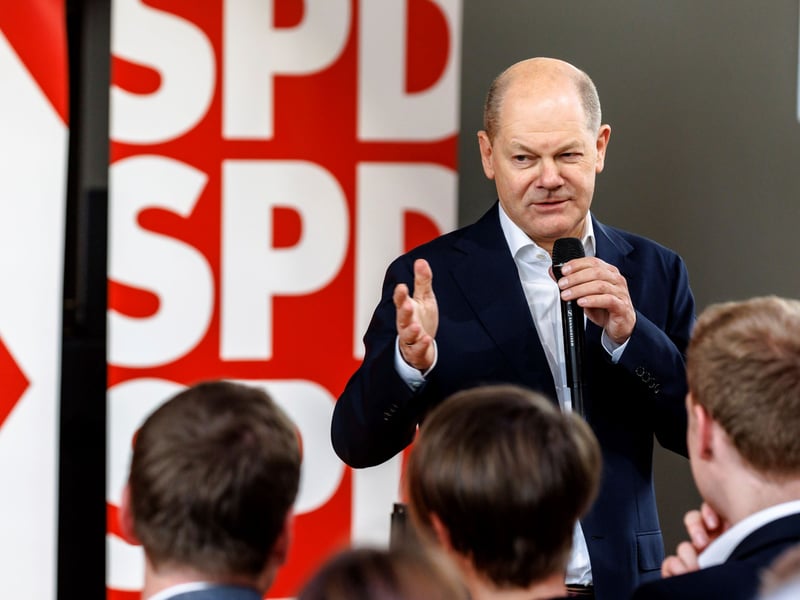
BERLIN (CN) — Germany’s “traffic light coalition” — the three-way governing coalition nicknamed the after the colors of its member social democratic, green and liberal parties — went dark after German Chancellor Olaf Scholz dismissed Finance Minister Christian Lindner on Wednesday.
“Over the last three years, I have continuously made recommendations for how a coalition of three distinct parties can reach solid compromises,” Scholz said in a televised address to the nation. “It was often difficult, but it is my duty to find pragmatic solutions. Far too often the necessary compromises were overturned due to public bickering and overtly ideological demands.”
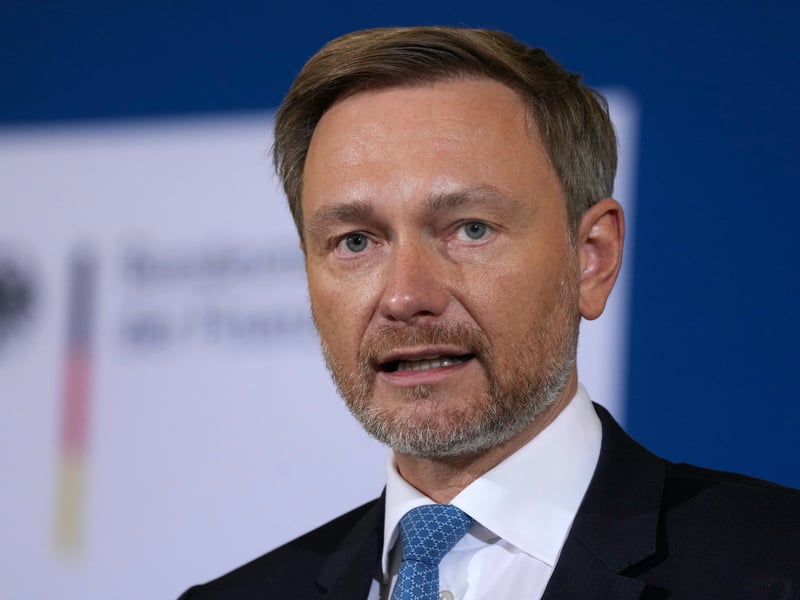
The center-left Scholz had been locked in months of clashes over spending heightened into days of exhausting crisis talks with Lindner, head of the liberal Free Democratic Party or FDP.
Though the three parties initially styled themselves as Germany’s ‘coalition of progress’ after taking power in December 2021, they’ve been strange bedfellows from the start. The FDP’s commitment to keeping spending to a minimum has frequently clashed with Scholz’s attempts to expand social programs and Green Economic Minister Robert Habeck’s commitment to decarbonizing German industry.
“The collapse of the ’traffic light’ coalition and the prospect of an impending election are likely to be viewed as an opportunity to restore stability in German politics, given the persistent and irreconcilable differences among its three governing factions,” Aaron Allen, a researcher at the Center for European Policy Analysis, told Courthouse News.
Scholz has called for a vote of confidence on his government for January 15, 2025. If he fails that test, elections will be held in March 2025 instead of as usually scheduled in September.
After initially passing a flurry of social legislation on topics ranging from dual citizenship to abortion access, the coalition found common ground increasingly elusive once it had to break out the checkbook. The war in Ukraine — as well as Germany’s 100 billion euro investment in its military in the wake of Russia’s invasion — and ensuing economic challenges have made debates over spending unavoidable.
“Lindner has blocked too much, and broken my trust too often,” said Scholz.
The finance minister had refused to rubber stamp an array of proposed public investment during his term. With it increasingly clear that the purse strings would take prying, conflict between the Greens and Social Democrats about just how to spend what was available became commonplace.
Tensions reached a new high last week, when instead of simply vetoing one billion euros in public investment proposed by Habeck, Lindner responded with a lengthy policy paper that recommended massive cuts to climate protections and welfare spending — and it just happened to get leaked to the public.
Trapped in a constellation where it was near impossible for any of the parties to actually deliver on campaign promises for their constituents, all three members of the coalition have bled support in European and regional elections.
Internal pressure to call it quits on the unhappy union has been unavoidable, and transatlantic uncertainty born out of U.S. election results has only intensified things.
“The return of Donald Trump to the White House will undoubtedly influence German discourse on critical issues, including continued support for Ukraine, defense spending, the need for greater European sovereignty and trade policy,” said Allen of the Center for European Policy Analysis.
In his Wednesday address, Scholz noted the dire need to spend on affordable energy, supporting Germany’s troubled auto industry, encouraging direct investment in the German economy and further backing Ukraine.
“We need to increase our support for Ukraine, which is facing a difficult winter. In the wake of the election in the U.S., this sends a strong signal that we can be relied on,” he said.
Scholz’s decision to pull the plug on his coalition might rid German politics of its current inertia, but it will do little to tamper the amount of uncertainty in the world.
“I think there’s an understanding that with the next election, whether it’s in March or it’s in September, it’s unclear that whatever is produced politically will be more stable than what we have now,” said Allen.
With all three coalition parties reeling and the far-right Alternative for Germany surging, early elections will likely be a competition to see who gets the honor of teaming up with the center-right Christian Democrats. As has been the case in recent regional elections, finding clear majorities without the far right could prove a challenge, and ultimately, lead to yet another awkward multi-party coalition.
 Follow @braneck
Subscribe to our free newsletters
Our weekly newsletter Closing Arguments offers the latest about ongoing trials, major litigation and rulings in courthouses around the U.S. and the world, while the monthly Under the Lights dishes the legal dirt from Hollywood, sports, Big Tech and the arts.