
 Search Articles


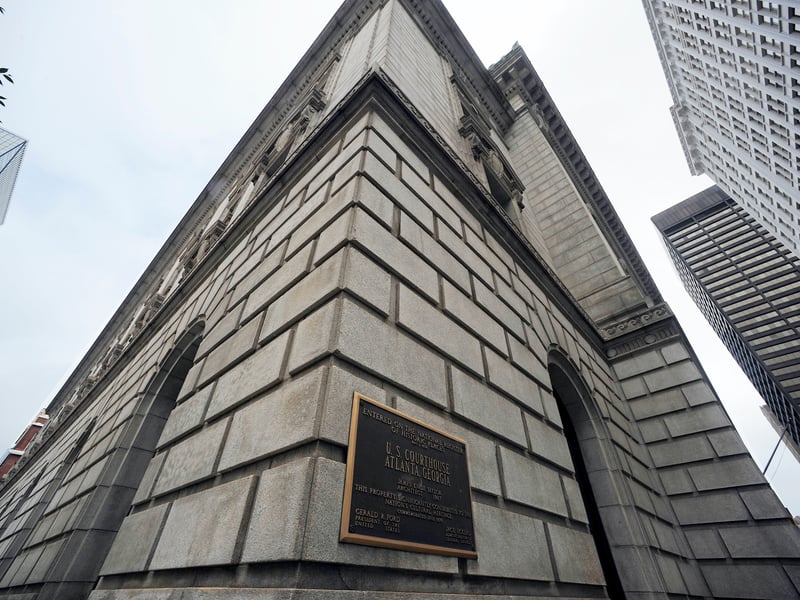
ATLANTA (CN) — A federal appeals court shot down two separate lawsuits on Thursday from two former Georgia university employees who claimed they were wrongfully fired.
Thomas Crowther, a former art professor at Augusta University, and MaChelle Joseph, formerly the head women’s basketball coach at the Georgia Institute of Technology, filed separate complaints of discrimination and retaliation against the University System of Georgia.
In each case, the 11th Circuit was left to decide on an issue that has split the circuit courts: whether the claims can be pursued under both Title VII and Title IX, two separate statutes of the Civil Rights Act.
While Title VII creates an administrative process to compensate victims of employment discrimination, Title IX focuses more on protecting individuals from discriminatory practices carried out by federally funded institutions.
“It is unlikely that Congress intended Title VII’s express private right of action and Title IX’s implied right of action to provideoverlapping remedies. Judicially implied rights of action require expressions of congressional intent to create both a right and a remedy,” U.S. Chief Circuit Judge William Pryor wrote in the unanimous opinion. (Emphasis in original.)
Although Title IX allows the withdrawal of federal funding from education institutions as a remedy if students sue for experiencing sex discrimination, the terms of the statute do not embrace the same right of action for employees, the circuit judges ruled.
“Where implied rights of action exist, we must honor them, but we cannot expand their scope without assuring ourselves that Congress unambiguously intended a right of action to cover more people or more situations than courts have yet recognized,” Pryor wrote.
In his suit, Crowther accuses the university of conducting a discriminatory, one-sided investigation against him based on complaints from several students that Crowther had sexually harassed them during the spring 2020 semester.
But because Title IX depends in large part on people willing to report sex discrimination, the students are owed protection under the statute, the circuit judges wrote, declining to let Crowther pursue his claims.
Crowther argued his retaliation claim could stand under* Jackson v. Birmingham Board of Education* , in which the Supreme Court held that retaliating against someone for complaining about sex discrimination is a form of intentional sex discrimination that violates Title IX.
The circuit judges explained that Crowther’s interpretation is too broad and that his claim looks nothing like the right of action implied in* Jackson* because he seeks to protect only his participation in the investigation of complaints against him — not his reporting of other discrimination violations.
The panel, which also included U.S. Circuit Judge Edward Carnes, a George H. W. Bush appointee and U.S. Circuit Judge Robert Luck, a Donald Trump appointee, also refuted Joseph’s claims that she was discriminated against for being a woman and because her players are women. They affirmed a lower court’s dismissal of the former coach’s employment discrimination claims brought under Title IX.
In Joseph’s suit, she claims the university allocated more resources and funding to the men’s basketball team than the women’s. But she failed to produce any evidence showing that her sex was the but-for cause of the resource disparity, the circuit judges found.
She further argues that she was retaliated against for complaining about the disparate resources by the university, which fired her after investigating complaints about of mistreatment from players on her team.
“Joseph offers no evidence that bias infected either the investigation itself or the decision to fire her,” Pryor wrote.
“The report provides multiple examples of inappropriate behavior, verbal abuse, and a toxic environment,” the George W. Bush appointee added.
Attorneys representing Joseph and Crowther did not immediately respond to requests for comment.
 Follow @Megwiththenews
Subscribe to our free newsletters
Our weekly newsletter Closing Arguments offers the latest about ongoing trials, major litigation and rulings in courthouses around the U.S. and the world, while the monthly Under the Lights dishes the legal dirt from Hollywood, sports, Big Tech and the arts.